
Ingredients
The pork
- 1 kgpork shoulder
- cut into large cubes
- salt and black pepper
The base
- 3onions, chopped
- 4garlic cloves, crushed
- 3 tablespoonssweet paprika
- 1 teaspoonhot paprika
- or to taste
- 1 teaspooncaraway seed
- ground
- 3 tablespoonslard or oil
- 1 tablespoontomato paste
The rest
- 800 gsauerkraut
- drained
- about 600 ml stock
- 250 mlsour cream
- 1 tablespoonplain flour
- 1bay leaf
To serve
- bread dumplings
- knedle
- or boiled potatoes
- extra sour cream
Directions
- Take the pan right off the heat. Add the paprika off the heat entirely. Stir it right through the hot fat. It should smell sweet and fruity. Mix flour into the sour cream first. Then temper it with hot liquid. Flour protects the cream proteins. Both together prevent splitting.
- Season the pork with salt and pepper. Heat the fat in a heavy deep pot. Brown all the pork in small batches. Do not crowd the pot at any point. Brown every side of every piece. Oil works perfectly well too here. Add the chopped onion to the pot. Cook it for about fifteen minutes. The onion should soften completely. Add the crushed garlic to the pot. Give it about one full minute.
- Take the pot right off the heat. Stir the paprika through the hot fat. Stir it for about thirty seconds. Pour in the stock while still off the heat. The liquid stops any burning entirely. Return all the pork to the pot. Add the tomato paste and caraway. Add the bay leaf into it as well. Grind it for better distribution.
- Bring the whole pot up to a bare simmer. Cover it and leave it to cook. Give it about ninety full minutes. Keep it at the very barest simmer. It should barely bubble at the surface. Add the drained sauerkraut to the pot. Add it in after about one hour. It needs about thirty minutes itself.
- Drain it well but do not rinse it. Rinsing removes too much sourness. Squeeze out the excess liquid. Keep a little of it for the pot. Do not try to reduce it much at all. Whisk the flour into the sour cream. Whisk it until entirely smooth. It stops it splitting entirely. Add hot liquid to the cream slowly. Take a whole ladleful from the pot. Whisk it into the cream gradually.
- Add two or three ladlefuls that way. Take the pot off the boil entirely. Stir the tempered cream into it. Pour it in while stirring constantly. Stir it right through the stew. Warm it gently without boiling it. Keep it well below a proper simmer. It should steam rather than bubble. Taste it and then adjust the salt. It should be rich, sour and creamy.
- Add hot paprika for more heat. Judging it takes a careful look. Cook it down further if it is thin. Add more stock if it is too thick. Serving it is always done hot. Serve it with bread dumplings. It keeps three days refrigerated.
Technique
- Add the paprika with the pot off the heat entirely, stir it through the hot fat for thirty seconds and then add the liquid before returning it to the heat. Paprika burns in seconds on direct heat, turns bitter the instant it does, and that bitterness cannot be removed — it ruins the whole pot. This sequence is not an optional precaution.
- Sour cream splits into grainy lumps if boiled. Whisk flour into it first, which stabilises it, then temper it by whisking in two or three ladlefuls of hot liquid gradually before it goes into the pot — and take the pot off the boil first. Afterwards keep it well below a simmer so it steams rather than bubbles.
- Add the sauerkraut only after about an hour, since it needs thirty minutes itself and goes to mush if added early. Drain it but do not rinse it, since rinsing removes too much of the sourness that cuts the rich pork.
Substitutions
- Lard is the traditional fat and gives a particular richness; oil works perfectly well and both are genuinely used. Boiled potatoes or plain bread stand in for bread dumplings.
- Good paprika matters enormously and should smell sweet and fruity — old paprika tastes of dust, since it loses flavour and colour fast, so buy it in small quantities and replace it every year or so.
Variations
- The name looks like it refers to Szeged, a Hungarian city, but that is genuinely mistaken: the Hungarian original székelykáposzta is named after József Székely, an archivist and writer. Székely and Szeged look similar and the Slovak name shifted toward the latter, entrenching the error. The atlas records the actual origin alongside the common name — the dish is called Segedín regardless, and that is entirely fine.
- This is called a goulash locally, though Hungarian gulyás is properly a soup and what most people call goulash is pörkölt; those distinctions blur outside Hungary, and the atlas records the local usage while noting the distinction.
- Three onions to a kilo of pork is a genuinely large amount and should not be reduced — the onion breaks down and thickens the sauce. Cook it a full fifteen minutes to deep golden, which takes real patience and is the base of the whole dish.
History
Pork and sauerkraut stew; the Hungarian original székelykáposzta is named after the archivist József Székely, not the town of Szeged.
Frequently asked questions
What is Segedin goulash?
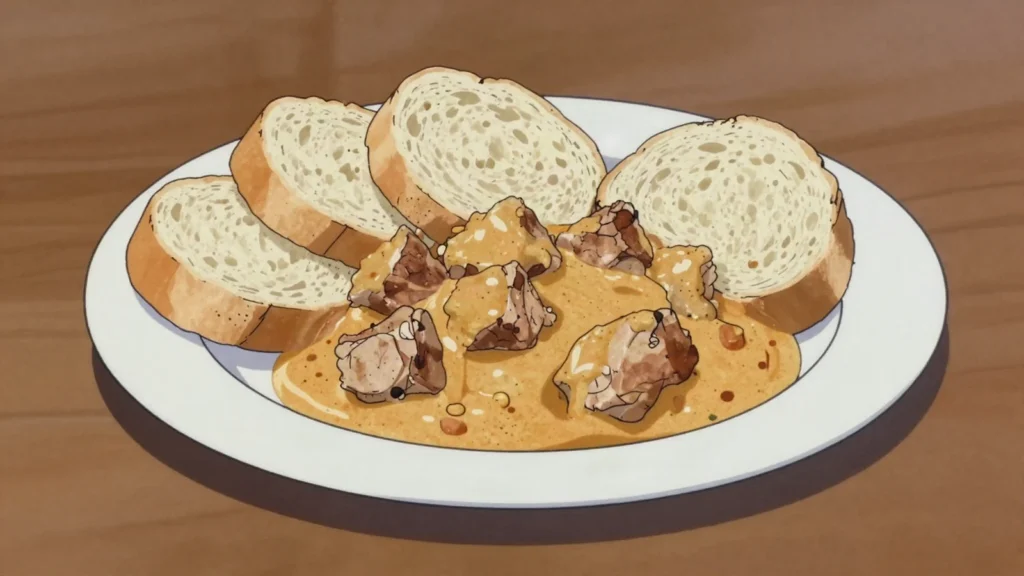
Segedin goulash is a main from Slovakia: creamy paprika pork-and-sauerkraut goulash with dumplings. Pork and sauerkraut stew; the Hungarian original székelykáposzta is named after the archivist József Székely, not the town of Szeged.
How long does Segedin goulash take to make?
Segedin goulash takes 30 minutes of preparation and 1 hour 45 minutes of cooking. The recipe makes serves 6. It is rated medium to make.
What can I substitute in Segedin goulash?
Yes, within limits. Lard is the traditional fat and gives a particular richness; oil works perfectly well and both are genuinely used. Boiled potatoes or plain bread stand in for bread dumplings. Good paprika matters enormously and should smell sweet and fruity — old paprika tastes of dust, since it loses flavour and colour fast, so buy it in small quantities and replace it every year or so.
What is the most important thing to get right in Segedin goulash?
Season the pork with salt and pepper. Heat the fat in a heavy deep pot. Brown all the pork in small batches. Do not crowd the pot at any point. Brown every side of every piece. Oil works perfectly well too here. Add the chopped onion to the pot. Cook it for about fifteen minutes. The onion should soften completely. Add the crushed garlic to the pot. Give it about one full minute.