
Ingredients
Blue rice
- 600 glong-grain rice
- 40dried butterfly pea flowers, or bunga telang
- 300 mlhot water, for steeping
- 2pandan leaves, knotted
- 1 stalklemongrass, bruised
- 1 tspsalt
Kerabu herb salad
- 200 glong beans, finely sliced
- 1/4white cabbage, finely shredded
- 1torch ginger flower, very finely sliced
- a large handful of Vietnamese mint
- a handful of Thai basil
- 4kaffir lime leaves, very finely shredded
- 2shallots, thinly sliced
- 150 gbean sprouts
Coconut topping
- 150 ggrated coconut
- 150 gdried fish or salted fish, flaked
- 3shallots
- 2garlic cloves
- 1 tspturmeric
To serve
- grilled or fried fish, or ayam percik
- budu, fermented anchovy sauce
- salted egg
- keropok crackers
- solok lada, stuffed chillies
Directions
- Strain out the flowers and discard them. Do not add anything acidic to the blue water. Rinse the rice until the water runs almost clear. Soak it in the blue water for thirty minutes. The grains will take up the colour.
- Drain it, keeping the blue water. Cook the rice with the pandan, lemongrass and salt. Use the usual ratio for your rice and method. Steam or cook it until the grains are separate and fluffy. It is served warm or at room temperature rather than hot.
- Toast the grated coconut in a dry pan over a medium heat. Stir it constantly for eight to ten minutes. It should turn a deep golden brown and smell strongly nutty.
- Pound or blend the toasted coconut with the shallots and garlic. Add the flaked dried fish and the turmeric. Pound it into a coarse fluffy mixture.
- Return it briefly to the dry pan to dry it out. It should be light and crumbly rather than damp. Slice the long beans across into thin rings. Shred the cabbage as finely as you can. Slice the torch ginger flower very finely.
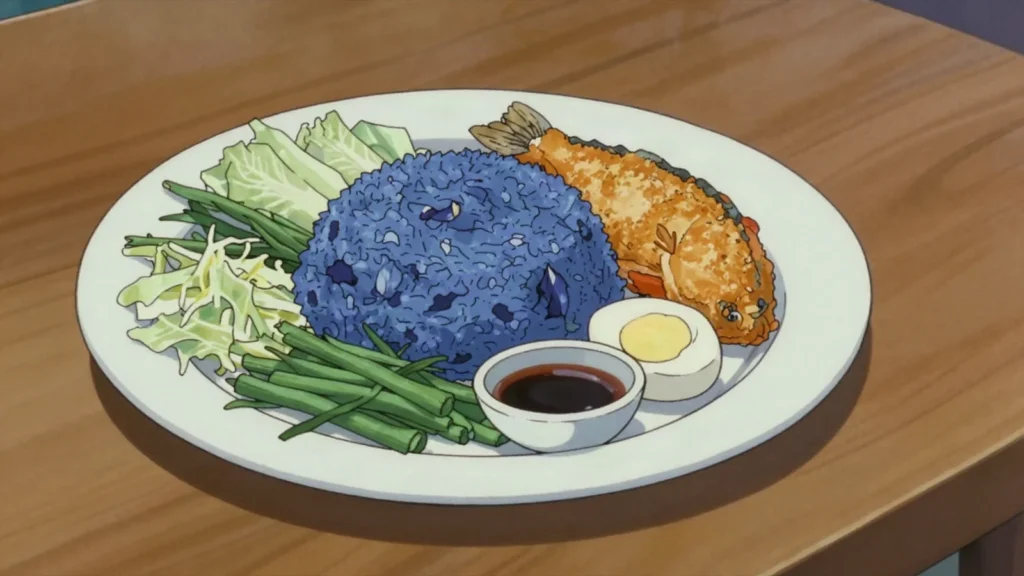
- Roll the kaffir lime leaves and shred them into threads. Tear the mint and basil leaves rather than chopping them. Keep everything separate until serving. Mound the blue rice on one side of the plate. Pile the raw herb salad beside it, not on top. Scatter the coconut fish topping over the rice.
- Lay the grilled fish or chicken alongside. Add half a salted egg and a few crackers. Put solok lada on the plate if you have made them. Serve the budu in a small dish for each person. Eating it is done by mixing everything together.
Technique
- Never add anything acidic to the blue steeping water, since acid turns the pigment purple.
- Slice the herbs and lime leaves extremely finely, as coarse pieces are unpleasant to chew.
- Budu is very salty and is added a spoonful at a time as the seasoning.
Substitutions
- Butterfly pea flowers are sold dried in Malaysian and Thai shops.
- Any strong fish sauce in place of budu, though it is not the same.
Variations
- Nasi kerabu putih, made with plain white rice.
- With ayam percik, the grilled coconut chicken.
- With extra solok lada, the stuffed chillies.
History
Blue-tinted rice, its colour coming from butterfly pea flower rather than any artificial dye, served with a variety of herbs, salad and grilled fish or chicken, most strongly associated with Malaysia’s Kelantan and Terengganu states on the country’s northeastern coast, a region with its own distinct Malay culinary character shaped partly by geographic isolation from Malaysia’s more developed western coast and by closer historical trade and cultural contact with neighboring Thailand. Butterfly pea flower, used to achieve the rice’s distinctive blue colour, has been used as a natural food dye across parts of Southeast Asia for many generations, valued both for its colour and for various believed traditional health properties. Nasi kerabu remains one of the most visually distinctive and specifically regional dishes within Malaysian cuisine.
Frequently asked questions
What is Nasi Kerabu?
Nasi Kerabu is a main from Malaysia: blue rice dyed with butterfly pea flowers, served with herbs, fish and budu. Blue-tinted rice, its colour coming from butterfly pea flower rather than any artificial dye, served with a variety of herbs, salad and grilled fish or chicken, most strongly associated with Malaysia’s Kelantan and Terengganu states on the country’s northeastern coast, a region with its own distinct Malay culinary character shaped partly by geographic isolation from Malaysia’s more developed western coast and by closer historical trade and cultural contact with neighboring Thailand. Butterfly pea flower, used to achieve the rice’s distinctive blue colour, has been used as a natural food dye across parts of Southeast Asia for many generations, valued both for its colour and for various believed traditional health properties. Nasi kerabu remains one of the most visually distinctive and specifically regional dishes within Malaysian cuisine.
How long does Nasi Kerabu take to make?
Nasi Kerabu takes 1 hour of preparation and 50 min of cooking. The recipe makes 6 servings. It is rated hard to make.
What can I substitute in Nasi Kerabu?
Yes, within limits. Butterfly pea flowers are sold dried in Malaysian and Thai shops. Any strong fish sauce in place of budu, though it is not the same.
What is the most important thing to get right in Nasi Kerabu?
Strain out the flowers and discard them. Do not add anything acidic to the blue water. Rinse the rice until the water runs almost clear. Soak it in the blue water for thirty minutes. The grains will take up the colour.