
Ingredients
Noodles
- 600 gnaengmyeon noodles, buckwheat and sweet potato starch
Broth, for mul-naengmyeon
- 800 gbeef brisket
- 2 litreswater
- 1onion
- 6 clovesgarlic
- 5cm ginger
- 1leek
- 1 tbspblack peppercorns
Seasoning
- 500 mldongchimi, radish water kimchi brine
- 3 tbsprice vinegar
- 1 tbspsugar
- 1 tbspsoy sauce
- salt
Sauce, for bibim-naengmyeon
- 4 tbspgochujang
- 2 tbspgochugaru
- 2 tbspsugar
- 3 tbspvinegar
- 1 tbspsesame oil
- 2 clovesgarlic
- 1 tbsptoasted sesame seeds
Toppings
- half an Asian pear, julienned
- 1cucumber, julienned
- 2boiled eggs, halved
- pickled radish slices
- the sliced brisket
At the table
- mustard oil, yeongyeoja
- more vinegar
- scissors
Directions
- Simmer the brisket with the aromatics for 2 hours, skimming constantly. Skim it patiently throughout, because this broth is served clear and cold and every fault shows.
- Lift out the beef, press it under a weight, and chill it before slicing thinly. Strain the broth through a cloth and chill it overnight, then lift off the solid fat from the surface. Chill it overnight and remove the fat completely. Beef fat is unpleasant in a cold broth and it congeals into flecks.
- Mix the cold broth with the dongchimi brine, vinegar, sugar and soy, and taste it. It should be sharply tart, faintly sweet and well salted, and taste slightly too strong before it is diluted by melting ice.
- Boil the noodles for 2 to 3 minutes only, following the packet and erring short. These noodles overcook in seconds and go soft and gluey, so stand over the pot.
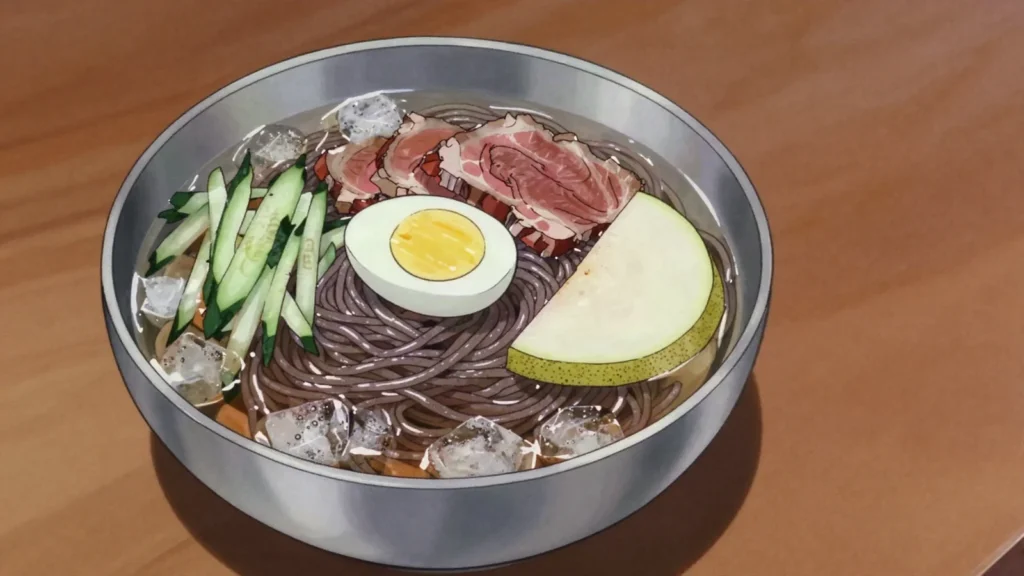
- Drain them and rinse them under cold running water, rubbing them hard with your hands. Rub them under cold water for a full minute. Metal bowls, chilled in the freezer, are used for a reason: they hold the cold far longer than ceramic.
- Arrange the pear, cucumber, sliced beef, pickled radish and half an egg on top. Its sweetness against the sour broth is part of the balance and Korean restaurants never leave it out.
- Serve with scissors, mustard oil and vinegar on the table. The scissors are there because the noodles are genuinely too chewy and too long to bite through, and cutting them in the bowl is normal and expected. Add the mustard oil and vinegar yourself, to taste, which is part of eating it.
Technique
- Pyongyang naengmyeon is subtle and lightly seasoned; the Seoul style is sharper and sweeter.
- Naengmyeon noodles are mostly sweet potato or buckwheat starch and are much chewier than wheat noodles.
- It is traditionally eaten after grilled meat, as a cooling finish.
Substitutions
- Bought dongchimi brine, sold in jars in Korean shops.
- Soba noodles at a pinch, which are far softer and not the same.
Variations
- Bibim-naengmyeon, the spicy Hamhung version.
- Hoe-naengmyeon, topped with fermented skate.
- Milmyeon, the Busan wheat-noodle version.
History
Cold buckwheat noodles served in a chilled broth, or dressed with a spicy sauce in a version called bibim naengmyeon, generally traced to the northern regions of the Korean peninsula, particularly around Pyongyang and Hamhung, now part of North Korea, and carried south by refugees during and after the Korean War in the early 1950s, when a large wave of northern Korean displacement significantly reshaped South Korean regional food culture. The two northern regional styles diverged in noodle composition and broth, with Pyongyang-style traditionally using a milder, clear broth and Hamhung-style favoring a chewier, potato-starch-based noodle typically served spicy rather than in broth. Naengmyeon became especially popular as a specifically summer dish across South Korea, valued for its cold, refreshing character during the country’s hot, humid summer months.
Frequently asked questions
What is Naengmyeon?
Naengmyeon is a main from South Korea: cold chewy buckwheat noodles in icy broth or spicy sauce, summer favorite. Cold buckwheat noodles served in a chilled broth, or dressed with a spicy sauce in a version called bibim naengmyeon, generally traced to the northern regions of the Korean peninsula, particularly around Pyongyang and Hamhung, now part of North Korea, and carried south by refugees during and after the Korean War in the early 1950s, when a large wave of northern Korean displacement significantly reshaped South Korean regional food culture. The two northern regional styles diverged in noodle composition and broth, with Pyongyang-style traditionally using a milder, clear broth and Hamhung-style favoring a chewier, potato-starch-based noodle typically served spicy rather than in broth. Naengmyeon became especially popular as a specifically summer dish across South Korea, valued for its cold, refreshing character during the country’s hot, humid summer months.
How long does Naengmyeon take to make?
Naengmyeon takes 40 min plus overnight chilling of preparation and 2 hr of cooking. The recipe makes 4 servings. It is rated hard to make.
What can I substitute in Naengmyeon?
Yes, within limits. Bought dongchimi brine, sold in jars in Korean shops. Soba noodles at a pinch, which are far softer and not the same.
What is the most important thing to get right in Naengmyeon?
Arrange the pear, cucumber, sliced beef, pickled radish and half an egg on top. Its sweetness against the sour broth is part of the balance and Korean restaurants never leave it out.