
Ingredients
Radish
- 1.5 kgsmall Korean radishes, whole, scrubbed with the skin on
- 4 tbspcoarse salt, for rubbing
Brine
- 3 litreswater
- 60 gcoarse non-iodised salt — 2%
- 2 tbspsugar
Aromatics
- 1Korean pear, quartered
- 1 headgarlic, cloves peeled
- 5cm ginger, sliced
- 4spring onions, whole
- 2green chillies, whole
- a handful of mustard leaves or watercress, optional
Directions
- Scrub the radishes well but leave the skin on — it holds them firm through weeks in brine.
- Rub them all over with the coarse salt and leave for two hours, turning once. Rinse briefly and drain.
- Dissolve the 60 g of salt and the sugar in the water. This is a much weaker brine than most kimchi, because dongchimi is a water kimchi and the brine is meant to be drunk.
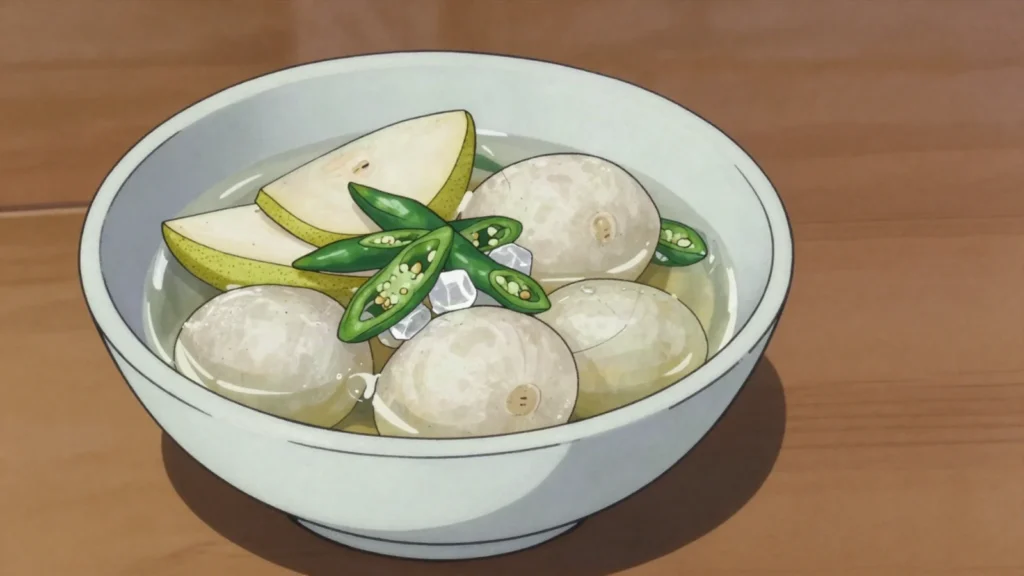
- Pack the radishes into a crock with the pear, garlic, ginger, spring onion, chilli and greens tucked among them.
- Pour over the brine so everything is covered by 5 cm, and weight the radishes down. They float, so the weight needs to be real.
- Cover and leave at cool room temperature — ideally 10 to 15°C (50 to 59°F) — for two to three days until the brine turns cloudy and starts to fizz.
- Then move it somewhere cold, 4°C (39 to 40°F) or below, and leave one to two weeks. Cold and slow is what gives dongchimi its clean sourness; fermented warm it turns muddy and yeasty.
- It is ready when the brine is tangy and slightly effervescent and the radishes are translucent. Slice the radish and serve with the brine poured over, and use the brine as the broth for cold naengmyeon.
Technique
- Cold and slow. Dongchimi was buried in jars in the ground before the frost precisely to hold it near freezing.
- The brine is the point. It is drunk, and it is the broth for winter cold noodles.
- Two percent salt only. A stronger brine gives a salty pickle rather than a drinkable one.
Substitutions
- Small daikon in place of Korean radish.
- Apple in place of pear.
- A few slices of yuzu or lemon, which some households add for aroma.
Variations
- Dongchimi-guksu floats cold noodles in the brine.
- Baek kimchi is the cabbage version of the same chilli-free idea.
History
A winter kimchi buried in jars before the ground froze; its cold brine traditionally forms the broth for northern naengmyeon.
Frequently asked questions
What is Dongchimi?
Dongchimi is a fermented & pickled from South Korea: whole radishes fermented in cold salty water, the tangy brine drunk as well. A winter kimchi buried in jars before the ground froze; its cold brine traditionally forms the broth for northern naengmyeon.
How long does Dongchimi take to make?
Dongchimi takes 40 min plus 2 hours salting and 1 to 2 weeks fermenting of preparation and no cooking at all. The recipe makes fills a 4-litre crock. It is rated easy to make.
What can I substitute in Dongchimi?
Yes, within limits. Small daikon in place of Korean radish. Apple in place of pear. A few slices of yuzu or lemon, which some households add for aroma.
What is the most important thing to get right in Dongchimi?
The brine is the point. It is drunk, and it is the broth for winter cold noodles.