
Ingredients
Meat
- 600 gbeef on the bone
- in pieces
- or 200 g sharmoot
- dried meat, soaked
The okra
- 700 gsmall okra
- whole, stems trimmed
- or 100 g weika
- dried okra powder
The pot
- 2onions, chopped
- 5garlic cloves, crushed
- 4tomatoes, chopped
- 3 tablespoonstomato purée
- 3 tablespoonsoil
- 1 tablespoonground coriander
- 1 teaspoonground cumin
- 1 teaspoonchilli powder
- 2stock cubes
- about 1.2 litres water
- salt and black pepper
To serve
- kisra
- fermented sorghum flatbread
- or asida
- eaten with the right hand
Directions
- Rinse the okra and pat it dry. Trim the stems off from the pods. Cut the stem off close to the pod. Cut them if you want a thicker stew. Leave them whole for more texture. Heat the oil in a large heavy pot. Add the beef pieces and brown them.
- Work in batches rather than crowding. Add the chopped onions to the pot. Cook them for a good ten minutes. Add the crushed garlic to them. Cook it for two more full minutes. Add the coriander and the cumin. Add the chilli powder as well. Fry them for about thirty seconds. Add the chopped tomatoes to the pot.
- Add the tomato purée along with them. Cook them down for about ten minutes. The tomato must cook right down. Oil should separate at the edges. Raw tomato taste should be entirely gone.
- Pour in all of the measured water. Add the stock cubes to the pot. Season it with salt and black pepper. Bring it up to a gentle simmer. Cover the pot and let it cook on. Give it at least one full hour. Simmer it on if it still resists.
- Add all of the okra to the pot. Cooking it takes about twenty minutes. Cover it and simmer it gently. Give the okra about twenty minutes. Stir it gently and not too often. Turn it over rather than stirring. Judging the okra takes a look. Add hot water if it goes too thick. Simmer it longer if it is too thin.
- Use dried okra powder instead of fresh. Sieve the powder before using it. Adding it in takes very real care. Sprinkle the powder into the pot gradually. Stir constantly as you sprinkle it in. Those lumps never break down afterwards.
- Add it in just a little at a time. Stir hard between each addition. Cooking the powder takes fifteen minutes. Let it simmer for about fifteen minutes. The powder needs cooking to lose its raw taste. Taste it and adjust the salt as needed. Add more chilli if you want more heat.
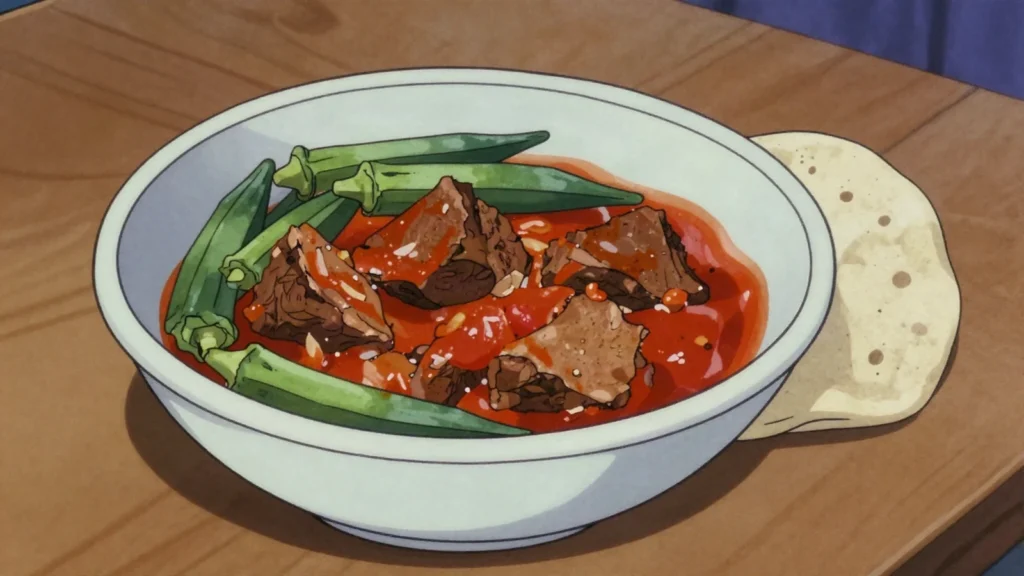
- Taste it before adding any more. Serving it is always done hot. Ladle it out into a wide bowl. Serve warm kisra alongside it. It keeps three days refrigerated.
Technique
- Mullah is the general Sudanese word for a stew, naming a family of dishes distinguished by what goes in: bamia is fresh okra, weika is okra dried and ground to powder, and roub is the buttermilk left from churning. Fresh okra is seasonal and weika fills the gap out of season, but the dried version is a different dish in its own right rather than a poor substitute, and tastes quite different.
- Okra’s slipperiness is wanted here rather than suppressed — the atlas also carries margat bamia from Iraq, which uses acid to break it down, so the same vegetable is treated oppositely. Kisra and asida are eaten with the fingers, and a slippery stew coats them and helps them go down, which is the practical reason. Cutting the pods across encourages the thickening; leaving them whole limits it.
- Okra cooks far faster than meat and goes in near the end, since adding it early turns it to slime. Stir gently and turn it over rather than stirring, since vigorous stirring breaks the pods and releases everything at once.
Substitutions
- Weika, dried okra powder, replaces fresh okra out of season; sieve it and sprinkle it in gradually while stirring, since powder tipped in at once lumps and never breaks down.
- Sharmoot, Sudanese sun-dried beef, replaces fresh meat and must be soaked first.
Variations
- Kisra is a thin fermented sorghum flatbread poured onto a hot plate, torn and used to scoop the stew.
- The atlas carries three mullah entries — bamia, weika and roub — which are a family rather than separate dishes.
- It thickens considerably on keeping, so loosen it with water when reheating.
History
One of the standard mullah stews of Sudan, made with fresh okra in season and dried weika out of it.
Frequently asked questions
What is Mullah bamia?
Mullah bamia is a soup & stew from Sudan: okra stew with dried meat or beef, poured over kisra. One of the standard mullah stews of Sudan, made with fresh okra in season and dried weika out of it.
How long does Mullah bamia take to make?
Mullah bamia takes 30 minutes of preparation and 1 hour 30 minutes of cooking. The recipe makes serves 6. It is rated medium to make.
What can I substitute in Mullah bamia?
Yes, within limits. Weika, dried okra powder, replaces fresh okra out of season; sieve it and sprinkle it in gradually while stirring, since powder tipped in at once lumps and never breaks down. Sharmoot, Sudanese sun-dried beef, replaces fresh meat and must be soaked first.
What is the most important thing to get right in Mullah bamia?
Work in batches rather than crowding. Add the chopped onions to the pot. Cook them for a good ten minutes. Add the crushed garlic to them. Cook it for two more full minutes. Add the coriander and the cumin. Add the chilli powder as well. Fry them for about thirty seconds. Add the chopped tomatoes to the pot.