
Ingredients
The okra
- 2 kgfresh okra
- young and firm pods
- bright green, snapping cleanly
- washed and dried completely
Equipment for drying
- clean drying racks or mats
- or clean baking trays
- fine netting or muslin, to cover
- or a dehydrator
- or a very low oven
For pounding
- a mortar and pestle
- or a spice grinder
- a fine sieve
- an airtight jar
To use the powder
- 2 tablespoonsweika
- per litre of stew
- stirred in near the end
- adjust to taste
Directions
- Use young tender pods for drying. They should be bright green and firm. Wash the pods thoroughly in cold water. Then dry them completely with a cloth. Trim the stalk ends off each pod. Leave the pointed tips of the pods on. Now slice them into thin rounds. Cut okra releases its mucilage immediately. Spread the slices in a single layer.
- Use racks, mats or clean trays. Do not let the slices overlap. Set them out in full direct sunlight. Cover them with fine netting or muslin. That keeps flies and insects off them.
- Bring the trays in every night without fail. Put them out again each morning. Turn the slices once they begin to firm. Continue for three to five days. Longer if the weather is humid. Press a thick slice between your fingers. It should crack rather than squash.
- Discard any batch showing mould. Do not pick mould off and keep the rest. Leave the oven door slightly ajar. Traditionally this is done in a mortar. Pound the dried slices to a powder. It takes real effort and some time. Work in small batches in a grinder. Do not overload it at any point.
- Return the coarse bits to the mortar. Pound them again and sieve again. Repeat until almost nothing is left. The powder should be fine and pale green. Put it in an airtight jar immediately. Keep the jar somewhere cool and dark. Check it occasionally for clumping. It keeps six months to a year that way.
- Add a few grains of dry rice if you like. So add it in the last few minutes. Make a smooth thin slurry in a bowl. Whisk out every lump at that stage. Stir constantly as you pour it in. That gives a smooth result every time.
- Start with less than you think. Simmer for a few minutes and look at it. Add more slurry if it needs it. The stew should be glossy and slippery. Grind it as you need it if you prefer.
Technique
- The slipperiness is the point, not a defect. English calls it sliminess, which carries a negative implication that does not exist here — the mucilage gives the stew body without flour and helps swallow foods go down. Understanding that changes how you cook okra.
- Never tip dry weika into a hot pot. It clumps instantly and those lumps never disperse. Mix it with cold water into a smooth slurry first, then stir that in while pouring.
- Add it near the end, in the last five to ten minutes. The mucilage breaks down with prolonged heat, so weika added early thickens nothing.
- Start with less than you think — about two tablespoons per litre — and build up. Dried okra is far more powerful than fresh, and you cannot take it out once it is in.
- Slice the pods thin, two or three millimetres. Thick slices stay damp in the middle, and damp centres mould and spoil the whole batch.
- Bring the trays in every night without fail. Night dew rewets the slices completely, undoing a day’s work and encouraging mould. Cover them with netting while they dry.
- The slices must be genuinely brittle — they should snap and rattle, not bend or squash. Incomplete drying allows moulds that produce toxins cooking does not destroy. Discard any mouldy batch rather than picking the mould off.
- In humid weather a dehydrator or a very low oven with the door ajar is safer than fighting the damp with sunlight.
- Sieve the pounded powder and re-pound the coarse bits. Fibrous pieces never soften in a stew and are unpleasant to bite into.
- Store it airtight. Powder draws moisture from the air, clumps and then moulds; a few grains of dry rice in the jar help.
Substitutions
- Whole dried okra slices, ground as needed, keep even better than powder and are less prone to clumping.
- Fresh okra, finely chopped or grated, replaces weika in season; use far more of it and add it near the end.
- A dehydrator or low oven replaces sun drying and is genuinely safer in a humid climate.
- Dried okra powder sold by African grocers replaces homemade entirely.
- Ground egusi or groundnut paste thicken stews differently, without the slippery quality that is the point of weika.
Variations
- Dried okra powder is used across Sudan, Chad, Nigeria and the wider Sahel under various local names.
- Fresh okra stews, cooked briefly so the mucilage survives, are the seasonal counterpart.
- Weika is stirred into groundnut sauces as well as meat and fish stews.
- Kisra, the fermented sorghum flatbread, and asida, the stiff porridge, are the staples these stews accompany.
- Some households dry the pods whole rather than sliced, which takes longer and risks more.
- Bamia, the wider Arab okra stew tradition, uses fresh pods and belongs to the same broad family.
History
Okra is sliced and sun-dried, then pounded to powder so the vegetable’s thickening quality is available all through the dry season.
Frequently asked questions
What is Weika?
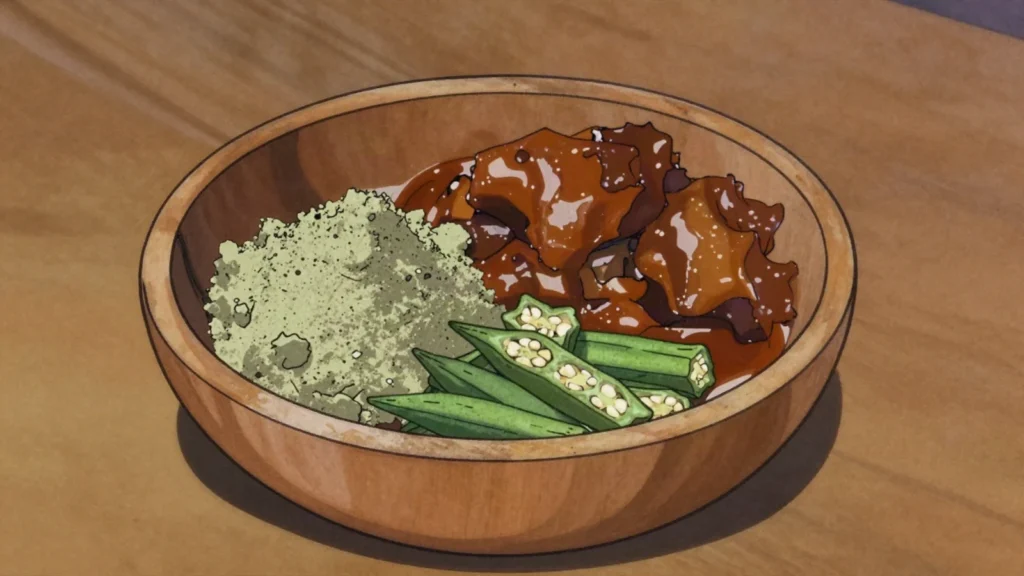
Weika is a sauce & condiment from South Sudan: powdered dried okra stirred into stews to thicken them to a slippery gloss. Okra is sliced and sun-dried, then pounded to powder so the vegetable’s thickening quality is available all through the dry season.
How long does Weika take to make?
Weika takes 30 minutes of preparation and none, plus 3 to 5 days drying of cooking. The recipe makes makes about 200 g of powder. It is rated medium to make.
What can I substitute in Weika?
Yes, within limits. Whole dried okra slices, ground as needed, keep even better than powder and are less prone to clumping. Fresh okra, finely chopped or grated, replaces weika in season; use far more of it and add it near the end. A dehydrator or low oven replaces sun drying and is genuinely safer in a humid climate. Dried okra powder sold by African grocers replaces homemade entirely. Ground egusi or groundnut paste thicken stews differently, without the slippery quality that is the point of weika.
What is the most important thing to get right in Weika?
Use racks, mats or clean trays. Do not let the slices overlap. Set them out in full direct sunlight. Cover them with fine netting or muslin. That keeps flies and insects off them.