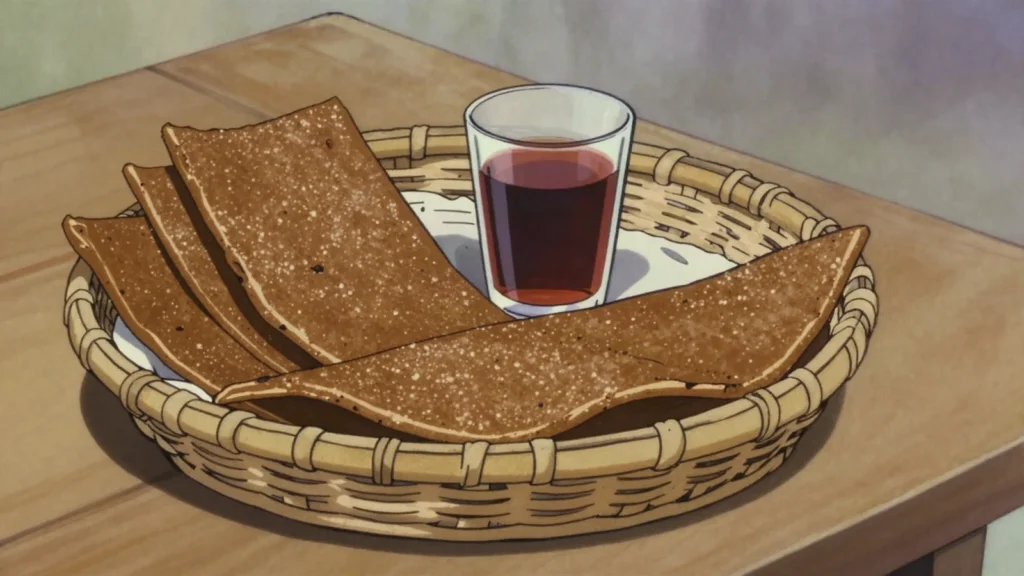

Fermented sorghum batter dried into thin flakes and stored for drinks. It is the dried base from which hulu-mur is reconstituted, prepared in bulk by Sudanese women before Ramadan.
It is a multi-day grain ferment carried by a starter from the previous batch, and the flakes are griddled on a purpose-built hot plate; the flakes themselves are sold ready-made in Sudanese markets before Ramadan.
What goes into it
- sorghum flour
- water
- spices including fenugreek, cinnamon, ginger and hibiscus
- a starter from a previous batch
How it is made
Sorghum flour is mixed with water and a portion of an earlier batch and left to ferment for several days, then spices are worked in and the batter is spread paper-thin on a hot griddle and peeled off as brittle sheets. Those sheets are broken into flakes and stored dry for months, then soaked in water and strained to make the drink.
How long it takes: several days of fermenting, then griddling and drying
How it is eaten
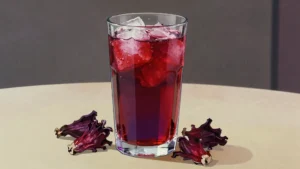
Soaked in water, strained and drunk cold as hulu-mur at iftar through Ramadan.
History
The dried base from which hulu-mur is reconstituted, prepared in bulk by women before Ramadan.
Frequently asked questions
What is Abreh?
Abreh is a fermented & pickled from Sudan: fermented sorghum batter dried into thin flakes and stored for drinks. The dried base from which hulu-mur is reconstituted, prepared in bulk by women before Ramadan.
How is Abreh made?
Sorghum flour is mixed with water and a portion of an earlier batch and left to ferment for several days, then spices are worked in and the batter is spread paper-thin on a hot griddle and peeled off as brittle sheets. Those sheets are broken into flakes and stored dry for months, then soaked in water and strained to make the drink. It takes several days of fermenting, then griddling and drying.
Can I make Abreh at home?
No, and the atlas gives no method for it. It is a multi-day grain ferment carried by a starter from the previous batch, and the flakes are griddled on a purpose-built hot plate; the flakes themselves are sold ready-made in Sudanese markets before Ramadan.
What goes into Abreh?
Sorghum flour, water, spices including fenugreek, cinnamon, ginger and hibiscus, a starter from a previous batch.
How is Abreh eaten?
Soaked in water, strained and drunk cold as hulu-mur at iftar through Ramadan.