
Ingredients
Ferment
- 500 gfine white sorghum flour (dura)
- 700 mlwarm water, plus more to thin
- 3 tbspmature kisra starter (khamira) from a previous batch, or 3 tbsp live yoghurt whey for the first batch
- ½ tspsalt, added only at the end
To bake
- 1doka or heavy flat steel plate, at least 35 cm
- 1gargariba, a flat wooden or palm-rib spreader, or a long metal ruler-edged spatula
- 1 tbspgroundnut oil, on a cloth, for wiping the plate
To serve
- mullah, any Sudanese stew, ladled alongside
- a little samn (clarified butter), optional
Directions
- Whisk the sorghum flour with 500 ml of the warm water and the starter to a thick, lump-free batter. Cover with a cloth and leave at warm room temperature, 25 to 30°C (85°F), for 24 hours.
- It should be domed, bubbly and sharply sour. Beat it down, add the remaining water, and leave a further 12 to 24 hours; the second stage is what gives kisra its clean acidity rather than a raw mustiness.
- Reserve 3 tbsp of the ripe batter in a jar in the fridge as the khamira for your next batch. Sudanese households keep one alive for years.
- Beat the salt into the rest and thin with water until the batter pours off the spoon in an unbroken thread, roughly the consistency of thin cream. Too thick and the sheet will tear when you lift it.
- Heat the doka over medium heat until a drop of water skitters and vanishes in about two seconds, then wipe it with the lightly oiled cloth. It should be barely greased, not slicked.
- Pour a ladle of batter along the near edge of the plate and, in one confident sweep, drag it across with the gargariba held at a low angle so it leaves a sheet as thin as paper.
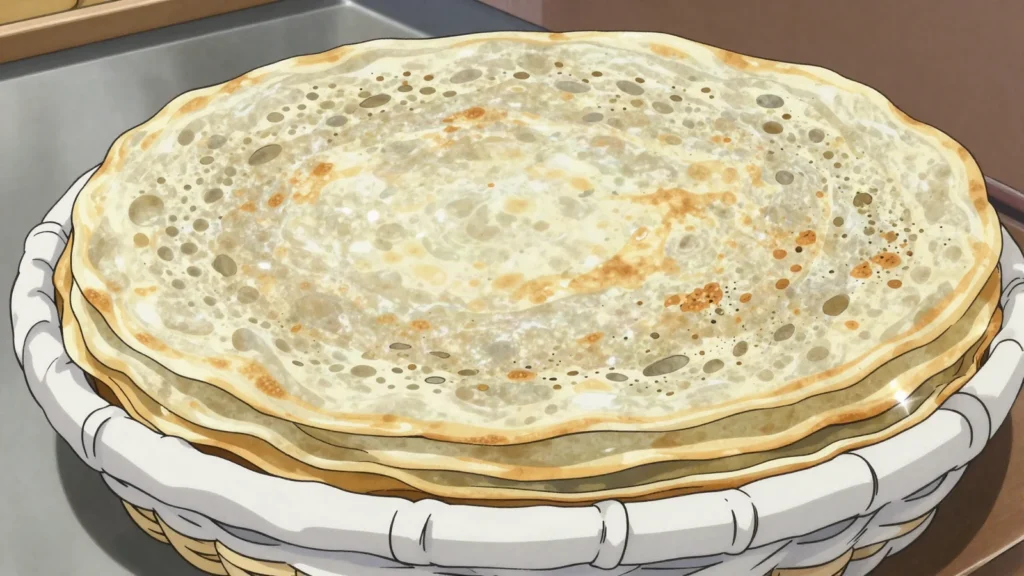
- Cook 30 to 45 seconds only. The surface goes matt, the edges lift and curl, and no browning should occur; kisra is pale, not toasted.
- Lift the sheet off with your fingers or the edge of the spreader and lay it on a cloth, folding it loosely in quarters. Stack the sheets as you go, covered, so they stay pliable.
- Wipe the plate between sheets and adjust the heat: if the batter sets before the spreader gets across, the plate is too hot.
- Serve at once, folded on a wide tray with mullah poured into the middle, and tear pieces off with the right hand to scoop.
Technique
- The two-stage ferment is the whole recipe. Sorghum has no gluten, so structure comes entirely from the acid and the gas the wild ferment produces, and an underfermented batter makes brittle sheets that crack.
- The single sweep of the gargariba takes practice. Sudanese women learn it as girls, and the usual failure for a beginner is stopping halfway, which leaves a ridge that will not cook evenly.
- Kisra is deliberately unbrowned and slightly sour, and it is meant to be soft enough to fold; if it crisps, the plate is too hot or the sheet was too thin.
Substitutions
- For a first batch with no khamira, 3 tbsp of live yoghurt whey or a sourdough starter will seed the ferment, though the flavour is not identical.
- A large flat non-stick crepe plate or an upturned heavy baking sheet on the hob will substitute for the doka.
- Half sorghum and half plain flour makes a more forgiving batter that is much easier to spread while you learn.
Variations
- Kisra rahifa, the everyday thin sheet described here.
- Kisra abre, the dried version ground into a powder and reconstituted as a cooling summer drink with sugar and lime.
- Injera, the Ethiopian teff cousin, is thicker, spongier and poured rather than spread.
History
A thin, fermented flatbread made from sorghum or millet flour, cooked on a large flat griddle until thin enough to be almost translucent, developed across the sorghum- and millet-growing regions of Chad, Sudan and South Sudan as a practical bread suited to grains that do not behave the same way as wheat when baked into a raised loaf. Its fermentation process, letting the batter sit for a day or more before cooking, both improves the bread’s flavour and texture and reflects a broader pattern of fermented grain cooking found across many sorghum- and millet-dependent regions of Africa, where fermentation historically served a preservation as well as a flavour purpose. Kisra is traditionally torn and used by hand to scoop up stews and sauces rather than eaten on its own.
Frequently asked questions
What is Kisra?
Kisra is a bread & pastry from Chad: thin fermented sorghum flatbread-crepes eaten with stews. A thin, fermented flatbread made from sorghum or millet flour, cooked on a large flat griddle until thin enough to be almost translucent, developed across the sorghum- and millet-growing regions of Chad, Sudan and South Sudan as a practical bread suited to grains that do not behave the same way as wheat when baked into a raised loaf. Its fermentation process, letting the batter sit for a day or more before cooking, both improves the bread’s flavour and texture and reflects a broader pattern of fermented grain cooking found across many sorghum- and millet-dependent regions of Africa, where fermentation historically served a preservation as well as a flavour purpose. Kisra is traditionally torn and used by hand to scoop up stews and sauces rather than eaten on its own.
How long does Kisra take to make?
Kisra takes 20 min of preparation and 2 days fermenting plus 25 min baking of cooking. The recipe makes 4 servings, about 16 sheets. It is rated hard to make.
What can I substitute in Kisra?
Yes, within limits. For a first batch with no khamira, 3 tbsp of live yoghurt whey or a sourdough starter will seed the ferment, though the flavour is not identical. A large flat non-stick crepe plate or an upturned heavy baking sheet on the hob will substitute for the doka. Half sorghum and half plain flour makes a more forgiving batter that is much easier to spread while you learn.
What is the most important thing to get right in Kisra?
It should be domed, bubbly and sharply sour. Beat it down, add the remaining water, and leave a further 12 to 24 hours; the second stage is what gives kisra its clean acidity rather than a raw mustiness.