
Ingredients
- 800 gfresh cassava leaves, tough stems stripped (or 500 g frozen pounded cassava leaf)
- 300 gsmoked or dried fish, flaked, bones removed
- 200 gfresh tilapia or catfish fillet, in chunks
- 150 gsmooth unsweetened peanut butter
- 5 tbspred palm oil
- 2onions, finely chopped
- 4garlic cloves, crushed
- 1thumb ginger, grated
- 2tomatoes, chopped
- 1–2hot chillies, whole
- 1.2 litreswater
- 1stock cube or 1 tsp salt
Directions
- Pound the cassava leaves in a wooden mortar in batches, or blitz briefly with a splash of water, until they break down to a coarse green mash; this releases the leaf and shortens cooking.
- Put the leaves in a large pot with the water, bring to the boil and simmer uncovered for 45 minutes, stirring now and then. This long boil is a safety step as well as a texture one.
- Stir in the onion, garlic, ginger, tomato and the whole chillies and cook another 20 minutes until the leaves lose their raw grassy smell and turn a deep olive green.
- Loosen the peanut butter with a ladle of the hot cooking liquid, whisking to a smooth cream, then stir it back into the pot.
- Add the smoked fish and simmer 15 minutes so its smoke works through the whole pot.
- Pour in the palm oil, season, and simmer uncovered a further 15–20 minutes until the stew is thick enough to hold a spoon upright and the oil rises in orange pools on the surface.
- Slip in the fresh fish chunks and cook 6–8 minutes more, just until they turn opaque and flake, stirring as little as possible.
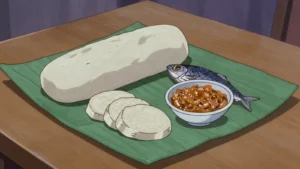
- Lift out the chillies, check the salt and serve very hot with gozo or rice.
Technique
- Cassava leaves must be pounded and boiled thoroughly; raw or briefly cooked leaves retain cyanogenic glycosides and are genuinely toxic. Long, open-pot simmering drives them off.
- Add the peanut butter only after the leaves are soft. Added early it scorches on the base of the pot and turns the stew bitter.
- The palm oil goes in late and is not stirred in hard; the red slick on top is what a Central African cook looks for.
Substitutions
- Frozen pounded cassava leaf from an African grocer is the standard shortcut and needs about 40 minutes of boiling.
- Sweet potato leaves or, at a stretch, well-boiled spinach with a handful of chopped kale can stand in, though the flavour is milder and the texture looser.
Variations
- Ngoundja is also made with smoked beef or game instead of fish in the drier north.
- Some households add a handful of ground squash seed with the peanut butter for a richer, grainier sauce.
History
A dish combining cassava leaves, pounded and cooked down with peanut paste, palm oil and often smoked fish or meat, developed in the Central African Republic using cassava leaf, the same plant whose root produces the flour used for gozo, reflecting a resourceful culinary tradition that makes use of multiple parts of the same crop rather than only the root. Peanut paste, made from groundnuts that reached the region through the same historic Portuguese trade routes that introduced cassava, gives ngoundja its characteristic rich, nutty flavour and thick consistency. It remains a common traditional dish across the Central African Republic, typically served alongside gozo or rice as part of a complete meal.
Frequently asked questions
What is Ngoundja?
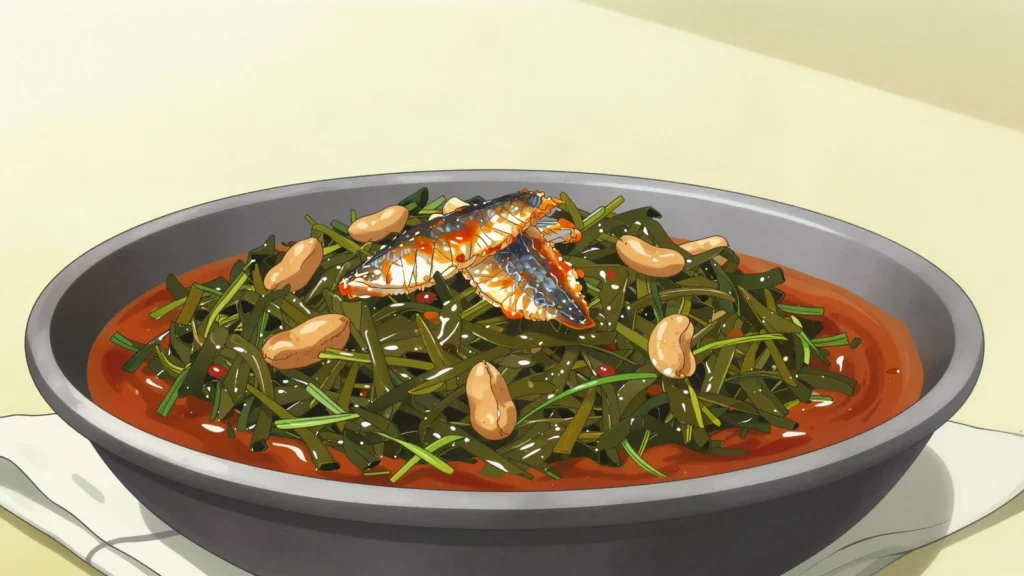
Ngoundja is a soup & stew from Central African Republic: pounded cassava leaves stewed with palm oil, peanut butter and fish. A dish combining cassava leaves, pounded and cooked down with peanut paste, palm oil and often smoked fish or meat, developed in the Central African Republic using cassava leaf, the same plant whose root produces the flour used for gozo, reflecting a resourceful culinary tradition that makes use of multiple parts of the same crop rather than only the root. Peanut paste, made from groundnuts that reached the region through the same historic Portuguese trade routes that introduced cassava, gives ngoundja its characteristic rich, nutty flavour and thick consistency. It remains a common traditional dish across the Central African Republic, typically served alongside gozo or rice as part of a complete meal.
How long does Ngoundja take to make?
Ngoundja takes 30 min of preparation and 1 hr 30 min of cooking. The recipe makes 4 servings. It is rated medium to make.
What can I substitute in Ngoundja?
Yes, within limits. Frozen pounded cassava leaf from an African grocer is the standard shortcut and needs about 40 minutes of boiling. Sweet potato leaves or, at a stretch, well-boiled spinach with a handful of chopped kale can stand in, though the flavour is milder and the texture looser.
What is the most important thing to get right in Ngoundja?
Stir in the onion, garlic, ginger, tomato and the whole chillies and cook another 20 minutes until the leaves lose their raw grassy smell and turn a deep olive green.