
Ingredients
Meat and marinade
- 2 kgpork neck, cut into 5 cm cubes with the fat left on
- 4large onions, half grated and half sliced into rings
- 2 tbspcoarse salt
- 1 tbspcoarsely ground black pepper
- 2 tspdried basil or thyme (optional)
- 150 mlsparkling mineral water or a splash of dry wine (optional)
Khorovats vegetables
- 3aubergines
- 4sweet red peppers
- 4firm tomatoes
- 3 tbspsunflower oil
To serve
- 6 sheetslavash
- 1 bunchcoriander, parsley and purple basil
- 1red onion, sliced and tossed with 1 tsp sumac
- pomegranate seeds
Directions
- Toss the pork with the grated onion, salt, pepper and herbs, working the onion juice into the meat with your hands, then leave it in a cool place for 4 hours or overnight. Build a fire of hardwood or, best of all, dried grapevine prunings, and let it burn down for 40 minutes to a deep bed of glowing embers with no flame.
- Thread the pork onto flat metal skewers (shampur), alternating leaner cubes with fattier ones and pressing them together, and shake off any clinging onion, which would burn.
- Lay the skewers directly across the sides of the mangal, about 15 cm above the coals, with no grill grate underneath.
- Turn the skewers a quarter-turn every 3–4 minutes for 20–25 minutes, so all four faces colour evenly. If fat drips and the coals flare, move the skewers aside rather than dousing the fire with water.
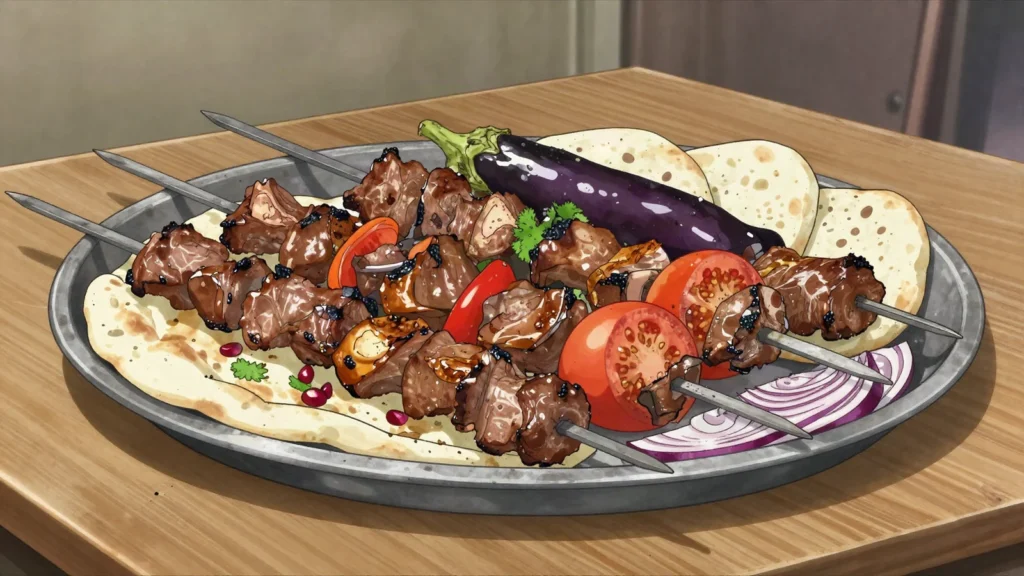
- Peel them while warm and chop into the salad known as khorovats vegetables or mangal salad. Slide the meat off the skewers onto a sheet of lavash spread on the platter, cover with more lavash to steam it for 2 minutes, then pile on the herbs, sumac onion and vegetables.
Technique
- Grapevine wood is the traditional fuel in the wine-growing valleys and gives a distinctly sweet smoke. Charcoal is acceptable; softwood is not, as resinous smoke ruins the meat.
- Flat skewers are used for a reason: round ones let the cubes spin as you turn them, so one face burns and another stays raw.
- Resting under lavash is a real step. The bread traps steam, softens the crust slightly and soaks up the juices, and that juice-soaked lavash is prized at the table.
- Khorovats is the centrepiece of every Armenian celebration, and by long custom it is cooked by the men of the household, out of doors, whatever the weather.
Substitutions
- No open fire? Use a kettle barbecue with the coals banked, or a very hot cast-iron griddle, allowing 12–15 minutes and accepting that you lose the smoke.
- Lamb shoulder is the older, festival version and is grilled the same way; trim it less, as the fat is the point.
- For a meat-free plate, the same fire is used for a vegetable khorovats of aubergine, pepper and tomato served with lavash and herbs.
Variations
- Karsi khorovats, large pieces on skewers, associated with the city of Kars.
- Khorovats in a pot (khorovats in tonir), where the meat is hung inside a clay oven and cooked in its own heat.
- Ishkhan khorovats, made with Lake Sevan trout on skewers.
History
Armenian barbecue of pork, lamb or vegetables grilled over vine cuttings, the centrepiece of family gatherings and holidays.
Frequently asked questions
What is Khorovats?
Khorovats is a main from Armenia: skewered pork or lamb barbecued over coals; national feast centerpiece. Armenian barbecue of pork, lamb or vegetables grilled over vine cuttings, the centrepiece of family gatherings and holidays.
How long does Khorovats take to make?
Khorovats takes 30 min of preparation and 1 hr of cooking. The recipe makes 6 servings. It is rated medium to make.
What can I substitute in Khorovats?
Yes, within limits. No open fire? Use a kettle barbecue with the coals banked, or a very hot cast-iron griddle, allowing 12–15 minutes and accepting that you lose the smoke. Lamb shoulder is the older, festival version and is grilled the same way; trim it less, as the fat is the point. For a meat-free plate, the same fire is used for a vegetable khorovats of aubergine, pepper and tomato served with lavash and herbs.
What is the most important thing to get right in Khorovats?
Turn the skewers a quarter-turn every 3–4 minutes for 20–25 minutes, so all four faces colour evenly. If fat drips and the coals flare, move the skewers aside rather than dousing the fire with water.