
Ingredients
Porridge
- 300 gdzedzadz, hulled and cracked wheat (pearled or skinned wheat berries)
- 2 litreswater
- 1 pinchsalt
- 180 gsugar, or to taste
- 1 tspground cinnamon
- 1 tbsprosewater, added off the heat
Fruit
- 150 gdried apricots, halved
- 100 graisins or sultanas
- 100 gpitted prunes, halved
- 50 gdried cherries or barberries, optional
To finish
- 100 gwalnut halves
- 50 gblanched almonds
- seeds of 1 pomegranate
- ground cinnamon for dusting
Directions
- Rinse the hulled wheat in several changes of water until the water runs clear, then soak it overnight in plenty of cold water.
- Drain, put it in a heavy pot with the 2 litres of fresh water and a pinch of salt, bring to the boil and skim the foam.
- Simmer partly covered on the lowest heat for 1 hour 30 minutes to 2 hours, stirring every 15 minutes and topping up with hot water as needed, until the grains have burst and the liquid has thickened to a loose, creamy porridge. Stirring is what releases the starch that gives the body.
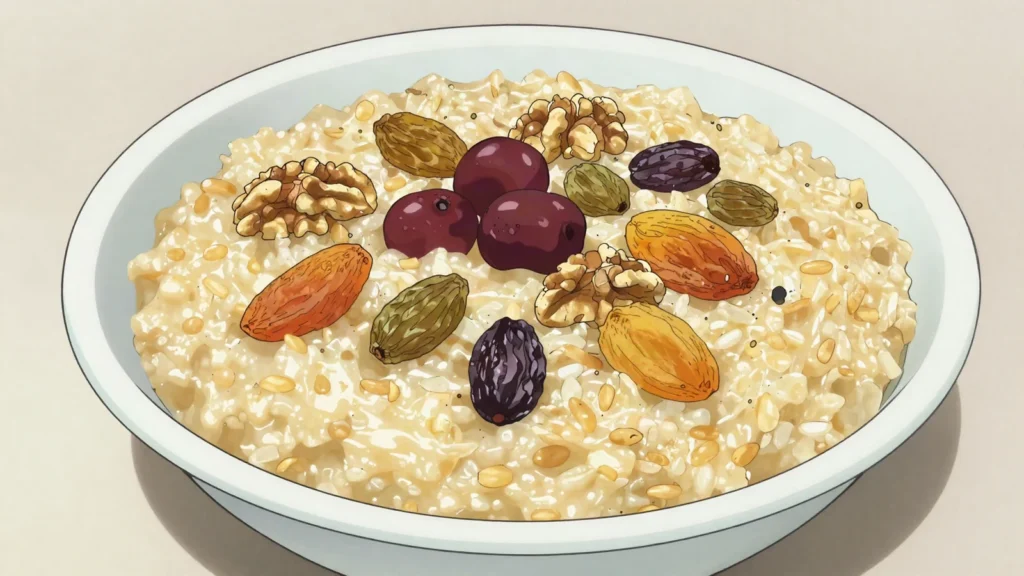
- Add the apricots, prunes and raisins for the last 20 minutes only, so they plump but keep their shape rather than dissolving.
- Stir in the sugar and cinnamon and cook 5 minutes more. Adding sugar earlier slows the softening of the wheat.
- Take the pot off the heat, stir in the rosewater and let it stand 10 minutes. It should be the consistency of thick porridge and will set further as it cools.
- Ladle into shallow bowls or one wide platter and cool to room temperature, then chill; anushabur is served cold or barely warm, never hot.
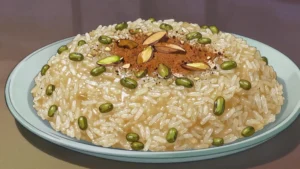
- Decorate the top with walnuts, almonds and pomegranate seeds, often in a cross or a star pattern, and dust with cinnamon just before it goes to the table.
Technique
- This is the Armenian Christmas Eve dish, eaten on 5 or 6 January after the Nativity liturgy, and it is meatless because it closes the Advent fast. It is closely related to the wheat-berry puddings of the whole region, but the Armenian version leans on apricot and rosewater.
- Use hulled wheat, not bulgur or pearl barley. Bulgur is pre-cooked and disintegrates in minutes, giving glue rather than distinct burst grains.
- It thickens dramatically as it cools. Take it off the heat looser than you think is right, or you will be serving a solid block.
Substitutions
- No dzedzadz: whole wheat berries work with an extra 30 minutes of simmering; pearl barley is the closest widely sold substitute, though the texture is smoother and less nutty.
Variations
- Some families sweeten it entirely with honey and grape molasses instead of sugar.
- A version made with skinned whole grains and served in individual glasses with a heavy layer of pomegranate is common in Yerevan restaurants.
History
Made for Armenian Christmas on 6 January; its name means sweet soup and it is shared with neighbours.
Frequently asked questions
What is Anushabur?
Anushabur is a dessert from Armenia: sweet porridge of hulled wheat with dried fruit, nuts and cinnamon. Made for Armenian Christmas on 6 January; its name means sweet soup and it is shared with neighbours.
How long does Anushabur take to make?
Anushabur takes 20 min plus overnight soaking of preparation and 2 hr of cooking. The recipe makes 8 servings. It is rated easy to make.
What can I substitute in Anushabur?
Yes, within limits. No dzedzadz: whole wheat berries work with an extra 30 minutes of simmering; pearl barley is the closest widely sold substitute, though the texture is smoother and less nutty.
What is the most important thing to get right in Anushabur?
Add the apricots, prunes and raisins for the last 20 minutes only, so they plump but keep their shape rather than dissolving.