
Ingredients
Meringue
- 4egg whites
- 200 gcaster sugar
- 150 gdesiccated coconut
- 1 tablespooncornflour
- a pinch of salt
- a few drops of lemon juice
Buttercream
- 200 gbutter, softened
- 150 gicing sugar
- 2egg yolks
- 1 teaspoonvanilla
- 2 tablespoonsrum, optional
- or 2 tablespoons strong coffee
Sometimes added
- 50 gdark chocolate, melted
- for a chocolate cream
- cocoa powder
To serve
- with coffee
- from a pastry shop counter
Directions
- Use a glass or metal bowl rather than plastic. It must be soft enough to sandwich with. Use very fresh eggs from a trusted source. Anyone pregnant or vulnerable should avoid raw egg.
- Use a small bowl for each white. Tip each clean white into the main bowl. Keep the yolks for the buttercream. Let the whites stand at room temperature. Give them about thirty minutes. Put the whites in a clean dry bowl. Add a pinch of salt and the lemon juice.
- Whip them until they hold soft peaks. Add the sugar a spoonful at a time. Keep whipping between each addition. Take several full minutes over it. Judging the meringue takes a test.
- Rub a little between your fingers. It should feel smooth rather than gritty. Fold the desiccated coconut in gently. Sift the cornflour over and fold it in. Cornflour helps the meringue hold its shape. Fold with a large metal spoon. Cut down through the middle and lift over.
- Turn the bowl steadily as you go. Stop as soon as it is combined. Line two trays with baking paper. Turn the paper over so the ink is underneath. Aim for about five centimetres across. Keep them all the very same size. They should be flat rather than domed.
- Spread each one gently with a spoon. Heat the oven to one hundred degrees. Bake them for about ninety minutes. They should stay pale throughout. Return them to the oven for twenty minutes. Turn the oven off and leave them in. Turn the oven off when they are done. Leave the oven door slightly ajar. Let them cool in the cooling oven. A slow cool prevents that entirely.
- Beat the softened butter until pale. Give it a good five minutes of beating. Sift the icing sugar over the butter. Beat it in slowly and gradually. Those lumps do not beat out again. Sift it every time without exception. Beat the egg yolks in one at a time. Add the vanilla in along with them.
- Add the rum or coffee if using. Judging the cream takes a look. Chill it briefly if it is too soft. Warm buttercream slides out of the sandwich. Cold buttercream cracks the meringue.
- Cool and spreadable is the right state. Turn one of each pair upside down. Spread or pipe buttercream onto it. Set the other disc on top of it. Press them together very gently. Press just enough to make them stick. Work slowly and expect some breakages.
- Set them on a tray in a cool place. Give them about one full hour. Set them out on a serving plate. Serve strong coffee alongside them. They keep three days in a sealed tin. Keep them somewhere cool and dry.
Technique
- Any grease stops egg whites whipping, and so does even a trace of yolk; separate each egg into a small bowl first so one broken yolk does not ruin the batch, and use glass or metal rather than plastic, which holds a film of grease in its surface that washing does not always remove.
- This is drying rather than baking: a hundred-degree oven for ninety minutes, and the discs should stay pale throughout, since any browning means the oven is too hot. Turn the oven off and leave them inside with the door ajar to cool, because sudden cooling cracks meringue.
- The buttercream contains uncooked egg yolk, which carries a small risk of salmonella; use very fresh eggs from a trusted source, or pasteurised yolks, and anyone pregnant or vulnerable should avoid raw egg or use a cooked custard base instead.
Substitutions
- Cream of tartar stands in for lemon juice as the meringue stabiliser.
- Strong coffee or melted chocolate flavour the buttercream in some versions.
Variations
- A chocolate buttercream is made alongside the vanilla one.
- Rum is added to the cream in many pastry shops.
- The meringue softens slightly against the cream, which is considered desirable.
History
A Czechoslovak confectionery classic still made in Slovak pastry shops.
Frequently asked questions
What is Laskonky?
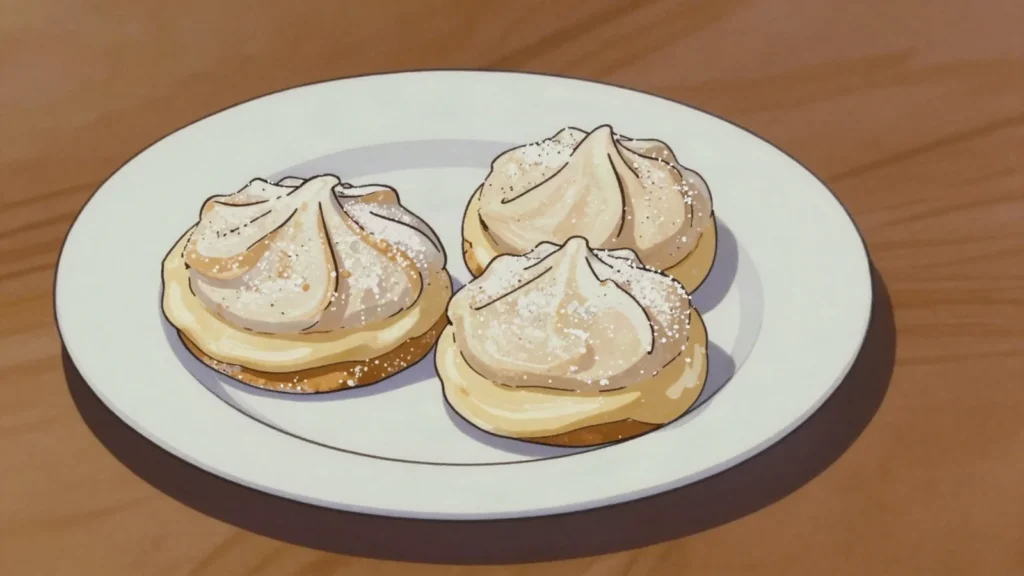
Laskonky is a dessert from Slovakia: two coconut meringue discs joined with buttercream. A Czechoslovak confectionery classic still made in Slovak pastry shops.
How long does Laskonky take to make?
Laskonky takes 30 minutes of preparation and 1 hour 30 minutes of cooking. The recipe makes about 20 filled biscuits. It is rated hard to make.
What can I substitute in Laskonky?
Yes, within limits. Cream of tartar stands in for lemon juice as the meringue stabiliser. Strong coffee or melted chocolate flavour the buttercream in some versions.
What is the most important thing to get right in Laskonky?
Use a glass or metal bowl rather than plastic. It must be soft enough to sandwich with. Use very fresh eggs from a trusted source. Anyone pregnant or vulnerable should avoid raw egg.