
Ingredients
Dough
- 500 gplain flour
- 6egg yolks
- 2 tbspsour cream
- 2 tbspsugar
- 3 tbspvodka or rectified spirit
- ½ tspsalt
- 1 tbspbutter, melted
To fry and finish
- 1 litrelard or oil
- icing sugar, to dust
Directions
- Mix the flour, salt and sugar, then work in the yolks, sour cream, melted butter and spirit to make a firm dough.
- The alcohol is functional rather than there for flavour. It inhibits gluten and evaporates in the fryer, which is what makes the ribbons blister and shatter instead of going tough.
- Now beat the dough. Slam it against the worktop repeatedly for a full 10 minutes, folding it over each time.
- Beating the dough is the traditional method and it is not optional. It develops and then breaks the gluten in a way ordinary kneading does not, and it creates the blisters faworki are judged on.
- Rest the dough for 30 minutes.
- Roll it out as thin as you can, ideally through a pasta machine on its thinnest setting.
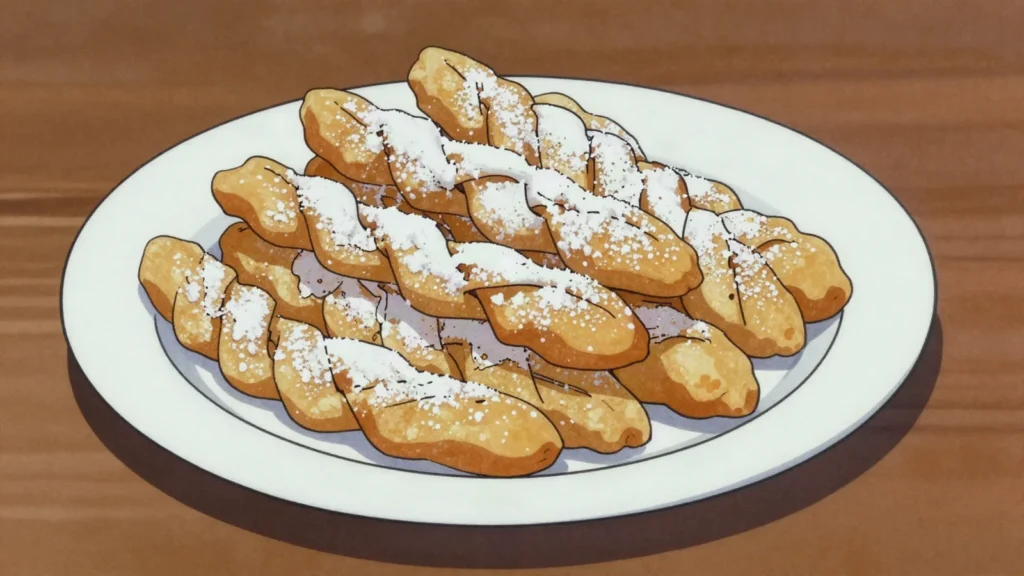
- Cut into strips about 3 cm wide and 12 cm long, then cut a slit down the centre of each and pull one end through it to make the twist.
- Heat the lard to 175°C (350°F).
- Fry in small batches for 20 to 30 seconds a side, until pale gold with blisters raised across the surface.
- They should not brown at all. Colour means overcooked, and a proper faworek is almost white with golden edges.
- Drain on a rack and dust heavily with icing sugar while barely warm.
- Eat them the same day. They are made for Fat Thursday and right through carnival in the days before Lent.
Technique
- Lard gives a cleaner, crisper result than oil and is the traditional fat.
- They are also called chrust, meaning brushwood, for the way a pile of them looks.
- The dough should be firm and quite dry. A soft one will not blister.
Substitutions
- Any neutral oil in place of lard.
- White wine vinegar in place of the spirit, which works less well but does something similar.
Variations
- Made with cream instead of sour cream for a richer ribbon.
- Cut wider and knotted rather than twisted.
- With a little lemon zest in the dough.
History
Thin strips of fried dough, twisted into a loose knot shape before frying and dusted generously with powdered sugar, documented in Polish baking for generations and closely associated with Tłusty Czwartek, or Fat Thursday, a pre-Lenten celebration during which Polish households traditionally indulge in rich, sweet, fried foods before the fasting period of Lent begins. Their light, crisp, bubbly texture, achieved through a specific thin-rolled dough recipe often enriched with a small amount of vinegar or alcohol to reduce gluten development, distinguishes faworki from denser fried pastries, and the twisted knot shape is considered essential to the traditional presentation rather than simply a decorative flourish. They remain closely tied to that specific pre-Lenten Polish celebration, though also enjoyed more broadly as a treat beyond that single occasion.
Frequently asked questions
What is Faworki?
Faworki is a dessert from Poland: crisp fried ribbons of dough dusted with icing sugar. Thin strips of fried dough, twisted into a loose knot shape before frying and dusted generously with powdered sugar, documented in Polish baking for generations and closely associated with Tłusty Czwartek, or Fat Thursday, a pre-Lenten celebration during which Polish households traditionally indulge in rich, sweet, fried foods before the fasting period of Lent begins. Their light, crisp, bubbly texture, achieved through a specific thin-rolled dough recipe often enriched with a small amount of vinegar or alcohol to reduce gluten development, distinguishes faworki from denser fried pastries, and the twisted knot shape is considered essential to the traditional presentation rather than simply a decorative flourish. They remain closely tied to that specific pre-Lenten Polish celebration, though also enjoyed more broadly as a treat beyond that single occasion.
How long does Faworki take to make?
Faworki takes 40 min plus 30 min resting of preparation and 25 min of cooking. The recipe makes 50 ribbons. It is rated medium to make.
What can I substitute in Faworki?
Yes, within limits. Any neutral oil in place of lard. White wine vinegar in place of the spirit, which works less well but does something similar.
What is the most important thing to get right in Faworki?
The alcohol is functional rather than there for flavour. It inhibits gluten and evaporates in the fryer, which is what makes the ribbons blister and shatter instead of going tough.