
Ingredients
Meat
- 1.2 kglamb neck or middle neck chops, on the bone
- seasoned flour
- 2lamb kidneys, cored and sliced, optional
Base
- 3onions, thickly sliced
- 2carrots, sliced
- 50 gbutter or dripping
- 2 tbspplain flour
- 600 mllamb or beef stock
- 2 tspWorcestershire sauce
- 2bay leaves
- 1 tspthyme
- salt
- black pepper
Top
- 900 gfloury potatoes, sliced 3 mm thick
- 50 gbutter, melted
To serve
- pickled red cabbage
Directions
- Use neck chops on the bone rather than diced shoulder.
- The bone and the connective tissue are what give the gravy its body over three hours. Lean diced lamb gives a thin, watery hotpot.
- Toss the chops in seasoned flour and brown them hard in the butter, then set them aside.
- Fry the onions and carrots in the same pan until softened and lightly coloured.
- Stir in the flour, cook it for a minute, then add the stock gradually, whisking, along with the Worcestershire sauce, bay and thyme.
- Layer the chops and vegetables in a deep pot, tucking the kidney slices among them if using.
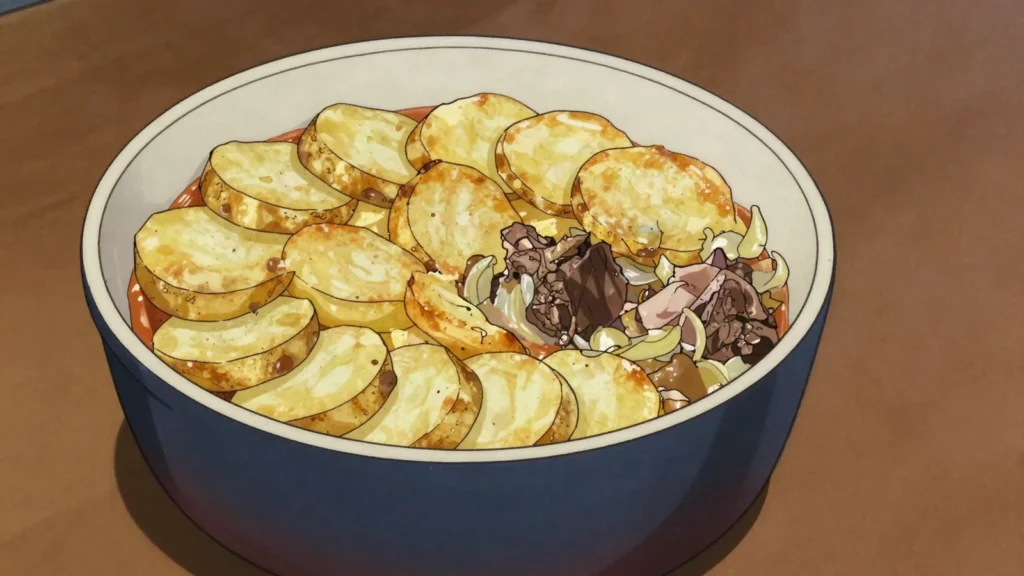
- The tall deep pot is where the name comes from and it matters: a wide shallow dish gives too much potato surface and not enough depth of stew.
- Pour the gravy over so it comes about three quarters of the way up, no higher.
- Do not cover the meat completely. The potatoes on top must sit above the liquid to crisp, and a flooded pot boils them into mush.
- Now the potatoes. Slice them thinly and arrange them over the top in overlapping rows, like roof tiles.
- Overlap them deliberately and neatly. The overlapping layer is what seals the stew below and turns crisp above, and a random scattering does neither.
- Brush the top generously with melted butter and season it.
- Cover and bake at 160°C (320°F) for 2 hours.
- Take the lid off and bake for a further 45 minutes to an hour, until the potatoes are deep golden and crisp at the edges.
- Covered first, uncovered last. That order gives you both a tender stew and a browned crust, and doing it uncovered throughout dries the whole thing out.
- Let it stand 10 minutes before serving.
- Serve with pickled red cabbage, which is the traditional and slightly startling accompaniment.
- It was a working-class dish designed to be left in a low oven all day, and the tall pot went to the baker’s oven in households without one.
- Oysters were once added as a cheap filler, which says a great deal about how oyster prices have changed.
Technique
- Middle neck or scrag end is the right cut and it is cheap.
- The pickled red cabbage is not a garnish; the sharpness cuts the fat and it belongs on the plate.
- It is better reheated the next day, though the potato crust suffers.
Substitutions
- Lamb shoulder chops, or shoulder on the bone.
- Beef dripping in place of butter, which is more traditional.
Variations
- With oysters, as it was made in the nineteenth century.
- With black pudding among the layers.
- Made with mutton, which needs an extra hour.
History
A dish of the Lancashire cotton towns, where a covered pot could sit in a cooling oven while whole families worked the mills.
Frequently asked questions
What is Lancashire hotpot?
Lancashire hotpot is a main from United Kingdom: lamb and onion casserole under sliced potatoes, baked slowly in a tall pot. A dish of the Lancashire cotton towns, where a covered pot could sit in a cooling oven while whole families worked the mills.
How long does Lancashire hotpot take to make?
Lancashire hotpot takes 25 min of preparation and 3 hr of cooking. The recipe makes 6 servings. It is rated easy to make.
What can I substitute in Lancashire hotpot?
Yes, within limits. Lamb shoulder chops, or shoulder on the bone. Beef dripping in place of butter, which is more traditional.
What is the most important thing to get right in Lancashire hotpot?
Do not cover the meat completely. The potatoes on top must sit above the liquid to crisp, and a flooded pot boils them into mush.