
Ingredients
Noodles and protein
- 400 gfresh flat rice noodles (kway teow), loosened into separate strands
- 8raw prawns, peeled and deveined
- 12blood cockles (see hum), blanched 20 seconds and shelled
- 2Chinese sausages (lap cheong), thinly sliced on the bias
- 2eggs
- 80 gbean sprouts, tails picked
- 1 handfulgarlic chives, cut into 4 cm lengths
Fat and aromatics
- 3 tbsprendered pork lard, plus 2 tbsp crisp lard croutons
- 4garlic cloves, finely chopped
- 1 tbspsambal or chilli paste
Sauce, mixed together
- 2 tbsplight soy sauce
- 1 tbspdark soy sauce (thick caramel soy)
- 1 tspfish sauce
- 1 tspsugar
- ½ tspwhite pepper
To serve
- Sliced red chilli
- Lime wedges
Directions
- Loosen the noodles by hand under warm running water if they are fridge-cold and clumped, then drain very well. Broken noodles are the mark of an unskilled hand, so separate them gently.
- Heat a carbon-steel wok over the fiercest heat you have until it smokes and a bead of water vanishes on contact. Char kway teow is cooked for one or two portions only; more than that and the wok cools and the dish steams.
- Add the lard and swirl to coat. Fry the garlic for 10 seconds until it just turns pale gold, then add the lap cheong and fry 20 seconds until its fat runs and perfumes the oil.
- Add the prawns and stir-fry 30 seconds until they turn opaque at the edges, then push everything to the side of the wok.
- Add the noodles and the sauce mixture, and toss with a wok spatula in long scooping motions for 45–60 seconds. Press the noodles flat against the wok between tosses so they catch and blister; this is where wok hei comes from.
- Stir in the sambal, push everything up one side, add a spoon of lard to the bare metal and crack in the eggs. Let them set for 15 seconds, break the yolks, then fold the noodles down over them.
- Add the cockles, bean sprouts and garlic chives and toss hard for 20–30 seconds only. The sprouts must stay crunchy and the cockles must stay plump and barely warmed through.
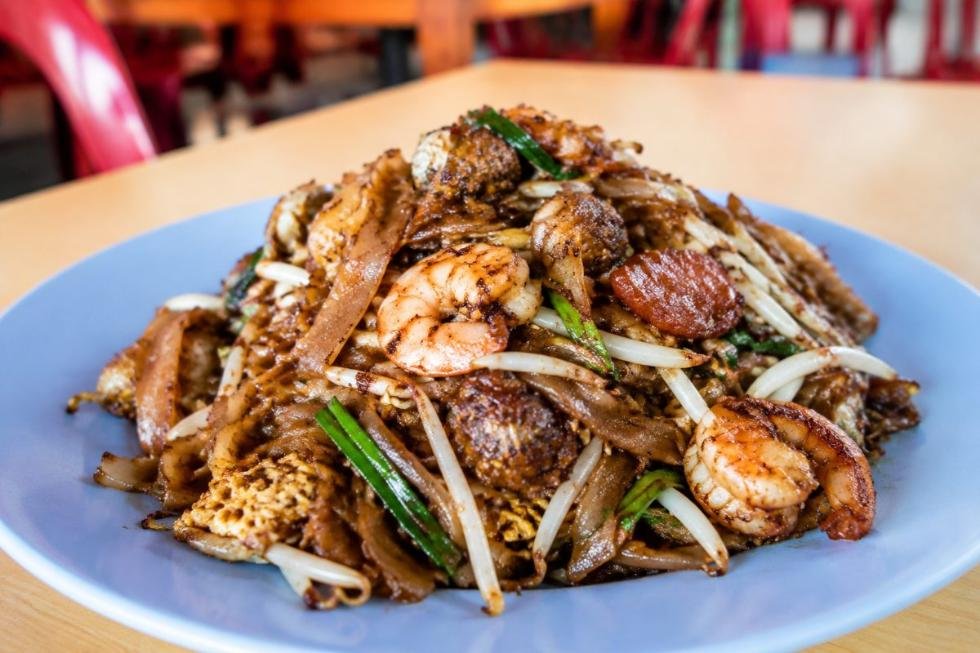
- Taste and correct with a dash more soy or sugar. The noodles should be glossy, dark in patches from the caramel soy, smoky, and not at all wet in the base of the wok.
- Slide onto a plate immediately, scatter with crisp lard croutons and sliced chilli, and eat within two minutes with lime alongside. Then wipe the wok, reheat it, and cook the second plate.
Technique
- Wok hei, breath of the wok, is a real physical effect: droplets of fat vaporising and combusting above 200°C (400°F), plus Maillard browning on the noodles. It cannot be produced in a crowded pan on a domestic burner without help, which is why one portion at a time is the rule.
- Lard is not optional in Penang. Vegetable oil gives a flatter, cleaner taste and no lard croutons, which are half the pleasure.
- Cockles are added at the very end and are barely cooked, which is traditional and is also a real food-safety consideration; blanch them briefly first and buy them from a source you trust.
- Fresh, never-refrigerated kway teow is soft and pliable and comes apart in the wok. Dried or over-chilled noodles break and turn gluey.
Substitutions
- No blood cockles: use small clams, briefly steamed and shelled, or leave them out and add extra prawns.
- Lap cheong can be replaced with any sweet cured sausage, or omitted.
- If lard is impossible, use groundnut oil and add 1 tsp sesame oil at the end for aroma, and accept that it is not the Penang original.
Variations
- Penang char kway teow, the reference version, with duck egg and a heavier hand with cockles.
- Ipoh style, fried paler with less dark soy.
- A halal version with beef slices and no lard, common at Malay-run stalls.
History
Flat rice noodles, stir-fried at very high heat with soy sauce, egg, bean sprout, Chinese sausage and often prawn or cockle, documented across Malaysia with roots tracing to Chinese immigrant communities, particularly Teochew and Hokkien laborers who settled in Malaysia’s Penang region during the 1800s and 1900s. Its defining cooking technique, requiring an extremely hot wok to achieve a distinctive smoky flavour called wok hei, or breath of the wok, is considered essential by Malaysian cooks to a properly made char kway teow, with the dish’s quality often judged specifically by how well a cook has achieved that particular smoky char. Char kway teow remains one of Malaysia’s most iconic street foods, especially closely associated with the city of Penang.
Frequently asked questions
What is Char Kway Teow?
Char Kway Teow is a street food from Malaysia: flat noodles wok-charred with prawns, cockles, egg and Chinese sausage. Flat rice noodles, stir-fried at very high heat with soy sauce, egg, bean sprout, Chinese sausage and often prawn or cockle, documented across Malaysia with roots tracing to Chinese immigrant communities, particularly Teochew and Hokkien laborers who settled in Malaysia’s Penang region during the 1800s and 1900s. Its defining cooking technique, requiring an extremely hot wok to achieve a distinctive smoky flavour called wok hei, or breath of the wok, is considered essential by Malaysian cooks to a properly made char kway teow, with the dish’s quality often judged specifically by how well a cook has achieved that particular smoky char. Char kway teow remains one of Malaysia’s most iconic street foods, especially closely associated with the city of Penang.
How long does Char Kway Teow take to make?
Char Kway Teow takes 25 min of preparation and 10 min of cooking. The recipe makes 2 servings, cooked one plate at a time. It is rated hard to make.
What can I substitute in Char Kway Teow?
Yes, within limits. No blood cockles: use small clams, briefly steamed and shelled, or leave them out and add extra prawns. Lap cheong can be replaced with any sweet cured sausage, or omitted. If lard is impossible, use groundnut oil and add 1 tsp sesame oil at the end for aroma, and accept that it is not the Penang original.
What is the most important thing to get right in Char Kway Teow?
Loosen the noodles by hand under warm running water if they are fridge-cold and clumped, then drain very well. Broken noodles are the mark of an unskilled hand, so separate them gently.