
Ingredients
Broth
- 1 kgpork or beef bones
- 500 gbeef shin or pork belly
- 3 litreswater
- 1onion, charred
- 4cm galangal
- 3 stalkslemongrass, bruised
- 6kaffir lime leaves
- 1cinnamon stick
- 3star anise
- 1 tspcoriander seed
- 1 tspblack peppercorns
Seasoning
- 4 tbspfish sauce
- 2 tbspdark soy sauce
- 2 tbsppalm sugar
- 3 tbsppreserved bean curd, yellow
- 2 tbspChinese five spice
- 2 tbspShaoxing wine or rice wine
Blood
- 200 mlfresh pig’s or beef blood, food grade, with 1 tbsp vinegar stirred in
To serve
- 300 gthin rice noodles, sen lek
- sliced beef or pork
- meatballs
- beef offal, boiled
- beansprouts
- morning glory, blanched
- Thai basil
- crushed peanuts
- crisp pork rind
- chilli flakes, vinegar, sugar and fish sauce, at the table
Directions
- Use it fresh, within a day or two, and keep it refrigerated until the moment it goes in. Strain it through a sieve before use, since a clot that goes in stays as a rubbery lump. Now the broth itself, which takes the time.
- Keep it at a bare simmer rather than a boil, which keeps the broth clean-tasting. Skim the surface diligently for the first half hour. Season with fish sauce, dark soy and palm sugar and taste as you go. It should be intensely savoury, faintly sweet, and much stronger than a broth you would drink on its own.
- Take the pot off the boil and let it drop to a bare simmer. Now whisk the strained blood into a ladleful of hot broth first, to temper it.
- Pour the tempered mixture back into the pot slowly while stirring constantly. Never let it boil after the blood is in, which curdles it into gritty specks and the broth cannot be recovered.
- Keep stirring for two or three minutes as it thickens and darkens. Now the consistency it should reach. Cook it gently for a further ten minutes so the raw blood taste goes. Blanch them to order rather than in advance, since they turn soft and gluey within minutes.
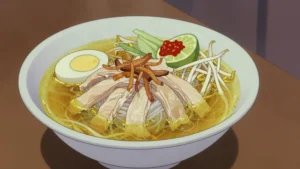
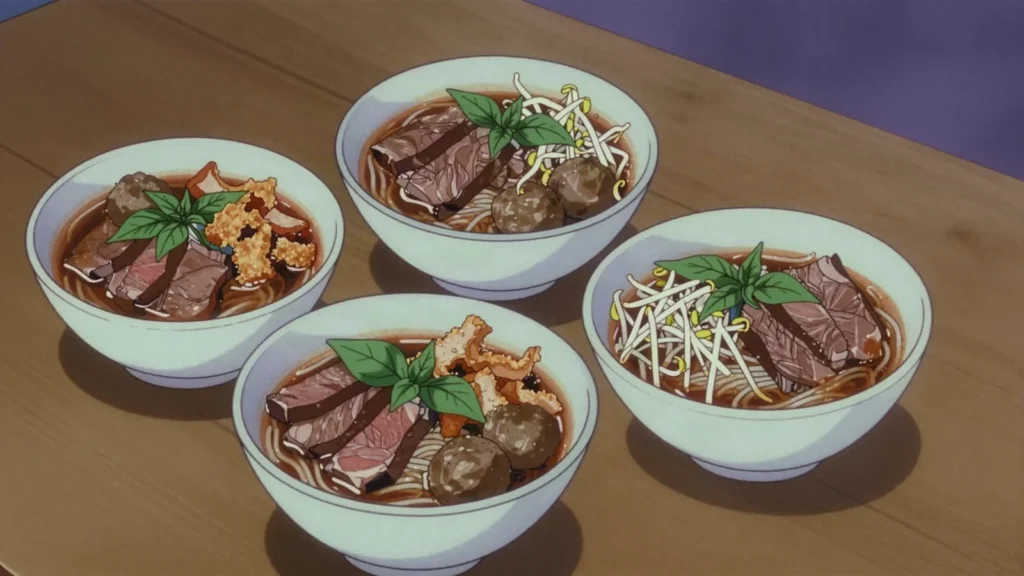
- Poach thin slices of beef or pork in the broth for a few seconds only. Put a small nest of noodles in the bowl with the meat, offal and meatballs. Add blanched morning glory and beansprouts. Ladle the hot broth over, filling the bowl only part way. Keep the portions genuinely small, which is the point of the dish.
- Scatter crushed peanuts, crisp pork rind and Thai basil over the top. The crisp pork rind gives a crunch against the thick broth and it is standard. Serve the condiment set of chilli flakes, vinegar, sugar and fish sauce so people season their own bowl.
Technique
- The small bowls come from serving across the gap between a boat and the bank.
- The blood is what thickens and darkens the broth, not a garnish.
- Never boil the broth once the blood is in, or it curdles.
Substitutions
- The clear version, nam sai, made without blood.
- Any thin rice noodle in place of sen lek.
Variations
- Made with beef rather than pork, or both.
- The clear nam sai version.
- With extra offal, which is traditional.
History
A rich, dark noodle soup, traditionally made with pork or beef in a broth flavoured by pig’s blood, warming spices and fish sauce, documented across Thailand with roots tracing to vendors who once sold the soup directly from small boats navigating the canals of Ayutthaya and Bangkok, ladling out small, intensely flavoured bowls to customers along the waterways. Its traditionally small serving size, historically just a few bites per bowl, reflects that specific boat-vending origin, since customers on land could easily order and finish several small bowls in succession from passing vendors, each one a burst of concentrated flavour. Boat noodles remain a beloved Thai dish, particularly associated with Bangkok, where dedicated boat noodle restaurants continue that tradition of small, intensely flavourful servings.
Frequently asked questions
What is Boat Noodles?
Boat Noodles is a soup & stew from Thailand: intense pork or beef noodle soup enriched with blood, in small bowls. A rich, dark noodle soup, traditionally made with pork or beef in a broth flavoured by pig’s blood, warming spices and fish sauce, documented across Thailand with roots tracing to vendors who once sold the soup directly from small boats navigating the canals of Ayutthaya and Bangkok, ladling out small, intensely flavoured bowls to customers along the waterways. Its traditionally small serving size, historically just a few bites per bowl, reflects that specific boat-vending origin, since customers on land could easily order and finish several small bowls in succession from passing vendors, each one a burst of concentrated flavour. Boat noodles remain a beloved Thai dish, particularly associated with Bangkok, where dedicated boat noodle restaurants continue that tradition of small, intensely flavourful servings.
How long does Boat Noodles take to make?
Boat Noodles takes 40 min of preparation and 2 hr 30 min of cooking. The recipe makes 6 small bowls. It is rated hard to make.
What can I substitute in Boat Noodles?
Yes, within limits. The clear version, nam sai, made without blood. Any thin rice noodle in place of sen lek.
What is the most important thing to get right in Boat Noodles?
Keep it at a bare simmer rather than a boil, which keeps the broth clean-tasting. Skim the surface diligently for the first half hour. Season with fish sauce, dark soy and palm sugar and taste as you go. It should be intensely savoury, faintly sweet, and much stronger than a broth you would drink on its own.