
Ingredients
The batter
- 300 grice flour
- not glutinous rice flour
- or 250 g raw rice, soaked and ground
- 100 gplain flour
- optional, for structure
- 400 mlthick coconut milk
- about 150 ml warm water
- 120 gsugar
- or to taste
- half a teaspoon salt
The raising
- 7 gsachet fast-action dried yeast
- or 3 tablespoons batter from a previous batch
- half a teaspoon ground cardamom
- optional
For the pan
- oil, or coconut oil
- for greasing the wells
Equipment
- a dimpled pan with round wells
- an aebleskiver or takoyaki pan
- or a paniyaram pan
- or small blini pans
To serve
- hot, on their own
- with sweet tea or coffee
Directions
- Use plain rice flour, not glutinous. Check the label. Raw rice is soaked and ground wet. Whisk the rice flour and any plain flour together. Add the sugar and salt. Add the cardamom if using. Whisk in the coconut milk gradually.
- Add warm water to loosen it. Whisk until completely smooth. Warm the water until just warm. It must not be hot. Heat kills yeast.
- Add the yeast to the warm liquid. It should be a thick pourable batter. Cover it and leave it somewhere warm. Give it four hours.
- Stir it gently before using. Left too long it goes sharply sour. Heat it over a medium heat. Give it a full five minutes.
- Brush each well generously with oil. A dry well gives a pale soft cake. Stir the batter. Ladle it into each well. Fill each about two thirds.
- Cook them over a medium heat. Give them three or four minutes. Lift and flip the cake in one movement.
- Turn it when the edges are set and browned. The top should still be soft. Adjust the heat and carry on. Serve them hot, within minutes. It is otherwise vegan.
Technique
- The atlas holds entries for zitumbuwa in Malawi and vitumbuwa in Zambia, and those are banana fritters — deep-fried dough balls, a different food sharing a related name. These are the Swahili coastal rice flour and coconut cakes cooked in a dimpled pan. The atlas records that plainly rather than conflating them.
- Use plain rice flour, not glutinous, which gives a sticky chewy cake and is sold in near-identical bags.
- Ferment the batter four to six hours. That gives both the lift and the faint sourness that plays against the sugar — a baking powder version rises but does not sour, and is a quicker, different thing. Left too long it goes sharply sour and loses its lift.
- Grease the wells generously and re-grease for every batch. The oil is what crisps the edges; a dry well gives a pale soft cake that sticks.
- Fill each well about two thirds. The batter rises as it cooks and a full well overflows.
- Turn when the edges are set and browned but the top is still soft, sliding a skewer down the side and flipping in one movement. Too early and the cake tears, too late and you get a hard flat side — watch the edges rather than the clock.
- Keep the batter thicker than a pancake batter, dropping heavily from a ladle.
- The dish needs a pan with wells. An aebleskiver, takoyaki or paniyaram pan all substitute; a flat pan gives a pancake rather than a vitumbua, and the rounded shape is the whole thing.
- The first batch is usually disappointing while the pan finds its temperature. Adjust and carry on.
- Cardamom is characteristic of Swahili coastal baking, arriving through Indian Ocean trade.
- Soaking and grinding raw rice with the coconut milk is the traditional route and gives a better texture; rice flour is the practical one.
- Swahili is one of the national languages of the Congo, spoken in the east, which is how a Swahili coastal cake comes to be eaten there.
Substitutions
- Soaked and ground raw rice replaces rice flour and gives a better texture.
- A spoonful of batter from a previous batch replaces yeast and is traditional.
- Baking powder replaces yeast for a quicker version without the sourness.
- Plain flour can be left out entirely for a gluten-free cake.
- Cardamom is optional though characteristic.
- Tinned coconut milk replaces fresh with no real loss.
Variations
- Vitumbua along the Swahili coast in Tanzania and Kenya are the same cake.
- Zitumbuwa in Malawi and vitumbuwa in Zambia are banana fritters sharing a related name.
- Bánh khọt in Vietnam uses the same dimpled pan with a savoury topping.
- Paniyaram in south India is the savoury or sweet relative.
- Mandazi and mahamri are the other Swahili coastal fried sweets.
- A version with grated coconut in the batter is made in some households.
History
Small, slightly sweet rice-flour cakes, fried until golden and often flavoured with coconut and cardamom, developed along the East African Swahili coast and its surrounding trade-influenced regions, reflecting historic Indian Ocean trade contact that carried rice, coconut and Indian and Arab spicing influences into East African coastal and inland cooking over many centuries. Their light, slightly spongy texture comes from a fermented rice batter, similar in underlying principle to other fermented rice cake traditions found across parts of South and Southeast Asia with which East Africa maintained long trade contact. Vitumbua are typically eaten as a breakfast food or snack, sold hot from street vendors particularly in the morning across the East African coastal and Great Lakes regions where the dish is found.
Frequently asked questions
What is Vitumbua?
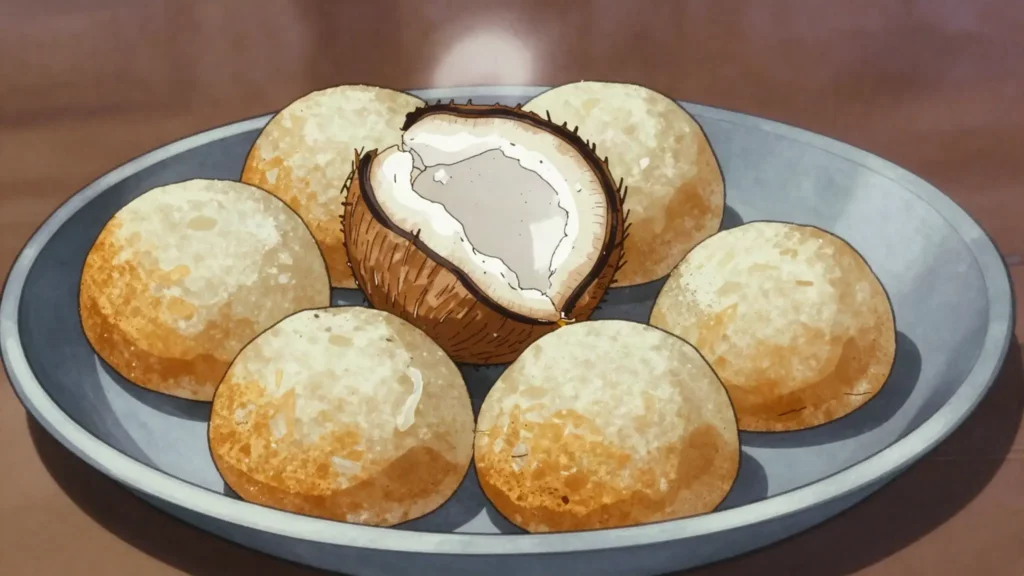
Vitumbua is a snack from DR Congo: small fried cakes of rice flour and coconut milk, crisp edged and spongy inside. Small, slightly sweet rice-flour cakes, fried until golden and often flavoured with coconut and cardamom, developed along the East African Swahili coast and its surrounding trade-influenced regions, reflecting historic Indian Ocean trade contact that carried rice, coconut and Indian and Arab spicing influences into East African coastal and inland cooking over many centuries. Their light, slightly spongy texture comes from a fermented rice batter, similar in underlying principle to other fermented rice cake traditions found across parts of South and Southeast Asia with which East Africa maintained long trade contact. Vitumbua are typically eaten as a breakfast food or snack, sold hot from street vendors particularly in the morning across the East African coastal and Great Lakes regions where the dish is found.
How long does Vitumbua take to make?
Vitumbua takes 20 minutes plus 4 hours fermenting of preparation and 30 minutes of cooking. The recipe makes makes about 20. It is rated medium to make.
What can I substitute in Vitumbua?
Yes, within limits. Soaked and ground raw rice replaces rice flour and gives a better texture. A spoonful of batter from a previous batch replaces yeast and is traditional. Baking powder replaces yeast for a quicker version without the sourness. Plain flour can be left out entirely for a gluten-free cake. Cardamom is optional though characteristic. Tinned coconut milk replaces fresh with no real loss.
What is the most important thing to get right in Vitumbua?
Add warm water to loosen it. Whisk until completely smooth. Warm the water until just warm. It must not be hot. Heat kills yeast.