
Ingredients
The marinade
- 600 gpork shoulder
- diced
- 400 gveal shoulder
- diced
- 300 mlMoselle Riesling
- 2shallots, chopped
- 3garlic cloves, crushed
- 2bay leaves
- a few sprigs thyme
- 10juniper berries, crushed
The forcemeat
- 200 gpork fat or belly
- minced
- 2eggs
- 3 tablespoonsbrandy
- 2 teaspoonssalt
- 2 teaspoonsblack pepper
- 1 teaspoonground allspice
- chopped parsley
The pastry
- 1 kgpuff pastry
- or shortcrust
- 1egg, beaten
- to glaze
The jelly
- 400 mlstrong chicken or veal stock
- 150 mlRiesling
- 12 ggelatine leaves
- or 2 sachets powder
Directions
- Steam escapes through it as it bakes. It is served and eaten entirely cold. Cool it fast and keep it cold. Take it out only in order to serve it. The filling must be cooked right through. Check it with a meat thermometer. Do not guess at all with a large loaf.
- Cover it with foil once it colours. Then keep baking until it is done. Discard it if it smells at all off. Discard it if the jelly turns cloudy. Do not take chances with set meat. Dice the pork and veal into small pieces. Dice it about one centimetre across. Put the meat in a bowl with the wine.
- Add the shallot, garlic and herbs. Add the crushed juniper berries. Crush the berries lightly first. A dozen berries is quite enough here. Drain the meat and keep the marinade. Strain out the solids from it. It must boil before it is used.
- Mince the pork fat or the belly. The fat keeps the terrine moist. Mix the drained meat with the minced fat. Add the eggs, brandy and seasoning. Add the parsley and the allspice. Cold food needs more salt than hot. Season it more heavily than seems right. It will taste correct once cold.
- Fry a small spoonful in a pan. Taste it and adjust the seasoning. It takes two minutes and is worth it. Roll the pastry out on a floured surface. Roll it about five millimetres thick. It must hold a heavy wet filling.
- Keep it even across the sheet. Line a loaf tin with the pastry. Leave plenty overhanging the sides. Press it into the corners properly. Do not stretch it over the tin. Pack the meat mixture into the pastry. Press it down firmly as you fill. Fill it right up to the very top. Fold the overhanging pastry over. Lay a pastry lid on top of that. Brush the edges with beaten egg.
- Press them firmly together all round. Crimp it with a fork or your fingers. Cut a hole in the centre of the lid. Make it about two centimetres across. Steam escapes through it as it bakes. It must be a real hole rather than a slit.
- Brush the whole top with beaten egg. Egg gives a deep golden shine. Brush it on thinly and evenly. Bake it at two hundred degrees first. Give it about twenty minutes there.
- Reduce the oven to one hundred and sixty. Bake it for about an hour more. The filling must cook right through. Cover it with foil if it browns early. It should read seventy-five degrees. Bake it longer if it reads lower. Do not guess at all with a large loaf.
- Let the whole loaf cool completely. Hot jelly poured onto hot meat will not set. Boil the strained marinade first. It must boil to be entirely safe. Let it bubble for a full minute. Add the stock and the fresh Riesling.
- Warm all of it through gently. That keeps the Riesling character bright. Soak the gelatine leaves in cold water. Give them about five full minutes. Squeeze out the excess water after. Then stir them into the warm liquid. Warm liquid dissolves it perfectly. Stir until no lumps remain at all. Let the jelly cool until barely warm. Hot jelly melts into the meat.
- Pour the jelly through the chimney. Use a small funnel to pour it. Pour it in slowly and in stages. Let each addition settle first. It takes more than seems possible. Keep pouring until it will take no more. Refrigerate it until fully set. Slice it thickly with a sharp knife. Use a very sharp knife for it. Serve it cold on a flat plate. It keeps four days refrigerated.
Technique
- This is cooked meat set in jelly and eaten cold, so it must be refrigerated throughout — cool it fast, keep it cold and take it out only to serve. It keeps about four days; discard it if it smells off or the jelly turns cloudy. The filling must also reach seventy-five degrees at the centre, checked with a thermometer pushed through the chimney rather than guessed at, and the pastry will brown long before a thick loaf is heated through, so cover it with foil and keep baking.
- Cut a real hole rather than a slit in the pastry lid, about two centimetres across, and keep it open with a paper or foil funnel: steam escapes through it during baking and the jelly goes in through it afterwards. It is functional rather than decorative — the meat shrinks as it cooks and the gap left under the crust would collapse when sliced if the jelly did not fill and support it.
- Boil the strained marinade for a full minute before it goes into the jelly, since it has touched raw meat, and add fresh Riesling alongside it since the boiled marinade alone tastes flat. Stir the soaked gelatine into warm rather than boiling liquid, which destroys its setting power.
Substitutions
- Any dry crisp white wine stands in for Moselle Riesling — the acidity is what matters, and a sweet wine throws the balance off entirely.
- Shortcrust stands in for puff pastry; roll either about five millimetres thick, since it must hold a heavy wet filling and thin pastry splits in the oven.
Variations
- Season the forcemeat more heavily than seems right, since cold food needs more salt than hot and it will taste correct once chilled; fry one spoonful to taste it, remembering it should taste over-seasoned at that point.
- Let the baked loaf go completely cold, at least three hours, before the jelly goes in — hot jelly on hot meat will not set, and it melts into the meat and softens the pastry. Pour it cool but still liquid, slowly and in stages, refrigerating between additions since it absorbs more once partly set.
- Keep the fat in the forcemeat, since it is what keeps the terrine moist and a lean one bakes dry and crumbly.
History
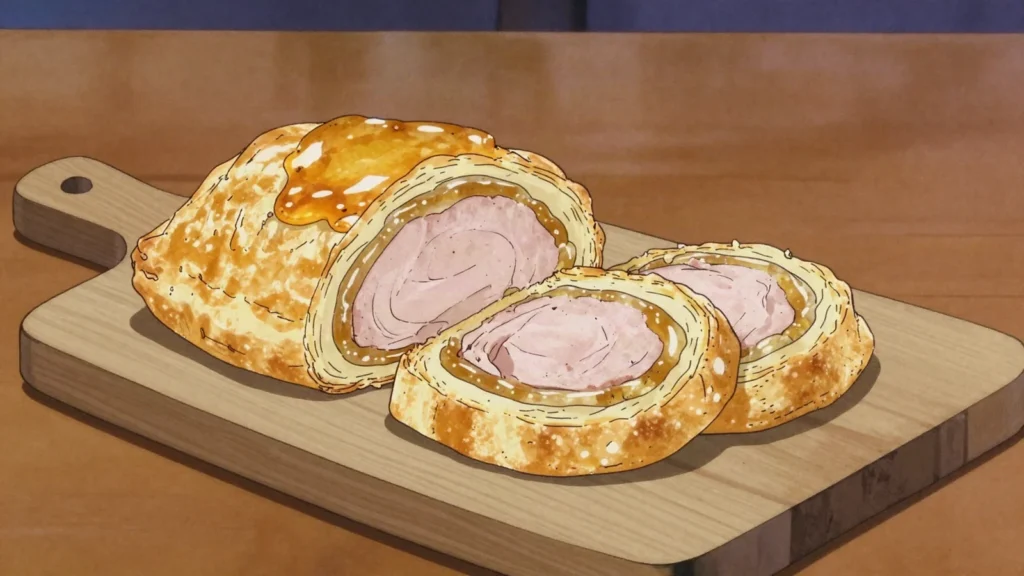
Pork and veal pastry set in a jelly made with Moselle Riesling, a speciality of the wine villages served cold in slices.
Frequently asked questions
What is Rieslingspaschtéit?
Rieslingspaschtéit is a snack from Luxembourg: puff-pastry pork terrine loaf set with Riesling jelly. Pork and veal pastry set in a jelly made with Moselle Riesling, a speciality of the wine villages served cold in slices.
How long does Rieslingspaschtéit take to make?
Rieslingspaschtéit takes 1 hour 30 minutes plus chilling of preparation and 1 hour 30 minutes of cooking. The recipe makes serves 10. It is rated hard to make.
What can I substitute in Rieslingspaschtéit?
Yes, within limits. Any dry crisp white wine stands in for Moselle Riesling — the acidity is what matters, and a sweet wine throws the balance off entirely. Shortcrust stands in for puff pastry; roll either about five millimetres thick, since it must hold a heavy wet filling and thin pastry splits in the oven.
What is the most important thing to get right in Rieslingspaschtéit?
Steam escapes through it as it bakes. It is served and eaten entirely cold. Cool it fast and keep it cold. Take it out only in order to serve it. The filling must be cooked right through. Check it with a meat thermometer. Do not guess at all with a large loaf.