
Ingredients
Leaves and shoots, choose several
- pegaga, pennywort leaves
- ulam raja, wild cosmos shoots
- pucuk gajus, young cashew shoots
- daun kadok, wild betel leaves
- daun selom, water celery
- kemangi, lemon basil
Vegetables
- kacang botol, winged beans, sliced
- cucumber, in batons
- long beans, cut short
- petai, stink beans, optional
- young mango or ambarella, sliced
Sambal belacan
- 6red chillies
- 2bird’s eye chillies
- 1 tablespoonbelacan, toasted shrimp paste
- 1 teaspoonsugar
- 1/2 teaspoonsalt
- juice of 2 limes
To serve
- steamed white rice
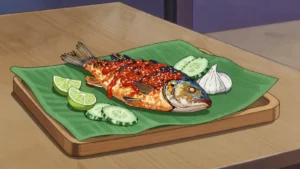
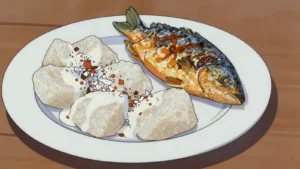
- grilled fish or ikan bilis
Directions
- Fill a large bowl with cold water. Lift them out rather than pouring the water off. Repeat with fresh water two or three times. The last water should be completely clear.
- Drain everything well in a colander. Pat the leaves dry with a clean cloth. Wrap a piece in foil and toast it in a dry pan.
- Toast it for two minutes on each side. Pounding the sambal is done in a mortar. Put the chillies in the mortar with the salt. Pound them into a rough paste. Add the toasted belacan and pound it in.
- Add the sugar and keep pounding. The paste should be coarse rather than smooth. Squeeze in the lime juice and stir it through.
- Taste it and balance the salt, sour and heat. It should be fiercely hot and strongly savoury.
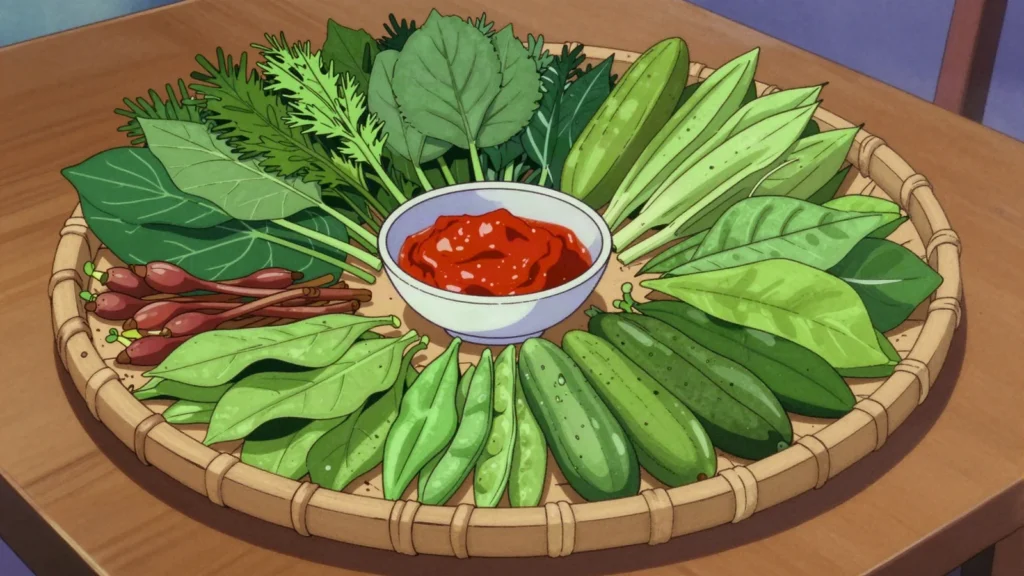
- Pile the leaves loosely on a large plate or a banana leaf. Keep each kind in its own group. Lay the sliced vegetables around them.
- Set the sambal in a small bowl in the middle. Do not dress or toss anything.
Technique
- Ulam is documented as a longstanding Malay eating practice and appears across Malaysia, Brunei and parts of Indonesia.
- The particular plants used vary enormously by region and by what is growing at the time.
Substitutions
- Watercress, rocket and Thai basil give some of the same bitter and aromatic range where the traditional greens are unavailable.
- Cucumber and long beans are the easiest components to find anywhere.
Variations
- Sambal belacan is the standard dip, but budu or cincalok are used in some regions.
- Some households blanch the winged beans and long beans briefly.
- Ulam is also served alongside nasi kerabu and other rice dishes as a fixed accompaniment.
History
An old Malay way of eating that made medicinal herbs part of everyday meals; pegaga and cashew shoots are typical.
Frequently asked questions
What is Ulam?
Ulam is a salad & side from Malaysia: platter of raw jungle leaves and shoots eaten with sambal and rice. An old Malay way of eating that made medicinal herbs part of everyday meals; pegaga and cashew shoots are typical.
How long does Ulam take to make?
Ulam takes 30 minutes of preparation and none of cooking. The recipe makes serves 6 as a side. It is rated easy to make.
What can I substitute in Ulam?
Yes, within limits. Watercress, rocket and Thai basil give some of the same bitter and aromatic range where the traditional greens are unavailable. Cucumber and long beans are the easiest components to find anywhere.
What is the most important thing to get right in Ulam?
Fill a large bowl with cold water. Lift them out rather than pouring the water off. Repeat with fresh water two or three times. The last water should be completely clear.