
Ingredients
The tubers
- 1 kgwater lily tubers
- tswii, cleaned and peeled
- cut into chunks
- see the harvesting notes
- or 1 kg sweet potato or taro
- as a substitute
The beans or maize
- 300 gdried cowpeas
- soaked overnight
- or 300 g dried maize kernels
- soaked overnight
- or a mixture of both
For cooking
- about 2 litres water
- 1 teaspoonsalt
- or to taste
Sometimes added
- a knob of butter
- or a little oil
- a splash of milk
- a little sugar
- for a sweeter version
To serve
- warm, in a bowl
- with sour milk
- or on its own
- alongside grilled fish or meat
Directions
- Wash them very thoroughly indeed. Peel off the outer skin with a knife. Cut the peeled tubers into chunks. Some cooks soak them for an hour or two. Cover them generously with cold water.
- Drain and discard the soaking water. There is a safety point about dried beans. Put them in a large heavy pot. Cover them with plenty of fresh water. Bring them to a full rolling boil.
- Boil hard for ten minutes uncovered. Skim off any foam that rises up. Simmer cowpeas for about forty-five minutes. Simmer maize for two hours or more. They should be soft with no chalky centre.
- Top up with boiling water as needed. Never add cold water to cooking pulses. Add more water if the pot is dry. The tubers should become completely soft.
- Use a wooden spoon or a pounding stick. Mash it against the side of the pot. Do not make it completely smooth.
- Add salt to taste at this stage. Add a knob of butter if you have it. Cook it a few minutes more to come together.
- Stir it so nothing catches on the base. The finished dish should be thick and soft. Serve the mash warm in a bowl. Leftovers keep three days in the fridge. Stir constantly, since it catches easily.
Technique
- Harvesting tswii means entering delta water that holds Nile crocodiles and hippopotamuses. Hippos kill more people in Africa than crocodiles do. Harvesters work from mokoro dugout canoes and know their channels, the animals and which water is safe — that knowledge is local, specific and not quickly acquired. Never wade into delta channels without local guidance. That is the plainest safety advice on this page.
- Schistosomiasis, bilharzia, is present in African fresh water and is contracted through skin contact. It is treatable and it is widespread. Anyone planning to enter fresh water should ask a travel clinic; the atlas simply notes it exists.
- Water lily tubers are not commercially sold and are effectively unavailable abroad. Most readers cannot make this dish, and the atlas records it as a record rather than offering a fake substitute. Sweet potato or taro give a similar starchy mash and do not taste the same.
- Do not gather water lily tubers elsewhere. Correct identification matters absolutely, not every water plant is edible, and aquatic plants concentrate agricultural and industrial contamination from the water they grow in.
- Wash the tubers exhaustively. They come out of channel mud, and grit left in cannot be removed after cooking.
- Cook the beans or maize first and add the tubers later. Whole dried maize can take two hours or more; the tubers need thirty to forty minutes.
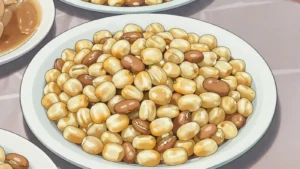
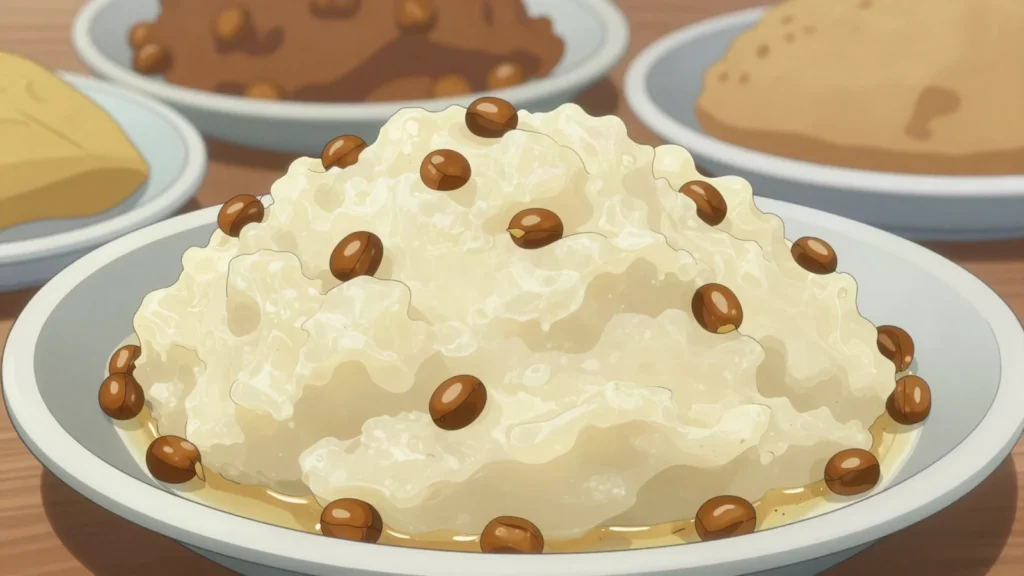
- Do not mash it completely smooth. Whole beans or kernels should stay visible against the softened tuber — that contrast is the texture of the dish.
- The Okavango floods on an annual rhythm, with water arriving months after rain has fallen far away in Angola. That flood governs when things can be harvested and shapes delta life entirely.
Substitutions
- Sweet potato or taro replaces the tubers for anyone outside the delta. The starch behaves similarly; the flavour does not.
- Cowpeas, maize or a mixture of both are all traditional, and the choice depends on what a household has.
- Tinned beans replace dried ones and shorten the cooking considerably; add them near the end.
- Butter, milk or a little oil enrich the mash where a household has them; the plainest version is salt alone.
- Sour milk poured over is the traditional accompaniment; cultured buttermilk or thin plain yoghurt does the same job safely.
- A little sugar turns it into a sweeter dish, which is made for children.
Variations
- Water lily seeds are also ground into flour in the delta and used in porridges, and the young stems are eaten as a vegetable.
- A version cooked with sorghum or millet rather than maize is made where those grains are grown.
- Some households add groundnut flour, which enriches and thickens the mash.
- A sweeter version with sugar and milk is made for children.
- Related wild tuber and pulse mashes are made across southern Africa under many names.
- Umngqusho and other samp-and-bean dishes of the region share the same principle with cultivated ingredients.
History
A Bayei and Hambukushu dish of the Okavango Delta, harvested by pulling the lily stems up from the channel bed.
Frequently asked questions
What is Tswii?
Tswii is a salad & side from Botswana: water lily tubers boiled with beans or maize into a soft mash. A Bayei and Hambukushu dish of the Okavango Delta, harvested by pulling the lily stems up from the channel bed.
How long does Tswii take to make?
Tswii takes 30 minutes plus soaking of preparation and 2 hours of cooking. The recipe makes serves 6. It is rated medium to make.
What can I substitute in Tswii?
Yes, within limits. Sweet potato or taro replaces the tubers for anyone outside the delta. The starch behaves similarly; the flavour does not. Cowpeas, maize or a mixture of both are all traditional, and the choice depends on what a household has. Tinned beans replace dried ones and shorten the cooking considerably; add them near the end. Butter, milk or a little oil enrich the mash where a household has them; the plainest version is salt alone. Sour milk poured over is the traditional accompaniment; cultured buttermilk or thin plain yoghurt does the same job safely. A little sugar turns it into a sweeter dish, which is made for children.
What is the most important thing to get right in Tswii?
Top up with boiling water as needed. Never add cold water to cooking pulses. Add more water if the pot is dry. The tubers should become completely soft.