
Ingredients
The dough
- 500 gplain flour
- plus extra for dusting
- 1egg
- 1 teaspoonsalt
- about 200 ml cold water
- adjust as needed
The filling
- 500 glamb, minced
- or beef, or a mixture
- with about 20 percent fat
- 2onions, very finely chopped
- or grated
- 1 teaspoonsalt
- 1 teaspoonblack pepper
- half a teaspoon ground cumin
- 3 tablespoonscold water
- or ice-cold stock
The broth
- 2 litreslamb or beef stock
- or water with bones
- 1onion, halved
- 1carrot, halved
- 2bay leaves
- salt and black pepper
To serve
- chakka, strained sour milk
- or thick plain yoghurt
- white wine vinegar
- or table vinegar
- chopped dill and coriander
- black pepper
- melted butter, optional
Directions
- Start larger if you are new to it. Put the flour in a bowl with the salt. Make a well and add the beaten egg. Add cold water gradually while mixing. Cold water gives a firmer dough.
- Warm water makes it slack and sticky. Mix until it comes together roughly. Turn it out onto a floured surface. Knead it hard for a full ten minutes. It should become smooth and elastic. Wrap it and rest it for thirty minutes. The filling must stay raw when wrapped.
- Use roughly equal weight of onion to meat. Mix the meat, onion and seasoning. Add the cold water a spoonful at a time. Mix it in thoroughly with your hand. The filling should be soft and slightly wet. Chill it while you roll the dough. Cold filling is much easier to handle. Work with a quarter of it at a time.
- Keep the rest covered so it does not dry. Dry dough cracks and will not seal. Roll it as thin as you possibly can. You should almost see through it. Cut small circles with a glass or cutter. Put a small amount of filling in each.
- Fold the dough over the filling. Press the edges together firmly. Press out any trapped air as you seal. Pinch them firmly to join them. Wet the corners lightly if they will not stick.
- Set each finished one on a floured tray. Do not let them touch each other. Cover them with a cloth as you work. Simmer stock with onion, carrot and bay. Season it well and taste it carefully. It should be a good soup on its own. Strain out the vegetables before cooking. Bring the broth to a rolling boil.
- Drop the dumplings in a batch at a time. Do not crowd the pot at any point. Stir gently once as they go in. That stops them settling on the bottom. Lift them out with a slotted spoon. Do not tip them into a colander. Serve them immediately in bowls.
- Ladle broth over them generously. It is thick, tangy and slightly salty. Use thick plain yoghurt instead. Strain it through muslin for a few hours. Scatter chopped dill and coriander over. Grind plenty of black pepper on top. Serve it very hot in deep bowls.
- Freeze them on a tray, not touching. They keep three months frozen. Cook them straight from frozen. Add two minutes to the cooking time. Cooked dumplings keep a day in broth.
Technique
- Roughly equal weight of onion to meat sounds like a great deal and it is correct. The onion releases moisture as it cooks, and that moisture is what makes the filling juicy. It must be very finely chopped or grated, since large pieces tear the thin dough.
- The cold water mixed into the filling turns to broth inside the dumpling as it cooks. That is the whole secret of a juicy pelmeni-type dumpling.
- Roll the dough one or two millimetres thin — you should almost see through it. Thick dough gives heavy, doughy dumplings, and thinness is the mark of a good cook in this tradition. Rest the dough for thirty minutes first or it springs back as you roll.
- Press out trapped air as you seal each dumpling. Air expands in the boiling broth and bursts the seal, and overfilling does the same.
- Rising to the surface is not the same as being cooked. Give them three to four minutes after they rise, and cut the first one open — the filling goes in raw and must cook through.
- Traditional chakka is made from naturally soured raw milk, which can carry harmful bacteria that souring does not reliably destroy. Thick plain yoghurt strained through muslin for a few hours is a close and safe substitute.
- Smaller is genuinely better, and a cook who makes tiny ones is admired. That value is shared across the region. Start larger if it is your first attempt.
- Uncooked dumplings freeze extremely well on a tray and then bagged, and cook straight from frozen with two extra minutes. That is exactly why families make several hundred in one sitting, together, around a table.
Substitutions
- Beef replaces lamb, and a mixture of the two is common.
- Thick plain yoghurt, strained, replaces chakka safely and closely.
- Any table vinegar replaces white wine vinegar; the point is the sharpness.
- The egg can be left out of the dough for a plainer, slightly firmer result.
- Squares of dough replace cut circles, waste nothing and are faster.
- A vegetarian version with pumpkin and onion, closer to Uzbek practice, is genuinely made.
Variations
- Uzbek chuchvara is the closest relative, often served in a tomato-rich broth.
- Russian pelmeni are the best-known member of the family and are usually served with soured cream and butter rather than broth.
- A fried version, pan-fried after boiling until crisp, is made in some households.
- Tushbera served drained rather than in broth, with chakka and butter, is another common serving.
- Manti, the much larger steamed dumplings, are the celebratory dish of the same tradition.
- Some cooks add a little chopped fat tail to the filling, which is the richest version.
History
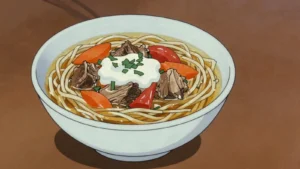
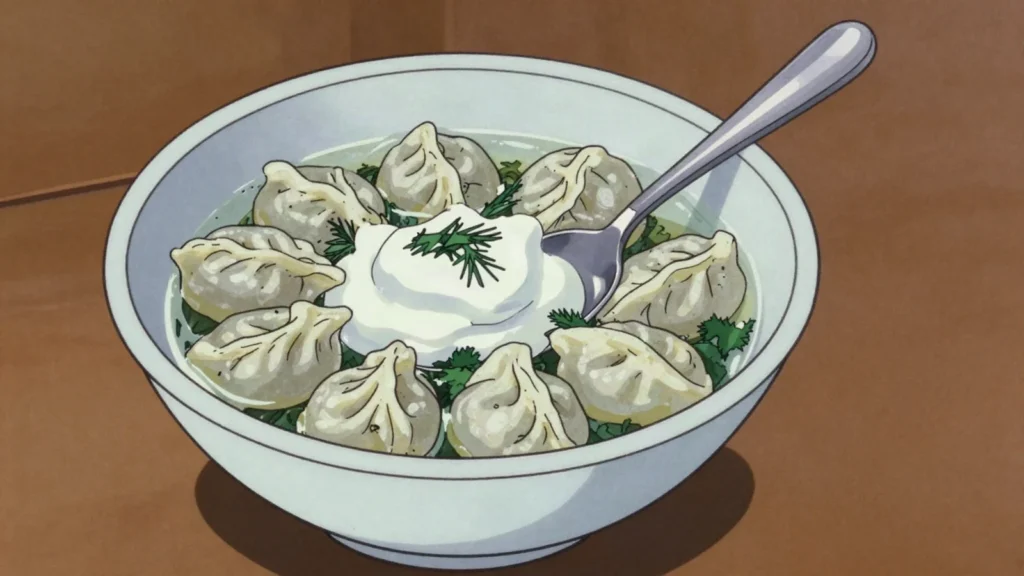
Small boiled dumplings in broth, served with chakka and vinegar.
Frequently asked questions
What is Tushbera?
Tushbera is a soup & stew from Tajikistan: small meat dumplings in broth, the Tajik pelmeni. Small boiled dumplings in broth, served with chakka and vinegar.
How long does Tushbera take to make?
Tushbera takes 1 hour 30 minutes of preparation and 30 minutes of cooking. The recipe makes serves 6. It is rated hard to make.
What can I substitute in Tushbera?
Yes, within limits. Beef replaces lamb, and a mixture of the two is common. Thick plain yoghurt, strained, replaces chakka safely and closely. Any table vinegar replaces white wine vinegar; the point is the sharpness. The egg can be left out of the dough for a plainer, slightly firmer result. Squares of dough replace cut circles, waste nothing and are faster. A vegetarian version with pumpkin and onion, closer to Uzbek practice, is genuinely made.
What is the most important thing to get right in Tushbera?
Warm water makes it slack and sticky. Mix until it comes together roughly. Turn it out onto a floured surface. Knead it hard for a full ten minutes. It should become smooth and elastic. Wrap it and rest it for thirty minutes. The filling must stay raw when wrapped.