
Ingredients
Couscous
- 400 gfine millet couscous, thiacry or arraw
- water, for sprinkling
- a pinch of salt
Dairy
- 800 mlsoured milk, lait caillé
- or 500 ml natural yoghurt with 300 ml milk
- 200 mlcrème fraîche or thick cream
To sweeten
- 100 gsugar, or to taste
- 3 tbspsweetened condensed milk, optional
To flavour
- 1 tspvanilla
- grated nutmeg
- 1 tbsporange blossom water, optional
Optional
- raisins
- crushed pineapple
- banana
Equipment
- a couscoussier or steamer lined with muslin
To serve
- cold, at naming ceremonies and gatherings
Directions
- Sprinkle the couscous with a little salted water and rub it between your palms. Rubbing it between the hands separates the grains and coats them evenly, and it is what stops the whole thing steaming into a solid lump.
- Line the steamer with muslin, since millet couscous is fine enough to fall through most baskets. Steam it, uncovered, for 15 minutes. Steam it uncovered so condensation does not drip back and make it soggy.
- Work it through with a fork and then with your hands, breaking up every lump. Do this while it is hot, as soon as you can bear to touch it, rubbing the grains between your palms. Steam it a second time for 15 minutes. Repeat the working, and steam a third time if the grains are still firm. Two or three steamings, depending on the couscous, and it should end up completely tender.
- Warm couscous curdles soured milk and it also keeps absorbing and goes stodgy. Spread it out to cool quickly and fork it through as it cools. Lait caillé is the soured milk of West Africa, tangy and thick, and it is what the dish is properly made with.
- Whisk the soured milk with the crème fraîche until smooth. Add the sugar, vanilla and nutmeg and taste. Nutmeg is the characteristic spice and it should be freshly grated.
- Add it gradually and stop when the consistency is right. The couscous keeps absorbing, so it thickens noticeably over the next hour. Make it looser than you want it, and hold some couscous back. It should be thick but still spoonable, somewhere between a porridge and a thick yoghurt.
- Stir in raisins or fruit if you are using them. Now chill it for at least 2 hours. Check it before serving and loosen it with more milk if it has thickened too far. Serve it cold in bowls, or in one large communal dish. It keeps two days refrigerated and continues to thicken.
Technique
- Lait caillé is the West African soured milk and is what it should be made with.
- It is served at naming ceremonies, at Tabaski and at Korité.
- Lakh is the closely related savoury-leaning version eaten as a meal.
Substitutions
- Natural yoghurt loosened with milk in place of lait caillé.
- Fine wheat couscous, which is not the same but works.
Variations
- With crushed pineapple, which is popular.
- With raisins and dates.
- Lakh, eaten as a fuller meal.
History
A sweet dessert combining couscous made from millet with fermented milk or yoghurt, sugar and often vanilla, developed across the Sahel region of West Africa, including Mauritania and Senegal, using millet, a grain long cultivated across the region’s semi-arid growing conditions well before the introduction of rice or wheat through later trade and colonization. Its combination of a grain-based couscous with fermented dairy reflects broader Sahelian and West African pastoral and agricultural traditions existing side by side, with millet farming and dairy herding both long-established, complementary parts of the regional food economy. Thiakry remains a popular dessert and snack across Mauritania and neighboring Senegal, often served at celebrations and social gatherings as well as eaten as an everyday treat.
Frequently asked questions
What is Thiakry?
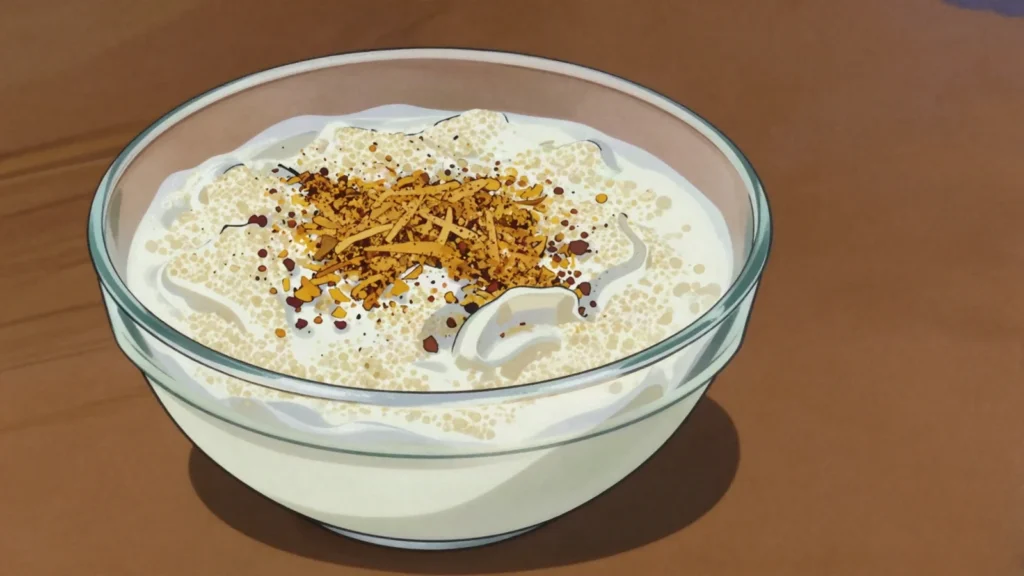
Thiakry is a dessert from Mauritania: sweet millet couscous folded into creamy soured milk. A sweet dessert combining couscous made from millet with fermented milk or yoghurt, sugar and often vanilla, developed across the Sahel region of West Africa, including Mauritania and Senegal, using millet, a grain long cultivated across the region’s semi-arid growing conditions well before the introduction of rice or wheat through later trade and colonization. Its combination of a grain-based couscous with fermented dairy reflects broader Sahelian and West African pastoral and agricultural traditions existing side by side, with millet farming and dairy herding both long-established, complementary parts of the regional food economy. Thiakry remains a popular dessert and snack across Mauritania and neighboring Senegal, often served at celebrations and social gatherings as well as eaten as an everyday treat.
How long does Thiakry take to make?
Thiakry takes 20 min of preparation and 40 min of cooking. The recipe makes 6 servings. It is rated medium to make.
What can I substitute in Thiakry?
Yes, within limits. Natural yoghurt loosened with milk in place of lait caillé. Fine wheat couscous, which is not the same but works.
What is the most important thing to get right in Thiakry?
Sprinkle the couscous with a little salted water and rub it between your palms. Rubbing it between the hands separates the grains and coats them evenly, and it is what stops the whole thing steaming into a solid lump.