
Ingredients
The batter
- 200 gbutter, softened
- 200 gsugar
- 4eggs, separated
- 250 gplain flour
- or half maize flour
- 2 teaspoonsbaking powder
- 150 mlmilk
- or a splash of aguardiente
- 1 teaspoonvanilla
- a pinch of salt
Sometimes added
- 100 graisins
- 100 ggrated fresh cheese
- grated zest of 1 orange
To wrap
- achira leaves
- or banana leaves
- wilted over a flame
- string, to tie
To serve
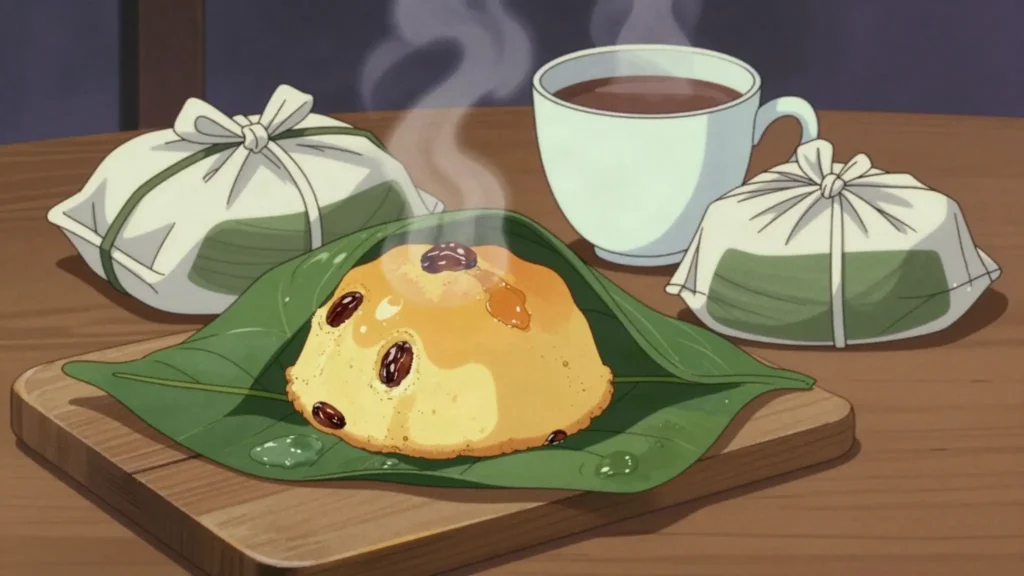
- warm in the leaf
- with coffee
- or hot chocolate
Directions
- Fold the whipped whites in very gently. Use a light hand right the way through. They are sold at highland bus stops. Cut the leaves into rough rectangles. A few seconds each side is quite enough. Brush the centre with a little oil. The oil stops the batter sticking fast. Brush only the centre of each leaf.
- Fold with the grain rather than across it. That stops the leaf tearing as you fold. Beat the butter and sugar together well. Beat them until they are pale and light. Give it a good five full minutes. Add the egg yolks in one at a time. Add the vanilla along with the last one. Adding them slowly stops the mixture splitting.
- Beat each one in before the next goes. Sift the flour and baking powder together. Fold it in alternately with the milk. Alternating stops the mixture from splitting.
- Start and finish with the dry mixture. Fold rather than beating it hard at all. Stop as soon as it just comes together. Whip the egg whites to soft peaks. Soft peaks flop over at the very tip. Fold a spoonful of the whites in first. Stir that first spoonful in properly.
- Cut down through the middle with a spatula. Lift the batter up and over the whites. Turn the bowl a little between each fold. Stop the moment no white streaks remain. Fold the raisins or cheese through it. Toss the raisins in a little flour first. That stops them sinking to the bottom.
- Fold them in with a few turns only. Lay a prepared leaf flat on the bench. Spoon batter into the middle of it. About two heaped spoonfuls is right. Leave real room for it to swell. Fold the sides of the leaf over the batter. Fold one long side over the batter.
- Fold the other long side over that. The parcel must stay closed while steaming. Steam and water get into an open one. Fold it firmly and check each parcel. Tie each parcel with kitchen string. Tie it firmly but not too tightly. Set the parcels in a steamer basket. Lay them with the folded side downward. That weight keeps the parcel closed. Stack them in layers if you need to.
- Leave gaps for the steam to circulate. Cooking them takes about forty-five minutes. Steam them for about forty-five minutes. A dense steamed cake needs real time. Check the water level every twenty minutes. Top it up with boiling water only. Cold water stops the cooking entirely. Wrap it up again and steam it longer. Give it another ten minutes and retest.
- Let the parcels stand for ten minutes. Serving them is done still in the leaf. Serve each one still in its parcel. They are eaten warm with the fingers. Serve coffee or hot chocolate alongside. They keep three days in the refrigerator. Steam them again briefly to reheat them.
Technique
- Wilt each leaf over a flame for a few seconds a side before folding: it goes from brittle to genuinely flexible and cracks apart entirely if you skip this. Both achira and banana leaves split along the grain, so fold with the grain rather than across it.
- Fold one spoonful of the whipped whites in first to loosen the batter, stirring it in properly, then fold the rest gently — cutting down with a spatula, lifting over and turning the bowl — and stop the moment no white streaks remain. Beating them in knocks the air out and defeats the whole purpose.
- Check the steamer water every twenty minutes and top it up with boiling rather than cold water, since long steaming uses a great deal and cold water stops the cooking. Never let the pot boil dry.
Substitutions
- Banana leaf substitutes for achira, being far more widely available and giving a similar but distinctly different aroma; the atlas gives both routes.
- Half maize flour in place of some of the wheat gives a coarser grainier crumb and a faint corn sweetness, and both versions are genuinely made.
Variations
- Grated fresh cheese in the batter gives a savoury salty edge and sounds odd in a sweet cake, but sweet and salty together is common in the Andes and cheese appears in many sweet dishes there — a genuine regional preference rather than an eccentricity.
- Do not overfill the parcels, since the cake rises as it steams, and lay them folded side down in the basket so their own weight keeps them closed — steam gets into an open parcel and waterlogs the cake.
- The cake is dense and moist rather than light, closer to a pudding than a sponge, which is characteristic rather than a fault.
History
Steamed in achira leaves in the highlands and sold at bus stations, eaten with coffee or hot chocolate.
Frequently asked questions
What is Quimbolito?
Quimbolito is a dessert from Ecuador: steamed sweet cake of maize or wheat flour wrapped in achira leaf. Steamed in achira leaves in the highlands and sold at bus stations, eaten with coffee or hot chocolate.
How long does Quimbolito take to make?
Quimbolito takes 40 minutes of preparation and 45 minutes of cooking. The recipe makes about 12 cakes. It is rated medium to make.
What can I substitute in Quimbolito?
Yes, within limits. Banana leaf substitutes for achira, being far more widely available and giving a similar but distinctly different aroma; the atlas gives both routes. Half maize flour in place of some of the wheat gives a coarser grainier crumb and a faint corn sweetness, and both versions are genuinely made.
What is the most important thing to get right in Quimbolito?
Fold with the grain rather than across it. That stops the leaf tearing as you fold. Beat the butter and sugar together well. Beat them until they are pale and light. Give it a good five full minutes. Add the egg yolks in one at a time. Add the vanilla along with the last one. Adding them slowly stops the mixture splitting.