
Ingredients
The tamarind
- 500 gtamarind, block form
- seedless if you can find it
- see the note on the three forms
- 300 mlhot water
- to loosen it
The spices
- 2 tablespoonspanch phoron
- the Bengali five-spice
- see the note
- 2 tablespoonschilli powder
- or to taste
- 1 tablespoonsalt
- 1 teaspoonturmeric
- 2 tablespoonsground roasted cumin
- 8dried red chillies
- whole
The rest
- 200 gjaggery or brown sugar
- or to taste
- see the note on balance
- 150 mlmustard oil
- see the note
- 1 headgarlic, cloves peeled
- optional
Equipment
- a non-reactive pan
- stainless steel or enamel
- not aluminium or copper
- see the note
- sterilised glass jars
- muslin, for covering
Directions
- Salt, sugar and oil do the rest. Break it up and pour hot water over it. Leave it thirty minutes. Squeeze it through your fingers. Discard the seeds and fibre. Take them all out. You want a thick pulp rather than a thin liquid. Use as little water as gets the pulp off the seeds. Use stainless steel or enamel.
- Heat the mustard oil until it just smokes. Then take it off and let it cool. Stand back and ventilate the kitchen. Never leave the pan. Oil that goes past smoking can catch fire.
- Take it off the moment it smokes. Never put water on an oil fire. Heat a little of the oil and add the panch phoron and whole chillies. Let them crackle for thirty seconds. Keep a lid to hand and take them off early. Start again if it happens. Add the tamarind pulp to the pan. Add the jaggery, salt, turmeric and chilli. Cook it on low heat, stirring. Give it fifteen to twenty minutes.
- Keep the heat low and keep stirring. Use a heavy pan. Hot sugar mixtures spit. Use a long spoon and stand back. It should darken and thicken. Taste and adjust the sour, sweet, salt and heat. All four should be present. Add it gradually and taste.
- Taste it cool rather than hot. Hot food tastes less sweet and less salty than it will. Stir in the remaining oil off the heat. Sterilise them and dry them completely.
- Fill the jars while the pickle is warm but not hot. Leave headspace. Top each jar with oil so the pickle is covered. Cover the jars with muslin and put them in the sun. Bring the jars indoors at night. Muslin keeps insects out while letting moisture escape.
- Use plastic-lined lids or paper under metal ones. If you are unsure, throw it out. Keep the oil layer topped up. Refrigerate it once opened if your kitchen is warm.
Technique
- Always use a clean dry spoon. A wet spoon puts water into the jar and that is how a good pickle spoils — the single most important habit with any achar.
- Sterilise the jars and dry them completely. A drop of water is where mould starts, and dry is not nearly the same as nearly dry.
- Bring the jars indoors at night while sun-maturing. A jar left out cools and condensation forms inside, and water dripping back into the pickle is the classic sun-pickling mistake. Cover them with muslin, which keeps insects out while letting moisture escape — a sealed lid traps it in.
- Sunning needs real sun over several days and does not work in a cool cloudy climate. Skip it and refrigerate the pickle instead: lighter, less deep, perfectly good. The atlas says so rather than insisting on the impossible.
- Keep the pickle covered by its oil layer, topped up as you use it. Exposed pickle at the surface moulds; the oil seals it from the air and is part of the preservation.
- Use the block form of tamarind. Jarred paste is looser and milder but works; dark concentrate is very strong and often bitter and is not right here. The three are not interchangeable by volume — concentrate is several times stronger than paste.
- Use as little water as gets the pulp off the seeds. A wet pickle spoils faster, and you can always cook more off later.
- Use stainless steel or enamel, never aluminium or copper. Tamarind is acidic and pulls metal into the food — a real effect rather than a superstition.
- Heat the mustard oil until it just smokes, then cool it. That is standard pickle practice: it drives off moisture and tempers the raw pungency. Oil past smoking can catch fire — take it off the moment it smokes, never put water on an oil fire, and smother it with a lid.
- Tamarind and sugar catch and burn readily. Keep the heat low, keep stirring, use a heavy pan, and stand back with a long spoon — hot sugar spits and sticks to skin.
- Tamarind varies enormously in sourness, so the sugar is a starting point rather than a rule. Add it gradually and taste the pickle cool, since hot food tastes less sweet and less salty than it will.
- Aim for sour first, then sweet, then salt, then heat, with all four present.
- The whole spices burn in seconds and mustard and nigella pop and jump — keep a lid to hand. Burnt spice is bitter through the whole batch and cannot be fixed.
- Fenugreek is the bitter one in panch phoron. Do not add extra.
- This is a comparatively forgiving pickle: tamarind is strongly acidic in its own right, and salt, sugar and oil do the rest, so nothing depends on a fermentation going right.
- Tamarind is mildly laxative in quantity, which is well known and part of why it is eaten by the spoonful.
- Panch phoron contains mustard in most blends, and mustard is a declarable allergen in the European Union.
- Discard it for fuzzy or coloured mould, a fermented or yeasty smell, or a bulging lid. If you are unsure, throw it out.
Substitutions
- Jarred tamarind paste replaces the block, giving a milder pickle.
- Neutral oil or sesame oil replaces mustard oil and keeps just as well.
- Jaggery, palm sugar or brown sugar are interchangeable here.
- Dates cooked in with the tamarind give a richer, sweeter pickle.
- Individual seeds replace a ready-made panch phoron in equal parts.
- Kashmiri chilli powder gives colour with less heat.
Variations
- Tamarind and date chutney, khejur tetul, is the sweeter cooked relative.
- Aam achar uses green mango in place of tamarind.
- Lebur achar is the lime version, cured in salt.
- Tetul makha mashes fresh tamarind with salt, chilli and sugar as a street snack.
- Tamarind candy, tetul lozenge, is the sweet-shop form.
- A garlic-heavy version is made in some households.
History
Sun-matured on Bangladeshi rooftops in jars; the sour pickle is a favourite snack of schoolchildren.
Frequently asked questions
What is Tetul Achar?
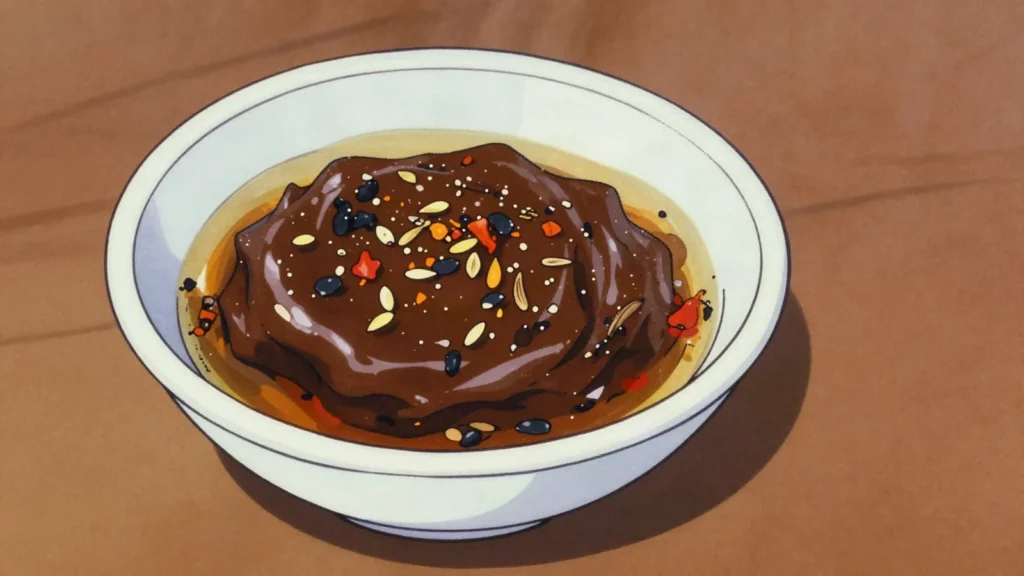
Tetul Achar is a fermented & pickled from Bangladesh: tamarind pulp cured with mustard oil, chilli and panch phoron until dark. Sun-matured on Bangladeshi rooftops in jars; the sour pickle is a favourite snack of schoolchildren.
How long does Tetul Achar take to make?
Tetul Achar takes 40 minutes plus 1 to 2 weeks of preparation and 20 minutes of cooking. The recipe makes makes 2 medium jars. It is rated medium to make.
What can I substitute in Tetul Achar?
Yes, within limits. Jarred tamarind paste replaces the block, giving a milder pickle. Neutral oil or sesame oil replaces mustard oil and keeps just as well. Jaggery, palm sugar or brown sugar are interchangeable here. Dates cooked in with the tamarind give a richer, sweeter pickle. Individual seeds replace a ready-made panch phoron in equal parts. Kashmiri chilli powder gives colour with less heat.
What is the most important thing to get right in Tetul Achar?
Salt, sugar and oil do the rest. Break it up and pour hot water over it. Leave it thirty minutes. Squeeze it through your fingers. Discard the seeds and fibre. Take them all out. You want a thick pulp rather than a thin liquid. Use as little water as gets the pulp off the seeds. Use stainless steel or enamel.