
Ingredients
Yaji (suya spice)
- 150 gkuli-kuli (defatted groundnut cake), ground to powder, or 150 g roasted peanuts blotted hard of oil and ground
- 3 tbspground dried chilli (or cayenne)
- 1 tbspground ginger
- 2 tspgarlic powder
- 2 tsponion powder
- 1 tspground cloves
- 1 tspground selim pepper (uda) or black pepper
- 2 tspsalt
- 1stock cube, crushed
Meat
- 800 gbeef, from the round or sirloin, sliced across the grain 5 mm thick in wide sheets
- 4 tbspgroundnut oil
To serve
- 1red onion, sliced in rings
- 2tomatoes, sliced
- ¼small cabbage, shredded
- 1lime, cut in wedges
- extra yaji, for dusting
Directions
- Grind the kuli-kuli to a fine powder and sift it with the chilli, ginger, garlic, onion, cloves, selim pepper, salt and stock cube. It should be loose and sandy – if it clumps into a paste the peanuts still hold too much oil.
- Lay the beef sheets flat and rub them all over with two-thirds of the yaji and 2 tbsp of the oil, working it in with your fingers.
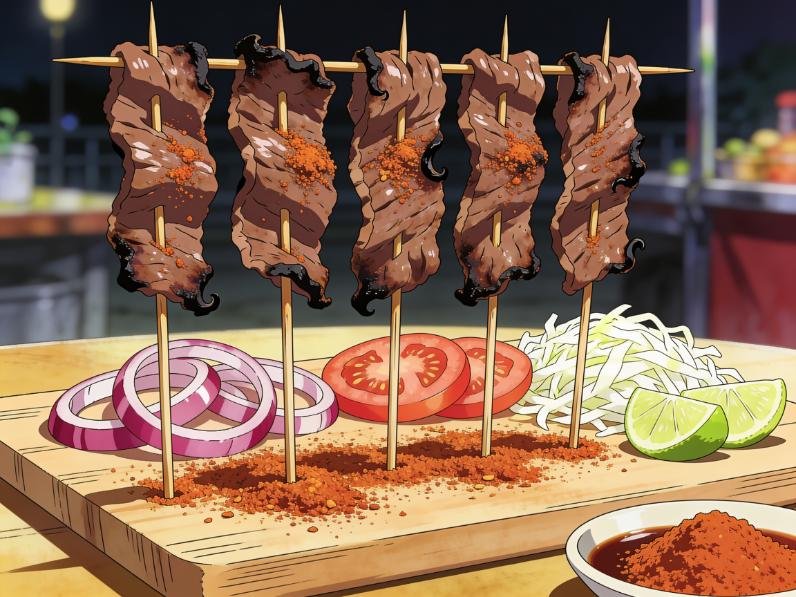
- Thread the sheets onto flat metal or soaked wooden skewers in loose folds, so the meat ripples rather than lying flat – the folds catch the fire.
- Rest the skewers on a rack, uncovered, at cool room temperature for 2 hours, or refrigerated overnight, so the spice draws into the meat and the surface dries.
- Build a charcoal fire and let it burn to a hot even bed with no flame. Suya men cook beside the coals as much as over them, on a slanted rack.
- Grill the skewers 8–10 cm above the coals for 3–4 minutes a side, brushing with the remaining oil once, until the edges char and curl and the surface is deep brown and dry to the touch. Beef this thin needs no more.
- Pull the skewers off, dust generously with the reserved yaji while the meat is still hot and glistening so it sticks, and let them sit 2 minutes.
- Serve on newspaper or a wooden board with raw onion rings, tomato, shredded cabbage and lime, with a small mound of extra yaji on the side for dipping.
Technique
- Kuli-kuli, not raw peanut butter, is the authentic base. It is groundnut paste that has been fried and pressed of its oil, so it toasts rather than burns and gives yaji its dry, savoury grip.
- The final dusting after grilling is essential. Spice applied only before cooking scorches; the second coat is what makes suya taste of suya.
- Slice the beef thin and across the grain. Suya is a dry, chewy, intensely seasoned meat, not a juicy kebab – thick cubes steam instead of charring.
Substitutions
- No kuli-kuli? Grind roasted unsalted peanuts, then press them between kitchen paper under a weight for 20 minutes to blot as much oil as possible before grinding again.
- Cook indoors under a very hot grill on the top shelf for 3 minutes a side, then finish with a blowtorch pass for the charcoal note.
Variations
- Ram suya, the northern original and still the most prized, made with mutton.
- Kilishi, the dried Hausa relative: beef sliced paper-thin, coated in a groundnut and spice slurry and sun-dried.
- Chicken and gizzard suya, sold from the same grills across Lagos.
History
A spiced, skewered grilled meat associated with the Hausa people, whose homeland spans what is now northern Nigeria and southern Niger, predating the modern border between the two countries. Its defining ingredient is yaji, a dry spice rub built on ground roasted peanuts along with ginger, chili and other spices, which forms a crust on the meat as it grills over an open flame, traditionally sold by Hausa street vendors called mai suya working from small stalls or carts, most active after dark. Hausa trading networks, which historically stretched across a wide swath of West Africa along trans-Saharan trade routes, are generally credited with carrying suya and its associated spice blend well beyond the Hausa homeland into other West African countries and communities over the past century.
Frequently asked questions
What is Suya?
Suya is a street food from Niger: thin beef skewers coated in spiced peanut powder and grilled over wood. A spiced, skewered grilled meat associated with the Hausa people, whose homeland spans what is now northern Nigeria and southern Niger, predating the modern border between the two countries. Its defining ingredient is yaji, a dry spice rub built on ground roasted peanuts along with ginger, chili and other spices, which forms a crust on the meat as it grills over an open flame, traditionally sold by Hausa street vendors called mai suya working from small stalls or carts, most active after dark. Hausa trading networks, which historically stretched across a wide swath of West Africa along trans-Saharan trade routes, are generally credited with carrying suya and its associated spice blend well beyond the Hausa homeland into other West African countries and communities over the past century.
How long does Suya take to make?
Suya takes 30 min of preparation and 20 min, plus 2 hr resting of cooking. The recipe makes 4 servings (about 12 skewers). It is rated medium to make.
What can I substitute in Suya?
Yes, within limits. No kuli-kuli? Grind roasted unsalted peanuts, then press them between kitchen paper under a weight for 20 minutes to blot as much oil as possible before grinding again. Cook indoors under a very hot grill on the top shelf for 3 minutes a side, then finish with a blowtorch pass for the charcoal note.
What is the most important thing to get right in Suya?
Thread the sheets onto flat metal or soaked wooden skewers in loose folds, so the meat ripples rather than lying flat – the folds catch the fire.