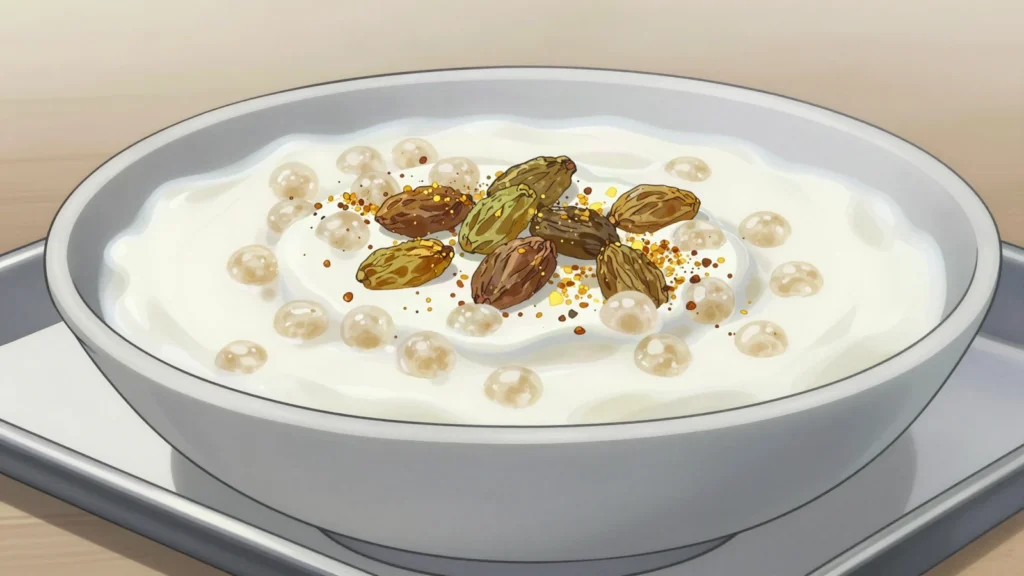

Ingredients
Millet couscous
- 400 gfine millet couscous
- or 400 g fine semolina couscous
- about 150 ml water
- 1/2 teaspoonsalt
The milk
- 1 litresour milk
- or 1 litre plain yoghurt
- 200 mlmilk, to loosen
- 150 gsugar, or to taste
To flavour
- 1 teaspoonvanilla
- 1/2 teaspoongrated nutmeg
- a pinch of salt
Sometimes added
- raisins
- a squeeze of lime
- condensed milk
Directions
- Use cultured yoghurt or buttermilk instead. Put the couscous in a wide bowl. Sprinkle water over it gradually. Rub it through with your fingertips. Work it evenly across the whole bowl. The grains should be damp but still loose.
- Let it stand for ten minutes to absorb. Cooking it takes about twenty minutes. Line a steamer basket with muslin. Set it over a pan of boiling water. Spoon the couscous in loosely. Never press or pack it down at all. Cover it and steam it for ten minutes. Tip it out and break up any lumps. Sprinkle a little more water over it.
- Return it and steam it another ten minutes. Judging the couscous takes a taste. Taste a spoonful from the middle. Give it longer if it is still hard.
- Tip the couscous onto a wide tray. Spread it out in a thin layer. Let it cool down completely first. Warm couscous curdles the yoghurt. Put the yoghurt in a large bowl. Whisk it until it is quite smooth.
- Add the milk gradually to loosen it. It should be pourable but not thin. Add the sugar and stir it until dissolved. Add the vanilla, nutmeg and salt. Taste it and adjust the sweetness. It should taste slightly too sweet. Add the cooled couscous to the milk.
- Fold it through the milk gently. Do not beat it or the grains break up. Add raisins now if you want them. It should be loose enough to spoon easily. Add more milk if it seems stiff. Cover it and refrigerate it now. Give it at least two full hours.
- Check the consistency before serving. Add a splash of milk if it has gone thick. Serving it is done properly cold. Spoon it out into bowls or cups. It keeps two days refrigerated.
Technique
- The Fulani have herded cattle across the Sahel for centuries, and soured milk is a natural product of that life, joined here with millet, the grain of the same region.
- Millet couscous is steamed millet flour rolled into grains and dried, not the same thing as millet flour.
- Milk should never be soured deliberately at room temperature, since uncontrolled souring can grow harmful bacteria, so cultured yoghurt is the safe route.
Substitutions
- Fine wheat couscous stands in for millet couscous with a milder flavour.
- Plain yoghurt or buttermilk replace traditionally soured milk safely.
Variations
- The same dish is called thiakry in Senegal and degue across much of West Africa.
- Some cooks add condensed milk for extra richness.
- A version with raisins and a squeeze of lime is common.
History
Millet couscous in soured milk, a Fulani herders’ preparation from the Sahel that spread south with cattle routes and migration.
Frequently asked questions
What is Dèguè?
Dèguè is a dessert from Benin: millet couscous in sweetened yoghurt. Millet couscous in soured milk, a Fulani herders’ preparation from the Sahel that spread south with cattle routes and migration.
How long does Dèguè take to make?
Dèguè takes 20 minutes of preparation and 30 minutes of cooking. The recipe makes serves 6. It is rated easy to make.
What can I substitute in Dèguè?
Yes, within limits. Fine wheat couscous stands in for millet couscous with a milder flavour. Plain yoghurt or buttermilk replace traditionally soured milk safely.
What is the most important thing to get right in Dèguè?
Use cultured yoghurt or buttermilk instead. Put the couscous in a wide bowl. Sprinkle water over it gradually. Rub it through with your fingertips. Work it evenly across the whole bowl. The grains should be damp but still loose.