
Ingredients
Tofu
- 2tubes sundubu, extra soft uncurdled tofu, about 700 g
Chilli oil base
- 3 tbspgochugaru, Korean chilli flakes
- 3 tbspneutral oil or beef fat
- 4 clovesgarlic, minced
- 1onion, sliced
Protein
- 150 gpork belly, thinly sliced
- or 200 g mixed seafood: clams, prawns, squid
Broth
- 500 mlanchovy and kelp stock
- 1 tbspsoy sauce
- 1 tbspfish sauce or saeujeot, salted shrimp
- 1 tspsugar
To finish
- 1egg
- 2spring onions, sliced
- 1 tspsesame oil
To serve
- steamed rice
- kimchi and side dishes
Equipment
- a ttukbaegi, earthenware pot, if you have one
Directions
- Heat the oil over a medium heat, add the chilli flakes, and stir them for thirty seconds to a minute. Chilli flakes stirred into broth instead never develop that flavour and the stew tastes thin.
- Take the pan off the heat the moment the oil turns red and fragrant, within a minute at most. Keep the heat moderate rather than high while doing it. If you are using pork belly, render it first and fry the chilli in that rendered fat.
- Use anchovy and kelp stock rather than water, which is the standard Korean base. Simmer a handful of dried anchovies and a piece of dried kelp in water for fifteen minutes and strain it.
- Remove the kelp before the water boils, since boiled kelp turns the stock slimy and bitter. Add the onion and garlic to the chilli oil and cook briefly. Add the stock, soy sauce, fish sauce and sugar and bring it to a boil.
- Cut the tube open and squeeze the sundubu into the boiling broth in large rough lumps. Do not break it up or stir it hard, since the large soft curds are the entire texture of the dish.
- Let it heat through for three or four minutes. Now the seafood, if you are using it. Add clams, prawns and squid and cook only until the clams open and the prawns turn opaque. That takes two or three minutes, and longer makes the seafood rubbery.
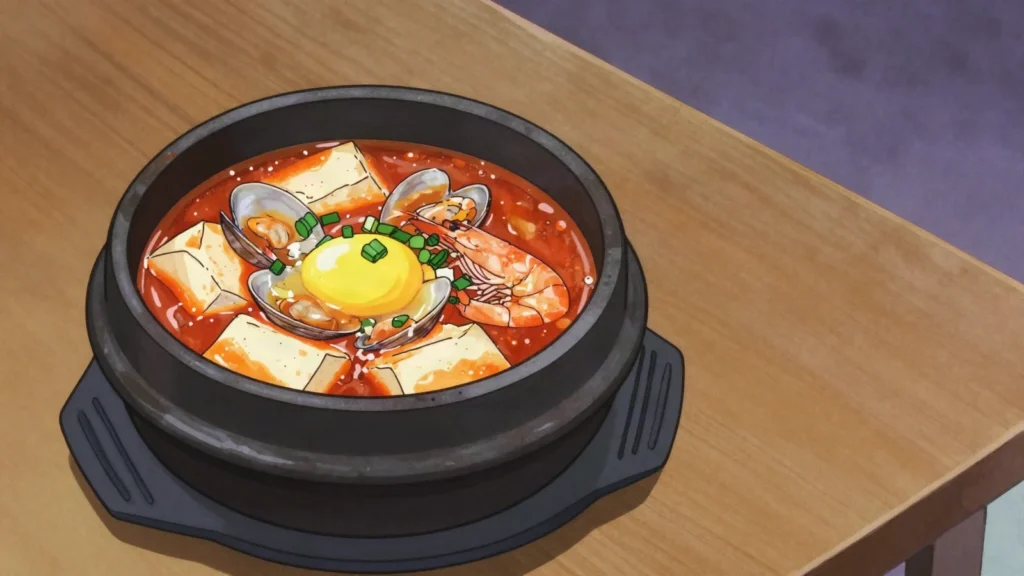
- Discard any clams that stay shut. Bring it to a genuinely furious boil before it leaves the stove. It should still be bubbling loudly when it is put down in front of you. Crack the raw egg into the middle of the boiling stew just before serving, or at the table. The residual heat poaches it gently over the next minute or two.
- Scatter the spring onions over and add a few drops of sesame oil. Serve it with a bowl of rice, which is eaten alongside rather than in the stew. Spoon the stew over the rice a little at a time, which is the usual way, and serve kimchi and side dishes with it.
Technique
- Sundubu is uncurdled tofu sold in tubes and is far softer than silken.
- Frying the gochugaru in oil first is what gives the stew its depth.
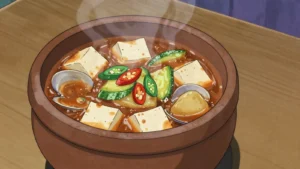
- It is served still furiously boiling in an earthenware pot.
Substitutions
- Silken tofu in place of sundubu, accepting a firmer texture.
- Fish sauce in place of salted shrimp.
Variations
- Made with pork belly rather than seafood.
- Made with kimchi as well, for extra sourness.
- Made vegetarian, with kelp stock and mushrooms.
History
A spicy, bubbling stew built on extremely soft, uncurdled tofu, called sundubu, along with vegetables, often seafood or meat, and a chili-based broth, served still boiling in its cooking pot at the table, developed within the wider Korean jjigae, or stew, tradition, in which dishes are conventionally served actively bubbling rather than only warm, considered important to both the eating experience and the perceived freshness of the dish. Soft tofu production itself, achieving that particular delicate, barely-set texture rather than the firmer tofu used in many other dishes, requires specific technique in the curdling and draining process. Sundubu jjigae remains an especially popular restaurant dish across South Korea, with entire restaurants sometimes specializing in little else but different variations of the soft tofu stew.
Frequently asked questions
What is Sundubu Jjigae?
Sundubu Jjigae is a soup & stew from South Korea: fiery soft-tofu stew with seafood, finished with a cracked egg. A spicy, bubbling stew built on extremely soft, uncurdled tofu, called sundubu, along with vegetables, often seafood or meat, and a chili-based broth, served still boiling in its cooking pot at the table, developed within the wider Korean jjigae, or stew, tradition, in which dishes are conventionally served actively bubbling rather than only warm, considered important to both the eating experience and the perceived freshness of the dish. Soft tofu production itself, achieving that particular delicate, barely-set texture rather than the firmer tofu used in many other dishes, requires specific technique in the curdling and draining process. Sundubu jjigae remains an especially popular restaurant dish across South Korea, with entire restaurants sometimes specializing in little else but different variations of the soft tofu stew.
How long does Sundubu Jjigae take to make?
Sundubu Jjigae takes 20 min of preparation and 20 min of cooking. The recipe makes 2 servings. It is rated easy to make.
What can I substitute in Sundubu Jjigae?
Yes, within limits. Silken tofu in place of sundubu, accepting a firmer texture. Fish sauce in place of salted shrimp.
What is the most important thing to get right in Sundubu Jjigae?
Heat the oil over a medium heat, add the chilli flakes, and stir them for thirty seconds to a minute. Chilli flakes stirred into broth instead never develop that flavour and the stew tastes thin.