
Ingredients
Main
- 300 gtama, fermented bamboo shoots
- 500 gpotatoes, in chunks
- 200 gblack-eyed peas, soaked overnight
Base
- 1onion, chopped
- 6 clovesgarlic
- 3cm ginger
- 3tomatoes, chopped
- 3 tbspmustard oil
Spices
- 1 tspturmeric
- 1 tspground cumin
- 1 tspground coriander
- ½ tsptimur, Sichuan pepper, ground
- 2dried red chillies
- 1 tspjimbu, Himalayan herb, optional
- salt
To finish
- chopped coriander
- juice of half a lemon
To serve
- with rice, and with dal
Directions
- Drain the fermented shoots and rinse them if they are very strong. Now boil them briefly in fresh water for five to ten minutes and drain them again. Soak them overnight and boil them separately until tender, about forty minutes.
- Cook them separately rather than in the curry, since they take far longer than the potatoes and the acid in the dish slows them further. Acid genuinely prevents pulses softening, which is why an undercooked bean added to a sour curry stays hard indefinitely.
- Heat the mustard oil until it just smokes, then let it cool slightly before cooking in it. Fry the dried chillies briefly, then the onion until soft and golden. Add the garlic and ginger and cook for two minutes.
- Add the turmeric, cumin and coriander with a splash of water. Adding a splash of water with ground spices stops them scorching, since they burn in seconds in hot oil alone. Add the tomatoes and cook them down until the oil begins to separate. Use it ground and in small quantity, since too much numbs the whole mouth. Add the boiled tama and cook it in the base for five minutes.
- Add the potatoes and enough water to cover, and simmer for twenty minutes. Add the cooked black-eyed peas for the last ten minutes. Some of the potato should dissolve into the sauce and thicken it, which is characteristic.
- Crush a few pieces against the side of the pot with a spoon to help this along. The curry should end up thick and slightly gloopy rather than thin and brothy.
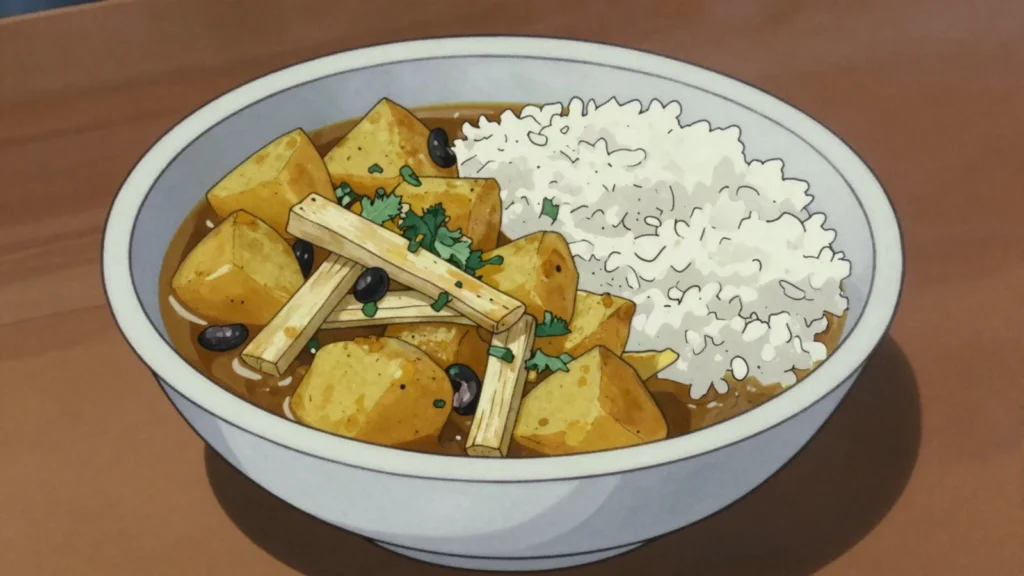
- Taste it: the sourness should be pronounced and clearly the leading note. Add a little of the reserved fermenting liquid or a squeeze of lemon if it tastes flat. Season with salt and stir in chopped coriander off the heat. Serve it with plain rice and a dal alongside, as part of a Nepali plate. It is better the next day and it keeps three days refrigerated.
Technique
- Tama is bamboo shoot fermented in water, quite unlike fresh shoot.
- Raw bamboo shoots must always be boiled, uncovered, before eating.
- The acid stops pulses softening, so cook the peas separately first.
Substitutions
- There is no real substitute for fermented tama.
- Kidney beans or soybeans in place of black-eyed peas.
Variations
- Aloo tama bodi, the version with black-eyed peas, which is the classic.
- Made with soybeans instead.
- Made hotter, with more dried chilli.
History
Potato with black-eyed peas and tama, bamboo shoots soured in water; a Kathmandu Valley dish made in the monsoon shoot season.
Frequently asked questions
What is Aloo Tama?
Aloo Tama is a soup & stew from Nepal: sour curry of potatoes, fermented bamboo shoots and black-eyed peas. Potato with black-eyed peas and tama, bamboo shoots soured in water; a Kathmandu Valley dish made in the monsoon shoot season.
How long does Aloo Tama take to make?
Aloo Tama takes 25 min plus overnight soaking of preparation and 1 hr of cooking. The recipe makes 6 servings. It is rated medium to make.
What can I substitute in Aloo Tama?
Yes, within limits. There is no real substitute for fermented tama. Kidney beans or soybeans in place of black-eyed peas.
What is the most important thing to get right in Aloo Tama?
Cook them separately rather than in the curry, since they take far longer than the potatoes and the acid in the dish slows them further. Acid genuinely prevents pulses softening, which is why an undercooked bean added to a sour curry stays hard indefinitely.