
Ingredients
Meat and marinade
- 1.5 kggoat, shoulder and leg on the bone, cut into 6 cm pieces
- 250 mldry white wine
- 6garlic cloves, crushed
- 2bay leaves
- 1 tbspsweet paprika
- 1 tspground cumin
- 1.5 tspfine salt
- 1 tspblack pepper
Stew
- 80 mlolive oil
- 3onions, sliced
- 3tomatoes, chopped, or 400 g tinned
- 2 tbsptomato paste
- 2red peppers, sliced
- 800 gwaxy potatoes, peeled and quartered
- 3carrots, cut into chunks
- 2jindungo chillies, whole
- 500 mlwater
- 1 bunchcoriander, chopped
To serve
- 600 gwhite rice, steamed, or funge
- gindungo sauce
Directions
- Mix the goat with the wine, garlic, bay, paprika, cumin, salt and pepper, cover and marinate at least 4 hours, or overnight in the fridge.
- Drain the meat, keeping the marinade, and dry the pieces on a cloth.
- Heat the olive oil in a heavy pot over high heat and brown the goat in batches, 8–10 minutes each, until well coloured. Set aside.
- Lower the heat, add the onions and cook 12–15 minutes until soft and golden, scraping up everything stuck to the base.
- Stir in the tomato paste and cook 2 minutes until it darkens, then add the tomatoes and cook 8 minutes to a thick base.
- Return the meat with the reserved marinade and the water, add the whole chillies and bay, bring to a simmer and skim.
- Cover and cook at the barest simmer for 1 hour 30 minutes. Goat is lean, hard-worked meat and needs the time; rushing it at a rolling boil makes it stringy.
- Add the potatoes, carrots and peppers, laying them on top rather than stirring them in, and cook 30–35 minutes more, until the potatoes are tender and the meat pulls from the bone.
- Take the lid off for the last 10 minutes to reduce the sauce until it coats the vegetables, and lift out the chillies before they burst.
- Season, scatter the coriander and rest 10 minutes off the heat. Serve with rice or funge and gindungo.
Technique
- Caldeirada in Angola means a deep one-pot braise rather than the Portuguese layered seafood version; the technique came with the colonial kitchen but the chilli, the coriander and the funge alongside are entirely local.
- Add the potatoes only in the last half hour. Cooked from the start they disintegrate and thicken the stew into a paste, which hides the goat.
- Leave the jindungo whole. Split chillies make the pot fiercely hot, whereas whole ones perfume it and let each person adjust with the sauce on the table.
Substitutions
- No goat: mutton or hogget shoulder is the closest in flavour and takes about the same time. Younger lamb needs only 50 minutes of the first braise.
- White wine can be replaced by 250 ml of water with 2 tbsp of white wine vinegar, which keeps the acidity that tenderises the meat.
Variations
- Cabrito assado, the same marinade but roasted whole over embers for festivals.
- A Benguela version enriched with a spoon of red palm oil stirred in at the end.
- Made with chunks of cassava in place of potato.
History
Traditionally cooked for Independence Day on 11 November, the Portuguese caldeirada method adapted to Angolan goat.
Frequently asked questions
What is Caldeirada de cabrito?
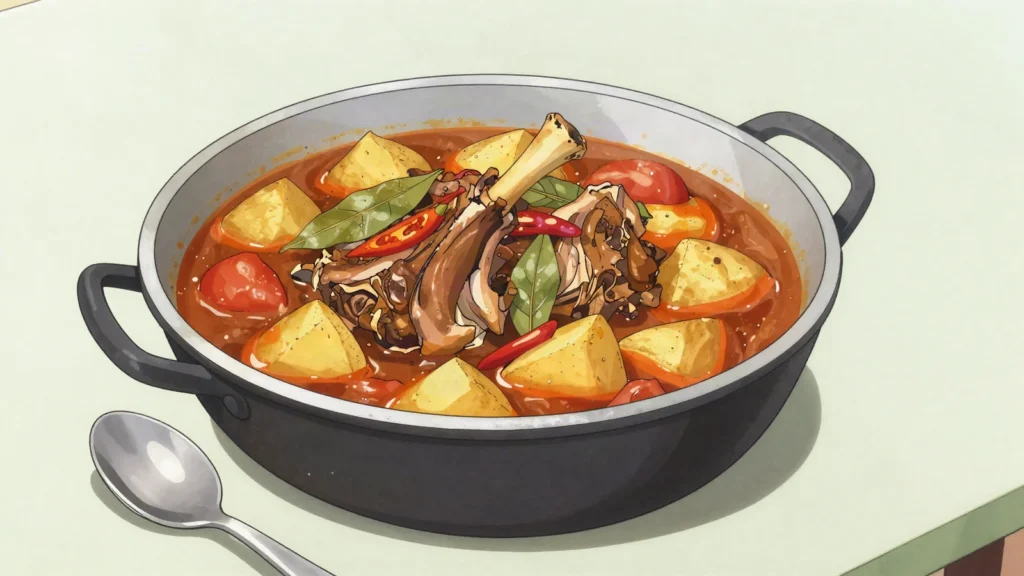
Caldeirada de cabrito is a soup & stew from Angola: goat braised with potato, tomato and wine in a deep pot. Traditionally cooked for Independence Day on 11 November, the Portuguese caldeirada method adapted to Angolan goat.
How long does Caldeirada de cabrito take to make?
Caldeirada de cabrito takes 30 min of preparation and 2 hr 15 min of cooking. The recipe makes 6 servings. It is rated medium to make.
What can I substitute in Caldeirada de cabrito?
Yes, within limits. No goat: mutton or hogget shoulder is the closest in flavour and takes about the same time. Younger lamb needs only 50 minutes of the first braise. White wine can be replaced by 250 ml of water with 2 tbsp of white wine vinegar, which keeps the acidity that tenderises the meat.
What is the most important thing to get right in Caldeirada de cabrito?
Return the meat with the reserved marinade and the water, add the whole chillies and bay, bring to a simmer and skim.