
Ingredients
The lamb
- 1.2 kglamb shoulder
- or neck, or shank
- cut into large chunks
- on the bone if possible
- 1 teaspoonsalt
- half a teaspoon black pepper
The coriander base
- a very large bunch of coriander
- leaves and soft stems
- about 150 g
- blended with a little water
- or with some of the stock
The sofrito
- 4 tablespoonsoil
- 2large onions, finely chopped
- 6 clovesgarlic, crushed
- 3 tablespoonsají amarillo paste
- 1 tablespoonají panca paste
- optional
- 1 teaspoonground cumin
The liquid
- 330 mlchicha de jora
- or dark beer
- or 250 ml water and a splash of vinegar
- about 500 ml stock or water
- salt, to taste
To finish
- 300 gcooked beans
- canary beans, or butter beans
- or fresh broad beans
- juice of half a lime
To serve
- white rice
- sarza criolla
- sliced onion with lime
- ají sauce
Directions
- Use the soft stems as well as the leaves. Discard only the thick woody ends. Blend it with as little liquid as possible. Blend it to a smooth bright green purée. Add most of the purée partway through. Hold back a portion for the very end. That keeps the colour brighter. Use a cut that suits long braising. Lean cuts dry out over ninety minutes.
- Season it with salt and pepper. Heat the oil in a heavy pot. Brown it in batches. Do not crowd the pot. Brown it properly in two or three batches. Wet meat will not brown at all. Lift the lamb out. Add the onions to the pot. Cook them for twelve minutes. They should soften and turn golden.
- Fry the ají paste for a full five minutes. Stir it constantly. An unfried paste tastes harsh and thin. Keep the heat moderate. Add a splash of stock if it sticks. Cook it briefly. Return the lamb and its juices.
- Add the chicha or beer. Let it bubble for two minutes. Add the stock or water. Bring it to a simmer. Cover it and simmer gently. Give it about an hour and a quarter. Add most of the purée after an hour.
- Simmer it fifteen minutes more. Adding it late keeps more of the flavour. Add the cooked beans near the end. Give them ten minutes to warm through.
- Butter beans substitute well. If you use dried red kidney beans, soak them and boil them hard for ten minutes. Reduce it uncovered if it is loose. Season with salt and taste it. Add the lime juice at the end.
- Add the reserved coriander purée. Serve it with white rice. It keeps three days refrigerated. Add fresh coriander purée after reheating to brighten it.
Technique
- The quantity of coriander should look excessive. A hundred and fifty grams blended to a purée is what makes the dish green, and the soft stems carry as much flavour as the leaves.
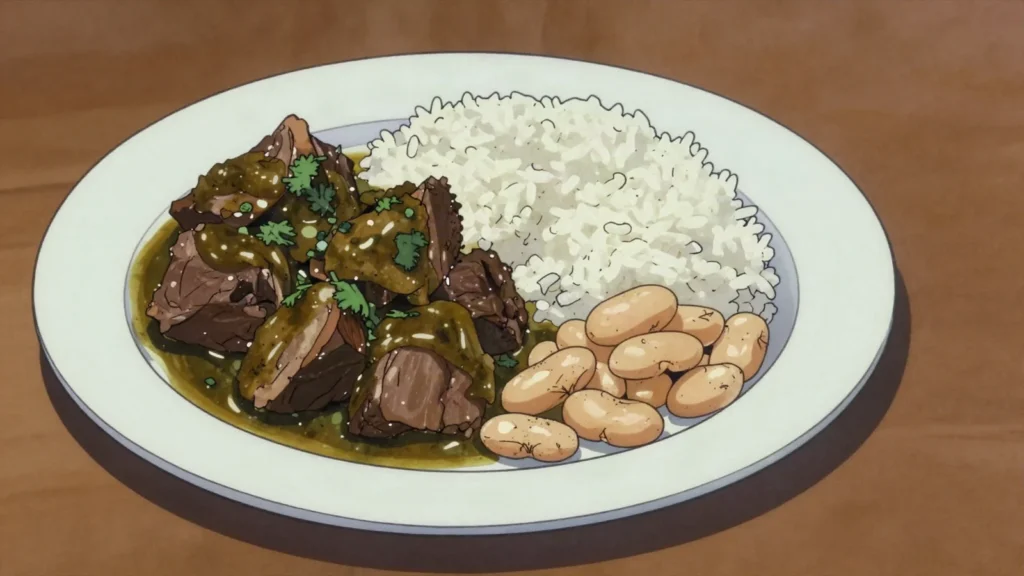
- Add most of the coriander purée after an hour, and the last spoonfuls off the heat. Coriander loses its colour and freshness with long cooking, and adding it at the start gives a flat olive sauce. Even done well, the finished dish is olive rather than vivid green — a vivid green seco has not cooked long enough.
- Fry the ají paste a full five minutes, stirring constantly. That removes the raw sharpness and deepens the colour; an unfried paste tastes harsh and thin. Keep the heat moderate, since burnt chilli is bitter and unusable.
- Cook the onions a full twelve minutes. The aderezo underlies a great many Peruvian dishes and rushing it leaves the sauce thin and harsh.
- Pat the lamb dry and brown it in two or three batches without crowding. Wet or crowded meat steams grey and adds nothing.
- Use shoulder, neck or shank rather than a lean cut. Connective tissue turns to gelatin over ninety minutes and enriches the sauce; lean lamb just dries out.
- Seco means dry, which is misleading — the dish has a generous sauce. Accounts of the name vary, one saying it once meant a dish served after a soup, and the atlas records those as commonly given rather than established.
- Chicha de jora is fermented maize beer, predating the Spanish arrival by centuries and central to Andean life. Chicha morada is unfermented sweet purple maize and a different drink entirely — only the fermented kind belongs here. Dark beer is the standard substitute and is now normal in Peru too.
- The sarza criolla is essential rather than a garnish. Its sharpness is what cuts a rich braise.
- Ají amarillo is fruity and aromatic rather than fiercely hot, and the jarred paste is the practical route outside Peru.
- Add fresh coriander purée after reheating leftovers. The colour and freshness fade overnight and that brings some back.
- Canary and butter beans carry no lectin problem, but if you use dried red kidney beans, soak them and boil them hard for ten minutes first.
Substitutions
- Beef makes seco de res and goat makes seco de cabrito, by the same method.
- Chicken makes a faster version, needing about forty minutes.
- Dark beer replaces chicha de jora and is the standard substitute.
- Butter beans or fresh broad beans replace canary beans.
- Ají panca is optional and adds smoky depth rather than heat.
- Yuca or potatoes can be added alongside or instead of the beans.
Variations
- Seco de res, made with beef, is at least as common.
- Seco de cabrito uses young goat and is the northern speciality.
- Seco de pollo is the quicker chicken version.
- Arroz con pato uses the same coriander and chicha with duck and rice.
- Carapulcra, the dried potato and pork stew, is the other great Peruvian braise.
- A version served with yuca instead of beans is made in some regions.
Frequently asked questions
What is Seco de cordero?
Seco de cordero is a main from Peru: lamb braised in coriander-chicha sauce with beans and rice.
How long does Seco de cordero take to make?
Seco de cordero takes 30 minutes of preparation and 1 hour 45 minutes of cooking. The recipe makes serves 6. It is rated medium to make.
What can I substitute in Seco de cordero?
Yes, within limits. Beef makes seco de res and goat makes seco de cabrito, by the same method. Chicken makes a faster version, needing about forty minutes. Dark beer replaces chicha de jora and is the standard substitute. Butter beans or fresh broad beans replace canary beans. Ají panca is optional and adds smoky depth rather than heat. Yuca or potatoes can be added alongside or instead of the beans.
What is the most important thing to get right in Seco de cordero?
Season it with salt and pepper. Heat the oil in a heavy pot. Brown it in batches. Do not crowd the pot. Brown it properly in two or three batches. Wet meat will not brown at all. Lift the lamb out. Add the onions to the pot. Cook them for twelve minutes. They should soften and turn golden.