
Ingredients
Main
- 24live palm weevil larvae, suri
- salt
To season, optional
- lime wedges
- aji charapita or another hot chilli
- ground cumin
Equipment
- wooden or metal skewers
- a charcoal grill or a heavy pan
Directions
- Rinse them in several changes of cold water. Some cooks leave them in clean water for an hour first. Drain them well and pat them dry. Dispatching them humanely is done by chilling.
- Put them in the freezer for fifteen minutes. The cold puts them to sleep before cooking. Thread three or four larvae onto each skewer.
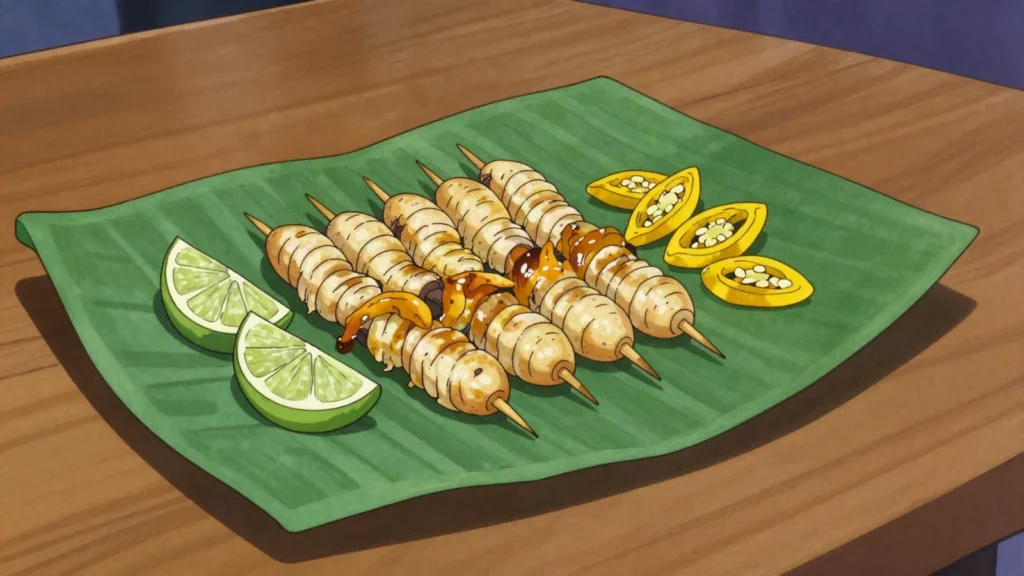
- Sprinkle them lightly with salt on both sides. Grilling them is fast and needs steady heat. Let the charcoal burn down to grey ash. Lay the skewers over the coals.
- Turn them every minute or so as they colour. The skin should turn golden and crisp all over. Cook them fully through and do not serve them rare. The inside should be firm and creamy rather than liquid.
- Put them in a dry heavy pan over a medium heat. They release enough of their own fat to fry in.
- Turn them until they are crisp and golden all over. Drain them briefly on kitchen paper. Serving them is done immediately and very simply.
- Squeeze lime over them and add a little salt. Sliced hot chilli is often served alongside.
Technique
- Palm weevil larvae are eaten across the tropics under many names, including sago worm in Southeast Asia and Melanesia.
- They are a documented traditional protein source and are increasingly farmed rather than gathered from felled trees.
Substitutions
- There is no substitute for the larvae themselves.
- Sago worms sold in Southeast Asia are closely related and are cooked the same way.
Variations
- Some Amazonian cooks wrap them in bijao leaf and roast them in embers.
- They are also cooked into juane, the wrapped rice parcel of the region.
- Skewers are sometimes dusted with cumin or with local chilli before grilling.
History
Harvested from felled aguaje palms in Loreto and San Martin and sold grilled at Amazonian markets such as Belen in Iquitos.
Frequently asked questions
What is Suri?
Suri is a snack from Peru: palm weevil larvae grilled on skewers, or eaten raw in the jungle. Harvested from felled aguaje palms in Loreto and San Martin and sold grilled at Amazonian markets such as Belen in Iquitos.
How long does Suri take to make?
Suri takes 15 minutes of preparation and 10 minutes of cooking. The recipe makes serves 4 as a snack. It is rated easy to make.
What can I substitute in Suri?
Yes, within limits. There is no substitute for the larvae themselves. Sago worms sold in Southeast Asia are closely related and are cooked the same way.
What is the most important thing to get right in Suri?
Turn them every minute or so as they colour. The skin should turn golden and crisp all over. Cook them fully through and do not serve them rare. The inside should be firm and creamy rather than liquid.