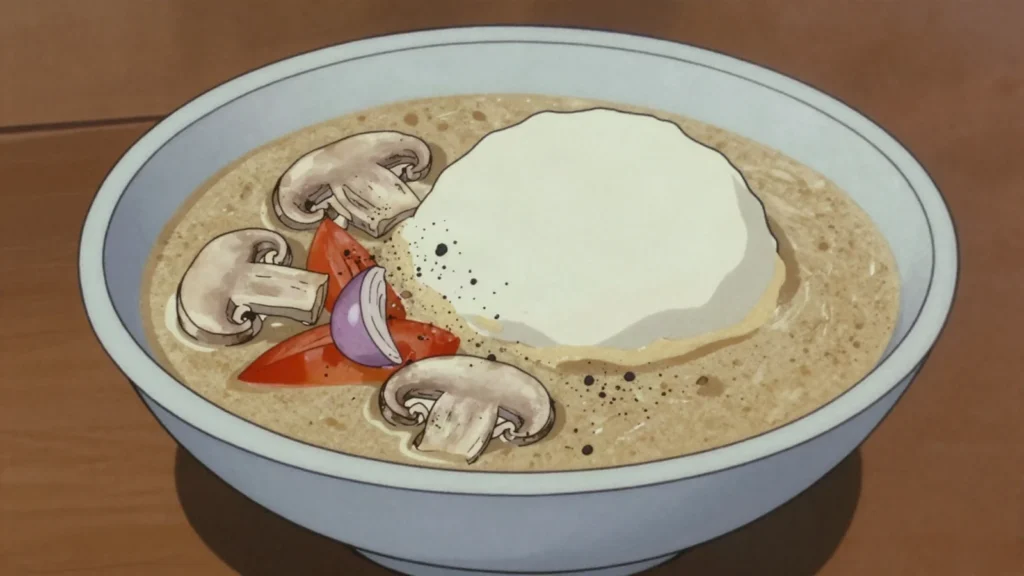

Ingredients
The mushrooms
- 800 gwild mushrooms
- gathered and identified by someone who knows them
- or cultivated mushrooms
- cleaned and sliced thickly
The pot
- 2onions, chopped
- 3tomatoes, chopped
- 3 tablespoonsoil
- about 700 ml water
- salt and black pepper
Sometimes added
- 2 tablespoonspeanut butter
- unsweetened
- a little milk
- 1hot chilli, chopped
To serve
- sadza
- stiff maize meal
- eaten with the right hand
Directions
- Brush them clean instead of soaking. Brush the soil off each mushroom. Use a soft brush or a dry cloth. Trim the gritty base of each stem.
- Cut it off and discard it entirely. Rinsing them is done sparingly. Rinse them quickly if they are very dirty. Pat them dry immediately afterwards.
- Slice all the mushrooms thickly. Thick slices hold their texture. Heat the oil in a wide heavy pot. Add the chopped onions in to it. Cook them for a good eight minutes. Add the chopped tomatoes to the pot.
- Cook them down for about six minutes. The tomato should soften and break down. Cook it until it goes quite jammy. Add the sliced mushrooms to the pot.
- Turn them through the tomato base. It settles within a few minutes. Let them cook for about ten minutes. Stir them through now and then. Let it reduce rather than draining it. Add the measured water to the pot. Season it with salt and black pepper. Bring it up to a gentle simmer.
- Let it simmer for about twenty minutes. Twenty minutes is about right. Let it cook for ten more minutes. Stir a little milk into the pot. Some households add it and some do not.
- Reduce it further if it is loose. Taste it and adjust the salt as needed. Add plenty of black pepper as well. Mushrooms take a good deal of salt. Spoon it out into a serving bowl. Serve stiff sadza alongside it. It keeps two days refrigerated.
Technique
- Wild mushrooms include genuinely deadly species, some closely resembling edible ones, and misidentification has killed people. There is no general test for edibility: silver spoons, colour changes, whether animals eat it and whether it peels all prove nothing. Never eat a wild mushroom you cannot identify, and never rely on a book or an application alone. In Zimbabwe the knowledge is passed on directly — children are shown the species, the places and the seasons by adults, and that direct teaching in the field is the real safeguard. The atlas gives the recipe as it is cooked rather than telling anyone to forage; cultivated mushrooms make the same soup and are the safe route for anyone unsure.
- Mushroom poisoning is unlike other food illness in that some species destroy the liver over days with no early warning, so by the time symptoms appear the damage is done. That is why the rule is absolute rather than a matter of care.
- Do not soak wild mushrooms, which absorb water readily and turn slimy and waterlogged, then steam rather than frying. Brush the soil off, wipe them with a damp cloth, trim the gritty stem base, and rinse only quickly if they are very dirty, patting them dry at once.
Substitutions
- Cultivated mushrooms make the same soup and carry none of the identification risk.
- Peanut butter loosened with hot water first is a common addition; say clearly if it has gone in, since the allergy can be severe.
Variations
- Miombo and mopane woodland cover large areas of Zimbabwe and many mushrooms grow with those trees, fruiting only after the first heavy rains in a window of weeks.
- The soup is valued for standing in for meat, which is expensive in rural areas, and the season is welcomed for that.
- Let the mushrooms release their water into the pot and reduce rather than draining it, since that water carries their flavour.
History
Wild mushrooms gathered from miombo and mopane woodland after the first rains and simmered into a dark, meaty soup.
Frequently asked questions
What is Nhedzi?
Nhedzi is a soup & stew from Zimbabwe: wild mushroom soup gathered in the rainy season. Wild mushrooms gathered from miombo and mopane woodland after the first rains and simmered into a dark, meaty soup.
How long does Nhedzi take to make?
Nhedzi takes 30 minutes of preparation and 45 minutes of cooking. The recipe makes serves 6. It is rated medium to make.
What can I substitute in Nhedzi?
Yes, within limits. Cultivated mushrooms make the same soup and carry none of the identification risk. Peanut butter loosened with hot water first is a common addition; say clearly if it has gone in, since the allergy can be severe.
What is the most important thing to get right in Nhedzi?
Brush them clean instead of soaking. Brush the soil off each mushroom. Use a soft brush or a dry cloth. Trim the gritty base of each stem.