
Ingredients
The starch
- 6green plantains
- or 1 kg cassava
- peeled and cut into chunks
The meat or cheese
- 300 gcharque
- dried salted beef, soaked
- or 300 g fresh white cheese
- or 300 g chicharrón, pork crackling
To fry
- 150 glard
- or oil
- 1onion, chopped, optional
- 3garlic cloves, crushed
- salt and black pepper
To serve
- hot from the mortar
- coffee
- at breakfast
Directions
- Discard the boiling water afterwards. Ripe plantain would be too sweet. Rinse the surface salt off under cold water. Cover it with cold water in a bowl. Give it at least eight full hours. Boil a small piece and taste it. It should be seasoned rather than harsh. Put the soaked charque in a pot. Cover it over with fresh water. Simmer it for about forty minutes. It should be tender enough to shred.
- Let it cool enough to handle it. Pull it all apart with two forks. Fry the shredded charque in a little lard. Give it about five full minutes. Set it aside until the pounding. Cut the ends off with a knife first. Score the skin lengthways in three places. Rub your hands with oil before you start.
- Cut the peeled plantains into thick chunks. Aim for about three centimetres. Heat the lard in a wide heavy pan. Add the plantain chunks to it. Fry them steadily for about fifteen minutes. They should be deep golden all over.
- Turn them so they colour evenly. Judging them takes a careful test. Peel the cassava thickly with a knife. Cut away the pink layer beneath the skin. Boil it hard for about twenty-five minutes. Drain it and discard all the water. Pull out the fibrous central cord. Tip the hot fried starch into the mortar. Add the fried charque to it as well.
- Add the crushed garlic as well. Pound it steadily with the pestle. Work it until it comes together. Pound it while everything is hot. Cold starch will not bind at all.
- Work quickly once it comes off the heat. Judging the texture takes a look. Work in more lard as you pound. Crumble fresh white cheese in as you pound. It softens into the hot starch. Taste it and adjust the salt as needed. Add plenty of black pepper as well.
- Taste it before adding any more. The cheese version needs more of it. Fry chopped onion with the plantain. Pound it in with everything else. Serving it is always done piping hot. Turn it out onto a warm plate. Shape it roughly into a mound. Serve strong coffee alongside it. It keeps two days refrigerated. Fry it again briefly to reheat it.
Technique
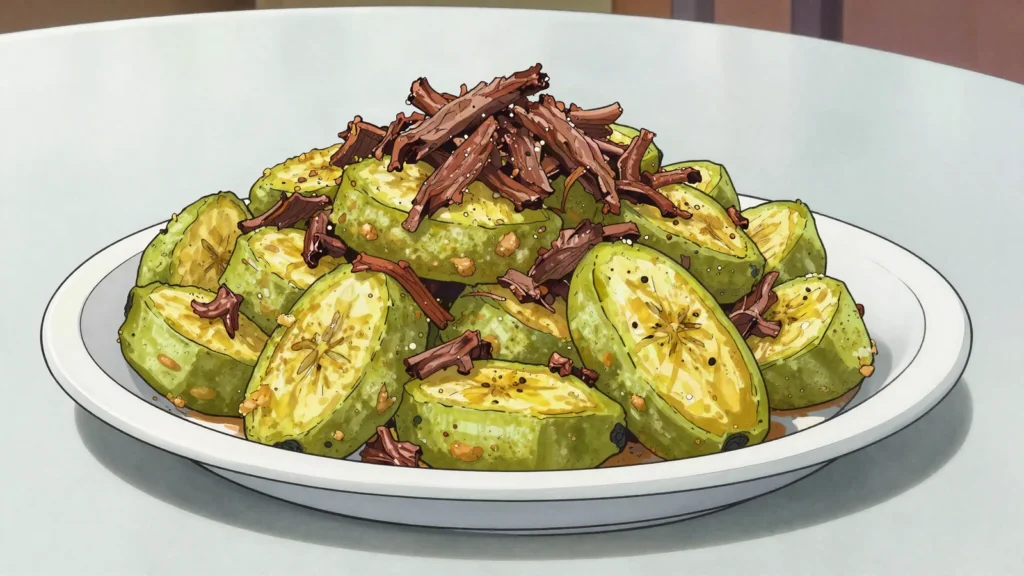
- The plantain or cassava is fried rather than boiled before pounding, and that is what makes it masaco: boiled starch pounds into a wet paste while fried starch pounds into a drier mass carrying the flavour of the fat. Pound it while everything is still hot, since cold starch will not bind at all.
- Charque is beef salted and sun dried, hard and intensely salty, and must be soaked in several changes of water for at least eight hours before boiling; test by boiling a small piece and tasting it, since salt cannot be removed after cooking.
- Cassava contains cyanogenic compounds and is genuinely dangerous raw: peel it thickly including the pink layer beneath the skin, boil it hard and discard that water entirely before frying it. Green unripe plantain is what the other version uses, since ripe plantain is too sweet and goes to mush when pounded.
Substitutions
- A large bowl with a heavy masher stands in for the tacú, the tall wooden mortar.
- Fresh white cheese or chicharrón replace the charque in the other common versions.
Variations
- Plantain masaco is sweeter and softer where cassava masaco is starchier and denser.
- Fried chopped onion is pounded in with everything else in some households.
- It is served in a rough mound or straight from the mortar.
History
An eastern lowland dish of Santa Cruz and Beni, often eaten for breakfast.
Frequently asked questions
What is Masaco?
Masaco is a main from Bolivia: fried plantain or cassava pounded with charque or cheese. An eastern lowland dish of Santa Cruz and Beni, often eaten for breakfast.
How long does Masaco take to make?
Masaco takes 30 minutes of preparation and 40 minutes of cooking. The recipe makes serves 4. It is rated medium to make.
What can I substitute in Masaco?
Yes, within limits. A large bowl with a heavy masher stands in for the tacú, the tall wooden mortar. Fresh white cheese or chicharrón replace the charque in the other common versions.
What is the most important thing to get right in Masaco?
Discard the boiling water afterwards. Ripe plantain would be too sweet. Rinse the surface salt off under cold water. Cover it with cold water in a bowl. Give it at least eight full hours. Boil a small piece and taste it. It should be seasoned rather than harsh. Put the soaked charque in a pot. Cover it over with fresh water. Simmer it for about forty minutes. It should be tender enough to shred.