
Ingredients
The pastry
- 300 mlwater
- or half water and half milk
- 60 gbutter
- half a teaspoon salt
- 300 gplain flour
- sifted
The filling
- 300 graw prawns
- peeled, deveined and chopped
- shells kept
- 50 gbutter
- 1small onion, very finely chopped
- 50 gplain flour
- 400 mlmilk
- or 300 ml milk and 100 ml prawn stock
- 1bay leaf
- a grating of nutmeg
- salt and white pepper
- a squeeze of lemon
- a handful of parsley, chopped
For coating
- 2eggs, beaten
- 150 gfine breadcrumbs
- or panko
For frying
- 1 litrevegetable oil
- or enough for 5 cm depth
To serve
- hot, on their own
- lemon wedges
- piri-piri sauce, optional
- as a petisco with a drink
Directions
- Flour is beaten in off the heat. The finished pastry is thin and crisp. Bring the water, butter and salt to a rolling boil. Take it off the heat. Add all the flour at once. Beat it hard with a wooden spoon. That takes about a minute of hard beating. Use a sturdy spoon and a firm grip on the pan. Tip it onto a surface. Let it cool until you can handle it.
- Knead it until smooth. Give it about three minutes. Let it cool two or three minutes before touching it. Wrap it and rest it thirty minutes. That makes it easier to roll thin. Keep it wrapped at all times. Keep offcuts covered while you work. Dry dough cracks and will not seal.
- Make it first if you can, since it must cool. Peel and devein them. Keep the shells. Simmer the shells in water for ten minutes. Strain it, pressing hard. Use that in place of some milk. Chop them fairly small. Cook them briefly in a little butter. Give them a minute only. Melt the butter in a pan. Add the finely chopped onion. Cook it soft without colouring.
- Stir it in and cook two minutes. It should smell nutty rather than raw. Add the milk a little at a time. Whisk it smooth after each addition. Building it gradually keeps it smooth.
- Simmer it for five minutes, stirring. This béchamel must be very thick. Stir in the chopped prawns. Add nutmeg, salt and white pepper. Add lemon juice and parsley. Season it strongly. Taste it and push it further. Spread it on a tray. Cover the surface with cling film. That stops a skin forming. Warm filling makes the pastry unworkable. Cold firm filling is easy to portion.
- Roll the dough out very thin. Aim for about two millimetres. Cut circles of about nine centimetres. Use a cutter or a glass. Put a teaspoon of cold filling on one half. Leave a clear border. Do not overfill them. Brush the border with water. Fold the pastry over into a half moon. Press the edge firmly with your fingers. Press out any trapped air.
- Trim the edge with the cutter for a neat crescent. Press the trimmed edge again. Check every one for gaps. This dough seals well if it is fresh. Dip each in beaten egg. Let the excess drip off. Roll it in breadcrumbs. Press the crumbs on.
- Chill the coated rissóis thirty minutes. Use a deep heavy pot. Fill it no more than one third full. Never leave hot oil unattended. Keep a well fitting lid within reach. If it catches fire, turn off the heat and cover it.
- Heat the oil to one hundred and eighty degrees. Do not crowd the pot. Fry them for three or four minutes. Turn them once. They should be deep golden. Strain the oil before the next batch if needed. Lift them out with a slotted spoon. Drain them on a rack over kitchen paper.
- Let the oil recover between batches. Serve them hot, within minutes. The filling stays scaldingly hot inside. Freeze them on a tray before bagging. Fry them from frozen at a slightly lower temperature. Give them an extra two minutes.
Technique
- Make the béchamel very thick — thick enough that a spoon drawn through leaves a channel that stays open for a moment. A loose filling leaks, tears the pastry and bursts the parcels in the oil, which is the commonest failure with rissóis.
- Chill the filling completely, at least two hours and preferably overnight, spread on a tray with cling film touching the surface so no skin forms. Warm filling makes the pastry unworkable.
- The boiled dough is the point. Boiling water gelatinises the starch, giving a pastry that is pliable and strong, does not shrink or tear when shaped, and fries crisp rather than greasy — a shortcrust would fall apart.
- Keep the dough wrapped at all times, including offcuts. It dries out fast in air, and dry edges will not seal.
- Press the air out as you seal. Trapped air expands in the oil and bursts the seam.
- Roll the pastry to about two millimetres. Thick pastry stays doughy inside.
- Do not overfill — a teaspoon per circle with a clear border. Overfilled rissóis burst.
- Chill the coated rissóis thirty minutes before frying. The coating firms and holds together far better.
- Cook the prawns a minute only before they go into the béchamel. They finish cooking in it, and prawns cooked through twice go rubbery.
- Add the milk to the roux gradually, whisking smooth after each addition. All at once gives lumps.
- Simmer the shells for ten minutes to make a quick stock and use it in place of some of the milk. It gives real prawn flavour for very little effort.
- Season the filling strongly. The plain pastry dilutes it considerably.
- If one bursts in the oil, lift it out at once. Filling in hot oil spits, burns and fouls the oil.
- Warn people about the first bite. A thick béchamel holds heat far longer than the pastry around it, and it is a genuine burn risk.
- This contains shellfish, wheat, milk and egg. Shellfish allergy can cause anaphylaxis — say so plainly.
- Freeze them uncooked and coated, which is how Portuguese households keep them, and fry from frozen with two extra minutes.
Substitutions
- Cooked chicken in the same béchamel makes rissóis de frango, equally common.
- Tinned tuna or cooked white fish replace prawns.
- Prawn stock in place of some milk gives more flavour.
- Panko replaces fine breadcrumbs for a crunchier coating.
- Half milk and half water in the dough gives a slightly softer pastry.
- Baking at 200 degrees with a brush of oil gives a drier, less traditional result.
Variations
- Rissóis de frango, with chicken, is at least as common.
- Rissóis de carne uses minced meat in the same pastry.
- Croquetes de carne are the beef croquettes served alongside.
- Pastéis de bacalhau, the salt cod fritters, are the other great Portuguese petisco.
- Empadas are the small baked pastries from the same counter.
- Rissoles across Brazil follow the same construction with local fillings.
Frequently asked questions
What is Rissóis de camarão?
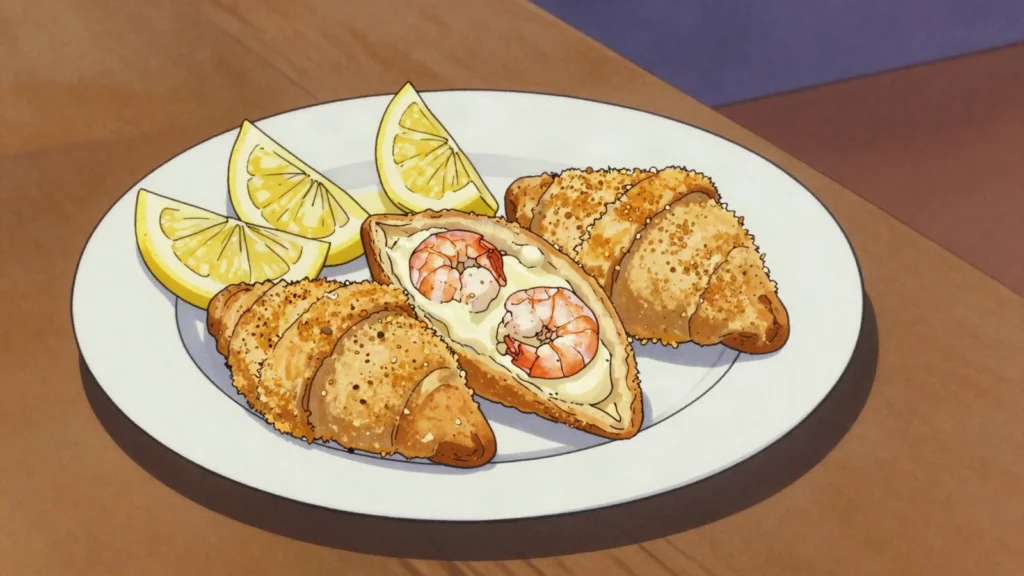
Rissóis de camarão is a snack from Portugal: crescent-shaped fried pastries filled with creamy shrimp béchamel.
How long does Rissóis de camarão take to make?
Rissóis de camarão takes 1 hour plus chilling of preparation and 40 minutes of cooking. The recipe makes makes about 24. It is rated hard to make.
What can I substitute in Rissóis de camarão?
Yes, within limits. Cooked chicken in the same béchamel makes rissóis de frango, equally common. Tinned tuna or cooked white fish replace prawns. Prawn stock in place of some milk gives more flavour. Panko replaces fine breadcrumbs for a crunchier coating. Half milk and half water in the dough gives a slightly softer pastry. Baking at 200 degrees with a brush of oil gives a drier, less traditional result.
What is the most important thing to get right in Rissóis de camarão?
Make it first if you can, since it must cool. Peel and devein them. Keep the shells. Simmer the shells in water for ten minutes. Strain it, pressing hard. Use that in place of some milk. Chop them fairly small. Cook them briefly in a little butter. Give them a minute only. Melt the butter in a pan. Add the finely chopped onion. Cook it soft without colouring.