
Ingredients
The sardines
- 16fresh sardines
- whole and ungutted
- see the note
- or gutted, if you prefer
- large summer sardines
To season
- coarse sea salt
- generously
- nothing else at all
The fire
- charcoal
- a wire grill
- or a fish basket
- a little oil, for the bars
To serve
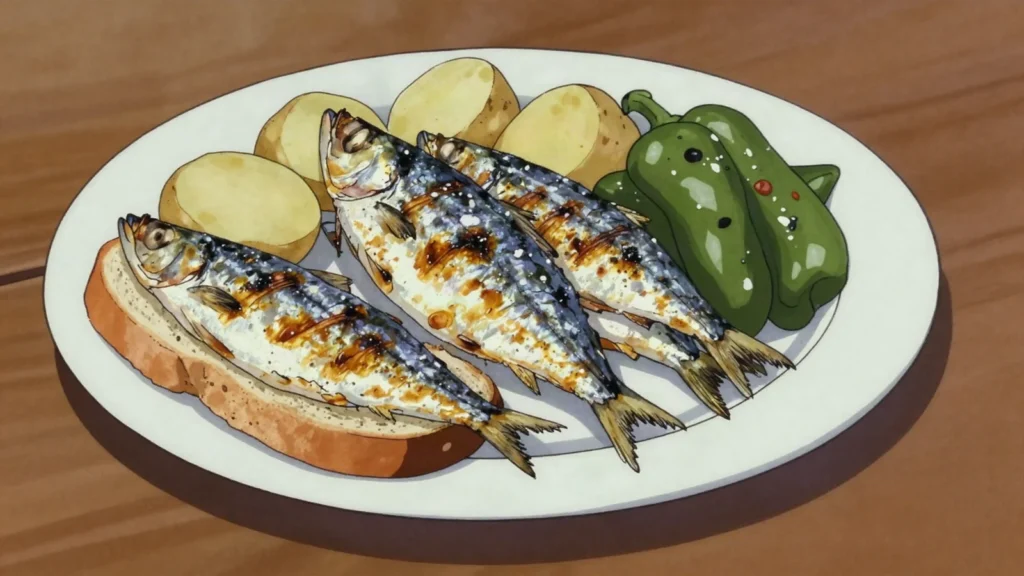
- boiled potatoes
- grilled peppers
- a tomato and onion salad
- bread, plenty of it
- olive oil
Directions
- Salt them about thirty minutes ahead. Use coarse salt genuinely generously. It should coat them all visibly. Rinse the sardines and pat them dry. Rinse away any of the loose scales. Pat them dry with kitchen paper.
- Cover them entirely in coarse salt. Let them sit for about thirty minutes. Brush the excess salt off before grilling. Enough stays for the seasoning.
- Wait until it glows under grey ash. That is what the method needs. Grill them outdoors for that reason. Get the grill genuinely hot first.
- Oil the bars thoroughly before cooking. A hot oiled grill releases the fish.
- Rub the bars with an oiled cloth. Use tongs to hold the oiled cloth. Lay the sardines on the hot grill. They take about three minutes a side.
- Turn them once with a spatula. Turn it in one confident movement. Judging them takes a careful look. Take them off as soon as they are done. Serving them is always done hot.
- Serve them straight from the grill. That is genuinely how it is done. Grill them fresh and eat them at once.
Technique
- Salt the sardines heavily with coarse salt about thirty minutes before grilling, then brush most of it off and pat them dry again: the salt draws surface moisture out and firms the skin, which holds together far better on the grill. It is a technique rather than just seasoning.
- Fish sticks badly to a grill and the skin tears when turned. Get the grill genuinely hot, oil the bars with an oiled cloth held in tongs, keep the fish surface dry, and do not move them until a crust has formed — they release themselves when ready. A fish basket solves it entirely.
- Charcoal produces carbon monoxide, which is odourless and genuinely lethal, so burn it outdoors only. Sardine fat also drips and smokes very heavily, which is part of the dish but another reason to grill outside.
Substitutions
- Traditionally they are grilled ungutted, the guts adding flavour as they cook and being discarded when eaten; many people prefer them gutted, which is milder and cleaner. The atlas gives both routes and the method is identical either way — ask the fishmonger if you prefer them gutted.
- The seasoning is coarse salt alone with no oil, lemon or herbs at all, and that restraint is genuinely the point: a good fat sardine needs nothing, and adding things buries the flavour.
Variations
- Summer sardines are what is wanted, since they fatten through the season and that fat is what makes them good — June to October is the window, and the June festival falls in it for that reason rather than by coincidence.
- The eye turning white is a useful traditional sign of doneness, along with blistered charred skin and flesh that pulls from the bone. Overcooked sardines go dry and grainy and fall apart on the grill, so take them off as soon as they are done.
- Serve them on a slice of bread, which catches the dripping oil and juices — that soaked bread is genuinely prized and eaten afterwards, and in the street the bread is the plate. Eat the top fillet, lift the backbone away in one piece, then eat the bottom fillet; small bones remain in the flesh, so warn people and watch children.
History
Fresh sardines, simply grilled over an open charcoal fire and seasoned with little more than salt, documented across Portugal as an essential summer dish, particularly closely associated with Lisbon’s Festas de Santo António in June, when grilled sardines are prepared and eaten in enormous quantities across the city’s streets and neighborhoods. Its extremely simple preparation, relying entirely on the freshness and quality of the sardines themselves rather than elaborate seasoning, reflects Portugal’s long historical relationship with Atlantic fishing and its correspondingly straightforward, ingredient-forward approach to preparing fresh seafood. Sardinhas assadas remain deeply tied to Portuguese coastal culture and specifically to Lisbon’s June festival traditions.
Frequently asked questions
What is Sardinhas assadas?
Sardinhas assadas is a main from Portugal: charcoal-grilled sardines eaten at summer saints’ festivals. Fresh sardines, simply grilled over an open charcoal fire and seasoned with little more than salt, documented across Portugal as an essential summer dish, particularly closely associated with Lisbon’s Festas de Santo António in June, when grilled sardines are prepared and eaten in enormous quantities across the city’s streets and neighborhoods. Its extremely simple preparation, relying entirely on the freshness and quality of the sardines themselves rather than elaborate seasoning, reflects Portugal’s long historical relationship with Atlantic fishing and its correspondingly straightforward, ingredient-forward approach to preparing fresh seafood. Sardinhas assadas remain deeply tied to Portuguese coastal culture and specifically to Lisbon’s June festival traditions.
How long does Sardinhas assadas take to make?
Sardinhas assadas takes 20 minutes plus salting of preparation and 15 minutes of cooking. The recipe makes serves 4. It is rated easy to make.
What can I substitute in Sardinhas assadas?
Yes, within limits. Traditionally they are grilled ungutted, the guts adding flavour as they cook and being discarded when eaten; many people prefer them gutted, which is milder and cleaner. The atlas gives both routes and the method is identical either way — ask the fishmonger if you prefer them gutted. The seasoning is coarse salt alone with no oil, lemon or herbs at all, and that restraint is genuinely the point: a good fat sardine needs nothing, and adding things buries the flavour.
What is the most important thing to get right in Sardinhas assadas?
Salt the sardines heavily with coarse salt about thirty minutes before grilling, then brush most of it off and pat them dry again: the salt draws surface moisture out and firms the skin, which holds together far better on the grill. It is a technique rather than just seasoning.