
Ingredients
The cassava
- 1.5 kgcassava root
- a sweet variety, peeled thickly
- read the safety note first
- or 1.2 kg frozen cassava
- or 800 g cassava flour
- and about 600 ml water
The groundnuts
- 300 graw groundnuts
- peanuts, skins on or off
- roasted and ground
- or 250 g smooth peanut butter
- unsweetened
The seasoning
- 1 teaspoonsalt
- or to taste
- 1 tablespoonsugar
- optional
- a little red palm oil
- optional
For wrapping
- banana leaves
- softened over a flame
- or maize husks
- or foil and greaseproof paper
- string, to tie
To serve
- on its own, as a snack
- with a hot sauce
- with grilled fish or meat
Directions
- Peel away the brown skin and the pink layer beneath. Both come off together in one thick strip. Boil it in plenty of water and discard that water. Never eat cassava raw at any point.
- Discard any root that tastes strongly bitter after cooking. Cut one open before cooking. The flesh must be pure white throughout. Discard any root showing those signs. Discard any that are shrivelled, discoloured or mouldy. Discard any that taste bitter or musty. Store them cool and dry.
- Peel it with a knife rather than a peeler. Cut the root into lengths of about eight centimetres. Stand each upright and cut down through the thick skin. Check the pink layer comes away with it. Put the cassava in a large pot of water.
- Boil it uncovered for about twenty-five minutes. It should be tender right through. Drain it and discard the water entirely. Pound the hot cassava to a smooth paste. Do not use a food processor.
- Pound it while it is still hot. Cold cassava goes hard and will not combine. Work fast once it is drained. Mix it gradually with boiling water. Stir hard until it forms a stiff paste. Cook it, stirring, for about ten minutes. Spread them on a tray. Roast them at one hundred and eighty degrees. Give them about fifteen minutes.
- Shake the tray twice. They should smell strongly nutty. Rub the cooled nuts in a cloth. Both are done. Grind them to a coarse paste. Do not grind it to smooth butter. Check it contains no added sugar or oil. Work the groundnut paste into the cassava. Add it gradually while pounding or kneading.
- Add the salt. Add sugar if you want a sweeter bar. Add a little palm oil if you like. Keep working until it is uniform. That takes real effort. Add a little hot water if it is too stiff.
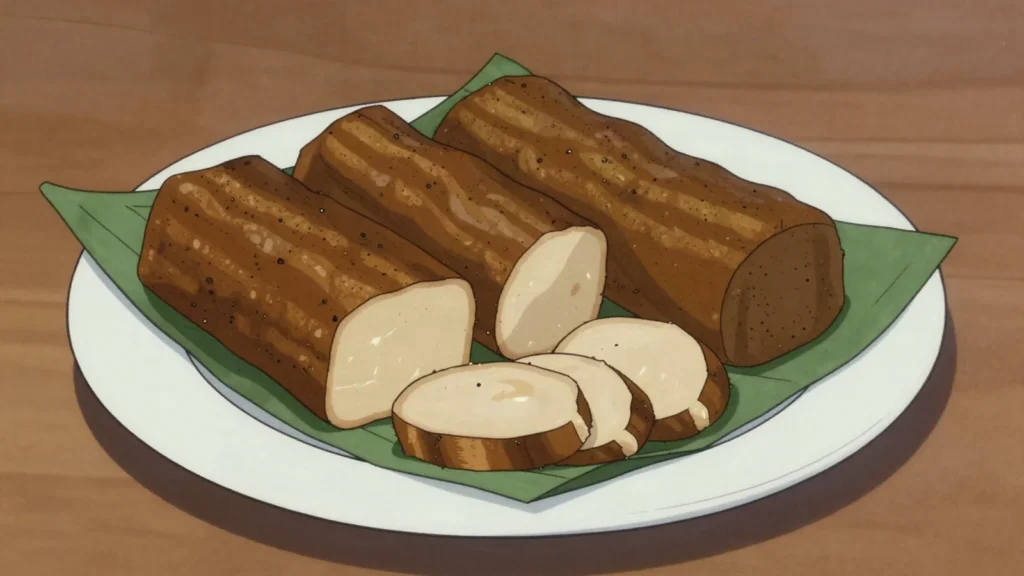
- Add more cassava if it is too loose. They crack when folded cold. Cut them into rectangles. Take a handful of the paste. Roll it into a thick cylinder. Make it about the size of a large sausage. Lay it on a leaf. Roll the leaf around it tightly.
- Fold the ends under or tie them. Tie the parcel with string or leaf strips. Wrap it tightly. Set them on a rack in a large pot. Add water below the level of the parcels.
- Cover the pot tightly. Steam them for about forty-five minutes. Check the level halfway. Top it up with boiling water. A pot that boils dry scorches badly. Steam escapes from a hot parcel when opened. Let the parcels stand five minutes first.
- Let them cool in their wrappers. They firm up considerably as they cool. Serve them warm or at room temperature. Slice them into rounds. Serve a hot sauce alongside if you like. It should be dense and chewy. Steam them from frozen for twenty-five minutes.
Technique
- Cassava contains cyanogenic glycosides that release cyanide when the tissue is damaged. Use sweet cassava, peel away both the brown skin and the pink layer beneath, boil it in plenty of water and discard that water, then steam the bars thoroughly. Never eat it raw and never taste the raw paste.
- Cut a root open before cooking. The flesh must be pure white; grey or blue streaks, black specks or dark rings mean it has begun to spoil, and that deterioration raises the harmful compounds as well as spoiling the flavour.
- Chronic cyanide exposure from poorly processed cassava causes konzo, a permanent paralysis of the legs, appearing in drought and shortage when processing is shortened out of hunger. It is a disease of poverty rather than of cassava, which properly processed feeds hundreds of millions. Both facts belong together.
- This dish is built on peanuts and cannot be made without them. Peanut allergy is one of the commonest severe allergies and can cause anaphylaxis — tell anyone you serve it, plainly and unmistakably.
- Groundnuts can carry aflatoxins, produced by moulds in humid climates and linked to liver damage with chronic exposure. Roasting does not destroy them, so sorting is what protects you: buy from a reputable source, discard any shrivelled, discoloured or mouldy nuts, discard anything tasting bitter or musty, and store them cool and dry.
- Pound the cassava while it is still hot. Cold cassava goes hard and will not combine, so work fast once it is drained.
- Never use a food processor on cassava. It turns to an unworkable elastic glue that cannot be recovered.
- Pull out the tough fibrous cord down the centre of each piece. It never softens.
- Grind the groundnuts to a coarse paste rather than smooth butter. Small pieces of nut through the bar are wanted.
- Watch roasting groundnuts from twelve minutes. They burn quickly once they colour and burnt nuts are bitter and unusable.
- Wrap the parcels tightly. Loose ones let water in and go soggy, while a tight wrap compresses the paste as it steams — that compression is what gives the chewy density.
- Let the parcels stand five minutes and open them away from your face. The trapped steam scalds.
- Cassava flour mixed with boiling water and cooked ten minutes gives a similar working paste with far less effort, and is a legitimate shortcut.
- The word pinda travelled with enslaved people from Central Africa and is the root of the Caribbean word for peanut. That etymology is documented.
Substitutions
- Frozen peeled cassava replaces fresh and avoids the spoilage problem.
- Cassava flour cooked with boiling water replaces the whole boiling and pounding stage.
- Unsweetened smooth peanut butter replaces ground roasted groundnuts, giving a smoother bar.
- Maize husks or foil lined with greaseproof paper replace banana leaves.
- A little sugar makes a sweeter bar; many versions have none.
- A little red palm oil adds colour and richness.
Variations
- Chikwangue is cassava paste alone, fermented and steamed in leaves.
- Kanya in Sierra Leone combines groundnuts with rice flour and sugar into a sweet bar.
- Mbala pinda sliced and fried is how leftovers are usually eaten.
- Fufu is the same cassava pounded to a soft dough rather than a firm bar.
- Gari, dried and toasted grated cassava, is the same root processed for storage.
- A sweetened version with more sugar is made as a confection.
Frequently asked questions
What is Mbala pinda?
Mbala pinda is a snack from Republic of the Congo: cassava paste worked with roasted groundnuts, wrapped and steamed into a chewy bar.
How long does Mbala pinda take to make?
Mbala pinda takes 40 minutes of preparation and 1 hour 15 minutes of cooking. The recipe makes makes about 12 bars. It is rated medium to make.
What can I substitute in Mbala pinda?
Yes, within limits. Frozen peeled cassava replaces fresh and avoids the spoilage problem. Cassava flour cooked with boiling water replaces the whole boiling and pounding stage. Unsweetened smooth peanut butter replaces ground roasted groundnuts, giving a smoother bar. Maize husks or foil lined with greaseproof paper replace banana leaves. A little sugar makes a sweeter bar; many versions have none. A little red palm oil adds colour and richness.
What is the most important thing to get right in Mbala pinda?
Peel away the brown skin and the pink layer beneath. Both come off together in one thick strip. Boil it in plenty of water and discard that water. Never eat cassava raw at any point.