
Ingredients
The hare
- 1hare, jointed
- its blood, reserved
- or 150 ml pig’s blood
- 1 tablespoonvinegar, for the blood
Marinade
- 1 bottlered wine
- 2onions, sliced
- 2carrots, sliced
- 4garlic cloves
- 3bay leaves
- 6juniper berries, crushed
- 10black peppercorns
- 3 sprigsthyme
- a few parsley stalks
- 2cloves
The pot
- 150 gsmoked bacon, in lardons
- 250 gbutton mushrooms
- 20small onions, peeled
- 50 gbutter
- 2 tablespoonsplain flour
- 500 mlstock
- 2 tablespoonsbrandy
- salt and black pepper
To serve
- boiled potatoes or spaetzle
- red cabbage
- stewed apple or cranberry
Directions
- Mix it with a little vinegar as soon as it is collected. That vinegar stops it clotting into a solid mass. Keep it refrigerated and use it within a day. The sauce must never boil after the blood goes in.
- Joint the hare into serving pieces. Put the pieces in a large non-metal bowl. Add all the marinade ingredients over them. Pour the wine over everything. Cover it over and refrigerate it. Give it at least twenty-four hours. Turn the pieces once or twice a day.
- Lift the hare pieces out of the marinade. Pat every piece completely dry. Strain the marinade and keep the liquid. Keep the vegetables separately as well. Melt the butter in a large heavy pot.
- Add the hare pieces in batches. Do not crowd the pot at any point. Brown them well on every side. Give each batch about six minutes. Lift the pieces out and set them aside. Fry the bacon lardons in a separate pan. Let them render out and crisp. Lift them out and set them aside. Fry the small onions in the bacon fat.
- Let them colour well all over. Set all three of them aside together. Add the strained marinade vegetables to the pot. Cook them for about eight minutes. Sprinkle the flour over all of them. Stir it and cook it for two full minutes. Return the hare pieces to the pot.
- Pour in the strained marinade. Add the beef stock to it as well. Season it with salt and black pepper. Bring it up to a gentle simmer. Cooking it takes genuinely real time. Cover the pot and simmer very gently. Give it at least two full hours. Check it and add stock if it goes dry. Judging when it is done takes a fork. Add the bacon, onions and mushrooms. Give them the last twenty minutes.
- Lift the hare pieces out and keep them warm. Take the pot right off the heat entirely. Let it cool for two or three minutes. The sauce must be below simmering point. Put the blood in a small bowl. Whisk a ladle of the hot sauce into it. Whisk it in slowly and steadily. Finishing the sauce takes a light hand.
- Stir the sauce over the lowest possible heat. Never let it come near a simmer. Stir in the brandy at the end. It should be glossy and deep brown. Strain it if that happens and serve it thinner. Serving it is done piping hot.
- Return the hare pieces to the sauce. Warm them through without simmering. Spoon it out onto warm plates. Serve boiled potatoes or spaetzle alongside. It keeps two days refrigerated.
Technique
- The sauce must never boil after the blood goes in, since blood curdles at around seventy degrees into grainy specks that cannot be fixed; take the pot off the heat, let it cool a few minutes, temper the blood with a ladle of hot sauce first, then stir it back over the lowest heat.
- Blood must be mixed with a little vinegar as soon as it is collected to stop it clotting, kept refrigerated and used within a day; a game dealer may supply it with the hare if you ask when ordering.
- Civet is the French name for this style of stew, from cive meaning onion, and small onions with bacon lardons and button mushrooms are its defining garniture; ziwwi is the Luxembourgish rendering of the word.
Substitutions
- Pig’s blood from a butcher stands in for the hare’s own blood.
- The dish can be made without blood entirely, thickened with flour and butter alone.
Variations
- Some cooks add a square of dark chocolate to deepen the sauce.
- Rabbit can be used, though the flavour is far milder.
- Spaetzle, boiled potatoes and red cabbage are the usual accompaniments.
History
A Luxembourgish hunting-season dish thickened with blood, in the civet style shared with neighbouring France.
Frequently asked questions
What is Huesenziwwi?
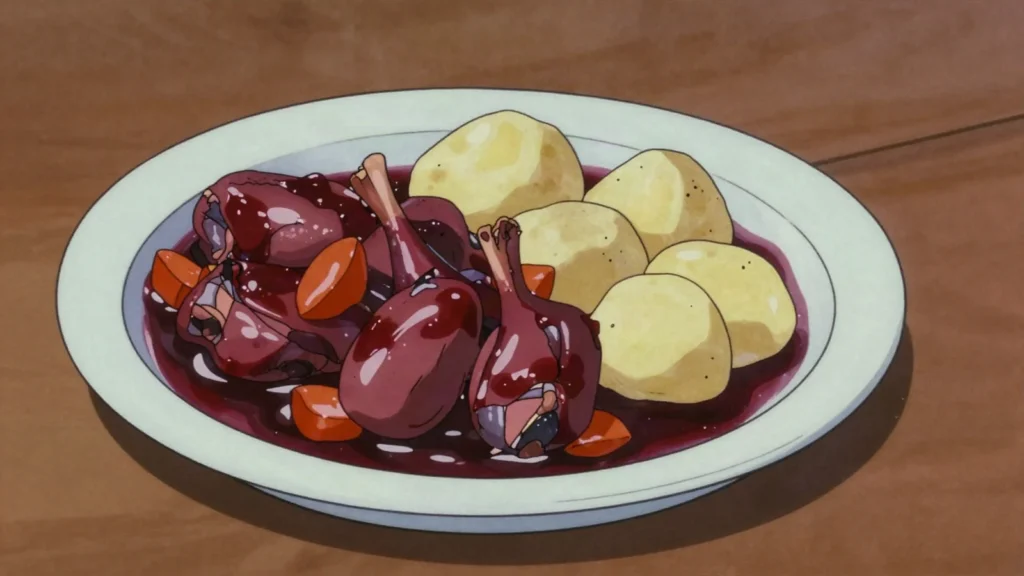
Huesenziwwi is a main from Luxembourg: hare jugged in red wine and its own blood, an autumn game dish. A Luxembourgish hunting-season dish thickened with blood, in the civet style shared with neighbouring France.
How long does Huesenziwwi take to make?
Huesenziwwi takes 40 minutes plus marinating of preparation and 2 hours 30 minutes of cooking. The recipe makes serves 6. It is rated hard to make.
What can I substitute in Huesenziwwi?
Yes, within limits. Pig’s blood from a butcher stands in for the hare’s own blood. The dish can be made without blood entirely, thickened with flour and butter alone.
What is the most important thing to get right in Huesenziwwi?
Mix it with a little vinegar as soon as it is collected. That vinegar stops it clotting into a solid mass. Keep it refrigerated and use it within a day. The sauce must never boil after the blood goes in.