
Ingredients
The fish
- 1 kgfirm white reef fish
- snapper, grouper or similar
- cleaned, in thick steaks
- or whole small fish
- or 1 kg fish fillets
The coconut milk
- 3fresh coconuts
- grated and pressed
- for about 1 litre milk
- or 3 tins coconut milk
- full fat, not light
The plantain
- 4green plantains
- or green cooking bananas
- peeled and cut into chunks
- see the note on peeling
The seasoning
- 1onion, chopped
- 3 clovesgarlic, crushed
- 1 teaspoonsalt
- or to taste
- black pepper
- 1hot chilli, whole
- optional
- a little chopped coriander
Sometimes added
- 1yuca root, peeled and chunked
- or a piece of pumpkin
- a squeeze of lime
- a little achiote, for colour
To serve
- plain boiled white rice
- lime wedges
- fried plantain, optional
Directions
- Use a firm white reef fish for this. The flesh must hold together in simmering. Crack a mature coconut over a bowl. Never chop at a coconut on a board. Grate the flesh out with a scraper. Put the grated coconut in a clean cloth. Add a little warm water to it.
- Squeeze the cloth hard over a bowl. The thick first pressing is the cream. Add more water and squeeze again. The thick cream goes in at the end.
- Use full fat, never light coconut milk. They must be completely green and hard. Oil your hands and knife beforehand. Oil dissolves the sap where water does not. Cut the ends off each plantain. Score the skin lengthways two or three times. Cut through the skin only, not the flesh. Cut the flesh into thick chunks.
- Drop them into water as you go. That stops them browning while you work. Put the thin coconut milk in a wide pot. Add the onion, garlic and salt. Add the whole chilli if you use one. Bring the pot to a gentle simmer. Add yuca or pumpkin at the same time. They need the longest cooking. Simmer them for about twenty-five minutes. Do not let coconut milk boil hard.
- Keep it at a bare simmer throughout. The plantain should be tender to a knife. Lay the pieces gently on the surface. Do not stir once the fish is in. Simmer it for eight to twelve minutes. Whole fish need a little longer.
- Add it in the last three minutes. Long cooking splits the thick cream. Shake the pot gently to combine. Do not stir with a spoon at this point.
- Taste the broth and adjust the salt. Add plenty of ground black pepper. Squeeze a little lime over if you like. Scatter chopped coriander on top. Remove the whole chilli before serving. Serve it in bowls with the broth. Both are done in Guna households.
Technique
- The Guna won their autonomy by revolt. The Guna revolution of 1925 was a response to forced assimilation, after which Panama negotiated and the comarca of Guna Yala was recognised. The Guna govern their own internal affairs through their own congresses, and that autonomy is often cited internationally as an example. A people who kept their autonomy kept their cooking, so this is not incidental to the dish.
- The Guna islands sit barely above sea level and are being flooded by rising seas and storm surges, worsened by reef damage. Some are becoming uninhabitable and communities have begun relocating to the mainland, one island community in 2024, with more expected. These are among the first such relocations in the Americas. That is honest context for a cuisine built on islands.
- Never let coconut milk boil hard — it splits into grainy oil. Keep it at a bare simmer, and add the thick cream only in the last three minutes.
- Do not stir once the fish is in. Shake the pot gently instead; a spoon breaks the fish into shreds.
- Ciguatera toxin accumulates in some reef predators, causes an unpleasant and lasting illness, is not destroyed by cooking and cannot be detected by look or smell. Local fishers know which fish and which reefs to avoid, and that knowledge is specific to place. Buy from established local sellers and ask locally in affected regions. Most reef fish sold commercially is fine.
- Reef fish stocks are under real pressure and grouper and snapper are both heavily fished. Check a current guide if that matters to you.
- Green plantains must be completely green. Any yellowing means sugars have developed and the dish turns sweet. They leak a staining sap that water will not shift — oil your hands and knife first, score the skin lengthways and prise it off in strips.
- Use a firm white fish that holds together in liquid. Soft-fleshed fish disintegrates into the broth.
Substitutions
- Any firm white fish replaces reef fish — cod, pollock or hake all hold together well.
- Tinned full-fat coconut milk replaces freshly pressed; hold back the thick top of the tin for the end.
- Green cooking bananas replace plantains directly.
- Yuca, pumpkin or breadfruit can be added or substituted for some of the plantain.
- A little achiote gives the orange colour some cooks want, without much change to the flavour.
- The chilli is optional; many households make it without.
Variations
- A version with whole small fish rather than steaks gives a much richer broth from the bones and heads.
- Some households add yuca alongside the plantain, making a heavier and more filling dish.
- Dule masi is another spelling of the same dish name in Guna.
- Related fish and coconut stews are cooked all along the Caribbean coast of Central America, in Nicaragua, Honduras and Belize.
- Rondón, the Caribbean coconut fish stew of Panama, Nicaragua and Colombia, is a close relative with a wider mix of vegetables.
- A version with lobster or crab, when the catch allows, is made for visitors and for occasions.
History
The everyday dish of the Guna of Guna Yala, whose islands supply the coconuts and the reef fish.
Frequently asked questions
What is Tulemasi?
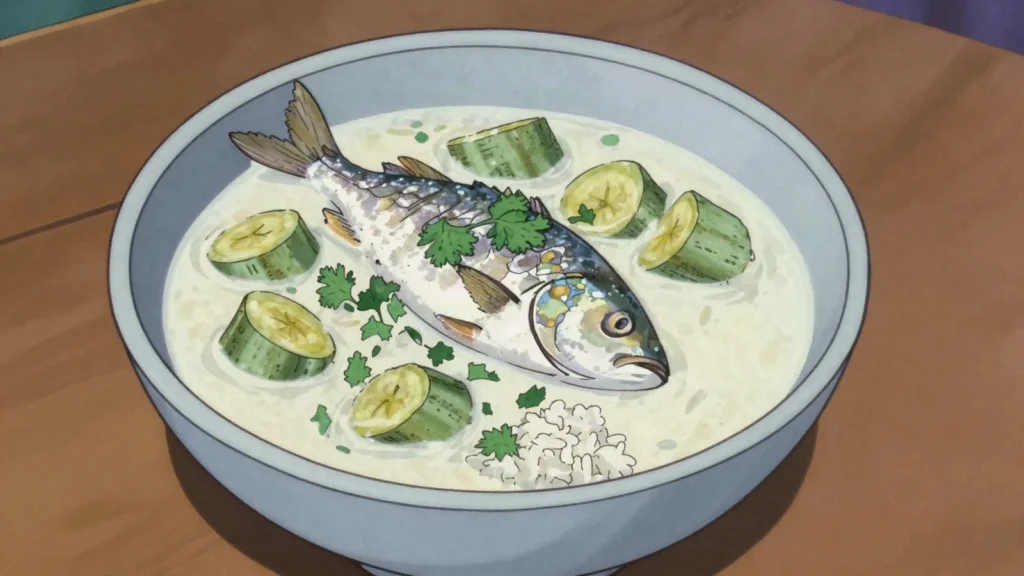
Tulemasi is a soup & stew from Panama: fish and plantain simmered in coconut milk, eaten with rice. The everyday dish of the Guna of Guna Yala, whose islands supply the coconuts and the reef fish.
How long does Tulemasi take to make?
Tulemasi takes 25 minutes of preparation and 45 minutes of cooking. The recipe makes serves 6. It is rated easy to make.
What can I substitute in Tulemasi?
Yes, within limits. Any firm white fish replaces reef fish — cod, pollock or hake all hold together well. Tinned full-fat coconut milk replaces freshly pressed; hold back the thick top of the tin for the end. Green cooking bananas replace plantains directly. Yuca, pumpkin or breadfruit can be added or substituted for some of the plantain. A little achiote gives the orange colour some cooks want, without much change to the flavour. The chilli is optional; many households make it without.
What is the most important thing to get right in Tulemasi?
Use a firm white reef fish for this. The flesh must hold together in simmering. Crack a mature coconut over a bowl. Never chop at a coconut on a board. Grate the flesh out with a scraper. Put the grated coconut in a clean cloth. Add a little warm water to it.