
Ingredients
The broth
- 800 gfirm white fish
- or oily fish such as mackerel
- on the bone if possible
- 2 litreswater
- 4 stalkslemongrass
- bruised and knotted
- a thumb of ginger, sliced
- 1onion, halved
- 1 tablespoonfish sauce
- or 2 teaspoons ngapi
- the fermented fish paste
- salt, to taste
The paste
- 2onions, roughly chopped
- 8 clovesgarlic
- a thumb of ginger
- 1 tablespoonpaprika
- or Kashmiri chilli, for colour
- 1 teaspoonturmeric
- 4 tablespoonsoil
The chilli oil
- 4 tablespoonsoil
- 2 tablespoonschilli flakes
- or more, to taste
- half a teaspoon salt
The noodles
- 600 gfresh round rice noodles
- or thick rice vermicelli
The toppings
- 3 tablespoonsfried garlic
- with its oil
- 4spring onions, sliced
- a handful of coriander
- 150 gbean sprouts
- blanched briefly
- roasted chickpea flour
- lime wedges
- extra chilli flakes
- fish sauce, to season
Directions
- Adjust it to your own tolerance. It must taste strongly of fish. Put the fish in a pot with the water. Add the bruised lemongrass, ginger and onion. Bring it slowly to a simmer. Skim the grey foam that rises.
- Keep skimming until it stops. Simmer it gently for twenty minutes. Do not boil it hard. Lift it out after fifteen minutes. Let it cool enough to handle. Flake the flesh and discard the bones. Check the flaked fish for bones carefully.
- Strain the broth through a fine sieve. Discard the aromatics. Knot them so they are easy to remove. Blend the onions, garlic and ginger. Blend to a smooth paste. Add a splash of water to help. Heat the oil in a wide pan. Add the paste. Fry it patiently for fifteen minutes.
- Stir it frequently. That separation is the sign it is ready. Add a splash of water. Add the paprika and turmeric. Fry them for a minute. Do not use a hot chilli powder in that quantity. Stir the fried paste into the strained broth. Add the flaked fish. Simmer it for fifteen minutes.
- Add it to the broth and simmer it. Season with fish sauce and salt. Taste it carefully. The broth should taste strongly of fish. Heat the oil until hot but not smoking. Take it off the heat. Pour it over the chilli flakes in a heatproof bowl.
- Add the salt and stir. Pouring hot oil onto chilli releases fumes. Keep your face away. Oil that is too hot burns the flakes. Let the oil cool for thirty seconds first. Slice garlic thinly. Put it in a cold pan with oil.
- Turn the heat to medium-low. Take it off while it is still pale gold. Keep both the garlic and the oil. Thick rice vermicelli substitutes. Rinse them briefly in cold water after cooking. It stops them clumping into a solid mass. Toss them in a little oil. Toast gram flour in a dry pan. Stir it until it smells nutty. Give it about five minutes.
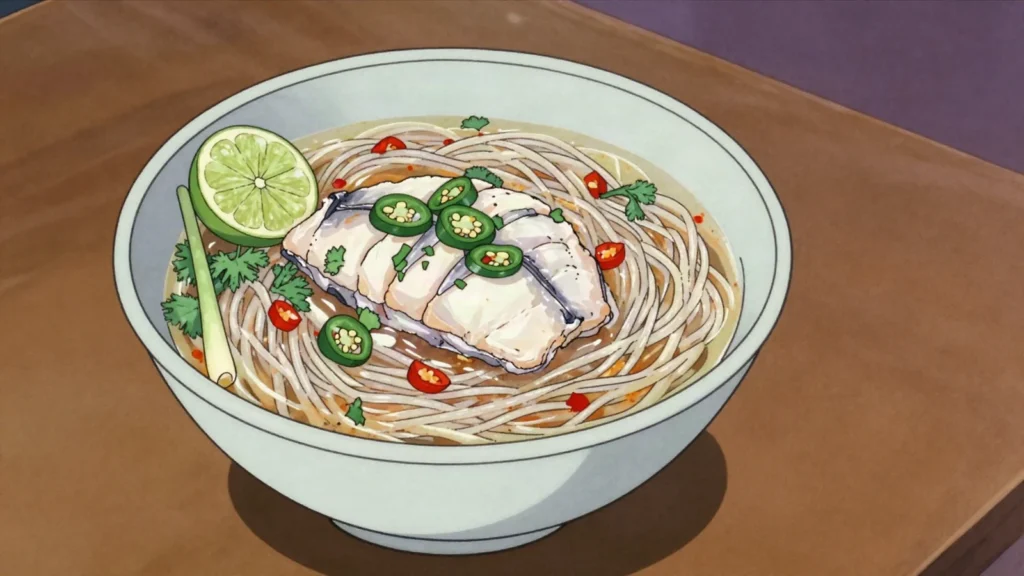
- Put noodles in each bowl. Ladle the hot broth over. Add flaked fish. Add blanched bean sprouts. Add spring onion and coriander. Scatter crisp fried garlic. Sprinkle roasted chickpea flour. Spoon chilli oil over.
- Squeeze lime. It should be savoury, sour, hot and fresh. Adjust each at the table. The broth keeps three days refrigerated. Cook fresh noodles when you serve it. Assembled bowls do not keep at all.
Technique
- Simmer fish stock twenty to thirty minutes and no longer. Unlike meat stock, fish stock turns bitter and glue-like with long cooking.
- Go through the flaked fish with your fingers for bones. Small bones in a noodle soup are genuinely dangerous and the check is worth the time.
- Fry the onion, garlic and ginger paste a full fifteen minutes, until it darkens and the oil separates around it. That removes the raw harshness and concentrates the flavour — an underfried paste tastes sharp and thin, and this is the difference between good and mediocre.
- Skim the grey foam and never boil the broth hard. Boiling clouds it and toughens the fish.
- Bruise the lemongrass and knot the stalks. Bruising releases the oils and knotting makes them easy to fish out.
- Use paprika or Kashmiri chilli for colour and let the chilli oil carry the heat. That quantity of hot chilli powder would be overwhelming, and paprika burns bitter in seconds — lower the heat before it goes in.
- Let the oil cool thirty seconds before pouring it over the chilli flakes. Too hot and it burns them black and bitter. Do it by an open window or under an extractor, keeping your face away — the fumes irritate eyes and throat.
- Take the frying garlic off the heat while pale gold. It darkens off the flame, and waiting for brown in the pan gives burnt bitter garlic that ruins the oil.
- Rinse cooked rice noodles briefly in cold water and toss them in oil. That removes surface starch and stops them clumping into a solid mass.
- Season the broth strongly. It should taste clearly of fish and be well salted, since the noodles dilute it considerably.
- Ngapi, Burmese fermented fish or shrimp paste, gives enormous depth in small quantities and mellows in cooking. It smells very strong when opened — open a window. Fish sauce is the practical substitute.
- Rakhine food is hot by Burmese standards and this dish is deliberately fiery, with extra chilli on the table. Adjust it to your own tolerance.
- This contains fish and often shrimp paste, both potentially severe allergens. Say so plainly.
- Rakhine State has been the site of severe violence, with large numbers of Rohingya people forced to flee in 2017 and investigations describing those events in the gravest terms. Very large numbers remain displaced in Bangladesh. That is documented and undisputed, and the atlas records it once.
Substitutions
- Fish sauce replaces ngapi and is easier to buy.
- Any firm or oily fish serves; mackerel gives a stronger broth than white fish.
- Fish heads and frames from a fishmonger make a better broth than fillets alone.
- Thick rice vermicelli replaces fresh round rice noodles.
- Crushed roasted peanuts replace roasted chickpea flour.
- The dry version dresses the noodles with the paste and toppings instead of ladling broth over.
Variations
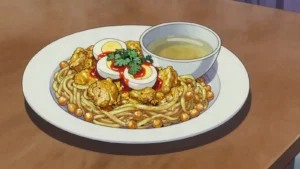
- Mont di served dry, tossed rather than in broth, is at least as common.
- Mohinga, the fish and banana-stem noodle soup, is Myanmar’s national breakfast.
- Mandalay mee shay is the upper Myanmar noodle dish built on fermented soybean.
- Shan khauk swe uses tomato and chicken in a lighter broth.
- Rakhine mont di made with a stronger fish paste is the fiercer local version.
- Ohn no khao swè uses coconut milk and egg noodles.
Frequently asked questions
What is Rakhine Mont Di?
Rakhine Mont Di is a main from Myanmar: rice noodles with fiery fish broth and lemongrass from the western coast.
How long does Rakhine Mont Di take to make?
Rakhine Mont Di takes 40 minutes of preparation and 1 hour of cooking. The recipe makes serves 6. It is rated medium to make.
What can I substitute in Rakhine Mont Di?
Yes, within limits. Fish sauce replaces ngapi and is easier to buy. Any firm or oily fish serves; mackerel gives a stronger broth than white fish. Fish heads and frames from a fishmonger make a better broth than fillets alone. Thick rice vermicelli replaces fresh round rice noodles. Crushed roasted peanuts replace roasted chickpea flour. The dry version dresses the noodles with the paste and toppings instead of ladling broth over.
What is the most important thing to get right in Rakhine Mont Di?
Adjust it to your own tolerance. It must taste strongly of fish. Put the fish in a pot with the water. Add the bruised lemongrass, ginger and onion. Bring it slowly to a simmer. Skim the grey foam that rises.