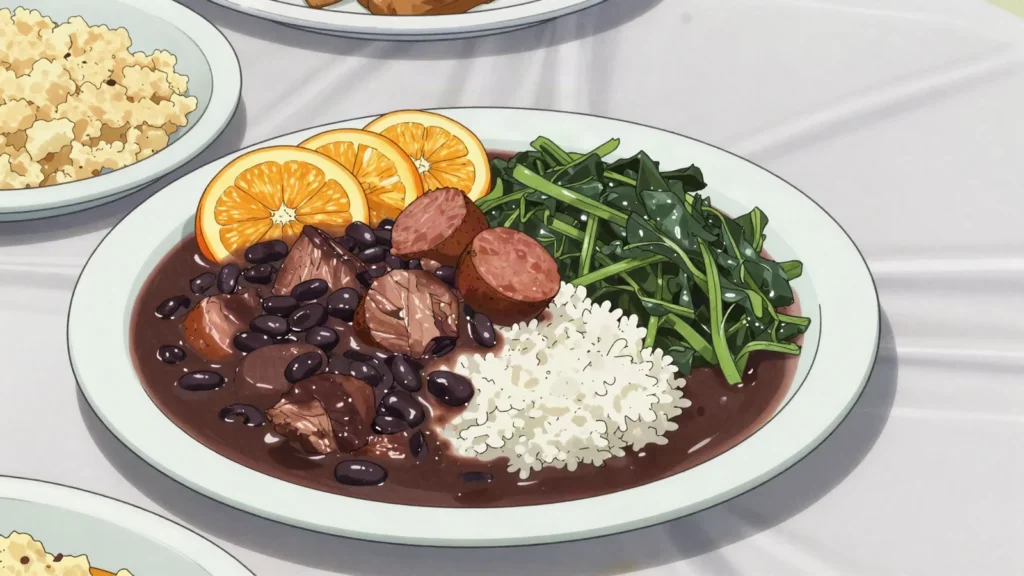

Ingredients
Beans and meats
- 700 gdried black beans
- 300 gcarne seca or salt beef, soaked overnight in 3 changes of water
- 400 gsmoked pork ribs
- 250 gpaio sausage, in thick slices
- 250 glinguiça calabresa, in thick slices
- 200 gsmoked pork belly, in cubes
- 1salted pig’s trotter and 1 ear, scrubbed and soaked overnight (traditional, optional)
Refogado
- 4 tbspneutral oil
- 2onions, finely chopped
- 8garlic cloves, crushed
- 3bay leaves
- 1 tspblack pepper
- Salt, to taste
To serve
- 600 gcooked white rice
- 400 gcouve mineira (collard greens), rolled and sliced into hair-thin ribbons
- 2 tbspoil and 2 garlic cloves, for the greens
- 300 gfarofa (toasted cassava flour)
- 3oranges, peeled and sliced
- Molho de pimenta, to taste
Directions
- Soak the beans overnight in cold water. Separately soak all the salted cuts overnight in plenty of water, changing it three times, then boil them 10 minutes and throw that water away — otherwise the finished pot is inedibly salty.
- Put the drained beans in a large heavy pot with the bay leaves and 2.5 litres of fresh water. Bring to a boil, then simmer covered for 1 hour.
- Add the toughest cuts first — the trotter, ear and carne seca — and simmer another hour, topping up with boiling water so the beans stay just covered.
- Add the ribs and belly and cook 45 minutes, then the sausages for the final 30 minutes so they do not go grainy.
- Make the refogado: fry the onion in the oil over medium heat until deep gold, about 10 minutes, then add the garlic for 1 minute. Ladle in two cups of cooked beans, mash them into the pan, and return the lot to the pot.
- Simmer uncovered for a final 30 minutes, stirring occasionally, until the liquor is glossy, almost black and thick enough to coat a spoon. Season with salt and pepper only now.
- For the couve, get a wide pan smoking hot with oil and garlic, throw in the ribboned greens and toss 60 to 90 seconds — they should stay squeaky and bright green.
- Rest the pot 20 minutes off the heat, or better, make it the day before. Serve the beans in a bowl, the meats on a platter, with rice, couve, farofa, orange slices and chilli sauce alongside.
Technique
- There is no tomato and no cumin in a Rio feijoada. The colour and depth come entirely from black beans, smoke and salt-cured cuts; anything else makes it a generic bean stew.
- The orange is not a garnish. Its acid cuts the fat and, in Brazilian belief, helps you survive the rest of the afternoon.
- Feijoada is a Wednesday and Saturday dish, eaten at lunch and followed by a nap. It improves overnight, so cooking a day ahead is traditional practice, not a shortcut.
Substitutions
- Carne seca is the hardest item to source: substitute a good salt beef or corned brisket at the same weight, and cut the added salt further.
- Paio can be replaced by a mild smoked Polish sausage, calabresa by a coarse smoked chorizo — though chorizo brings paprika that is not native to the dish.
Variations
- Simplified home versions use only ribs and sausages, skipping the ears, trotters and tails of the feijoada completa.
- In parts of São Paulo and the south the beans used are brown or red rather than black, giving a lighter pot.
History
Long popularly explained as a dish invented by enslaved people from plantation scraps and pig off-cuts, a story food historians now largely reject: bean-and-meat stews nearly identical to feijoada were already standard peasant food across Portugal and its other colonies, eaten by all classes, well before Brazilian slavery. What is accurate is that feijoada took its specific Brazilian form — black beans rather than the white beans used in Portugal, and the particular mix of smoked and salted pork cuts — through generations of Afro-Brazilian cooking, and was elevated from everyday food to a formal national dish mainly in the 20th century, served as a Wednesday-and-Saturday restaurant ritual across Rio de Janeiro long before it represented Brazil abroad.
Frequently asked questions
What is Feijoada?
Feijoada is a main from Brazil: black bean and pork stew with rice, orange, greens, farofa; Saturday ritual. Long popularly explained as a dish invented by enslaved people from plantation scraps and pig off-cuts, a story food historians now largely reject: bean-and-meat stews nearly identical to feijoada were already standard peasant food across Portugal and its other colonies, eaten by all classes, well before Brazilian slavery. What is accurate is that feijoada took its specific Brazilian form — black beans rather than the white beans used in Portugal, and the particular mix of smoked and salted pork cuts — through generations of Afro-Brazilian cooking, and was elevated from everyday food to a formal national dish mainly in the 20th century, served as a Wednesday-and-Saturday restaurant ritual across Rio de Janeiro long before it represented Brazil abroad.
How long does Feijoada take to make?
Feijoada takes 45 min plus overnight soaking of preparation and 3 hr 30 min of cooking. The recipe makes 8 servings. It is rated medium to make.
What can I substitute in Feijoada?
Yes, within limits. Carne seca is the hardest item to source: substitute a good salt beef or corned brisket at the same weight, and cut the added salt further. Paio can be replaced by a mild smoked Polish sausage, calabresa by a coarse smoked chorizo — though chorizo brings paprika that is not native to the dish.
What is the most important thing to get right in Feijoada?
Soak the beans overnight in cold water. Separately soak all the salted cuts overnight in plenty of water, changing it three times, then boil them 10 minutes and throw that water away — otherwise the finished pot is inedibly salty.