
Ingredients
The meat
- 2.5 kgpork shoulder
- or a whole goose or duck
- on the bone if possible
- salt and black pepper
The seasoning
- 8garlic cloves, crushed
- 2 teaspoonscaraway seed
- 2 teaspoonsground coriander
- 2bay leaves
- a few juniper berries
- 2 tablespoonsmustard
- 3 tablespoonsoil or lard
The pot
- 2onions, thickly sliced
- 2carrots, in chunks
- about 300 ml stock
- or water
- a splash of vodka, optional
To serve
- with potatoes
- or buckwheat
- pickles
- and horseradish
Directions
- Cut pieces expose far more surface. It has a warm slightly bitter note. Use caraway where the recipe says so. A few berries is quite enough. Check it rather than guessing. It is cooked until it pulls apart. Check the thickest part of the thigh. The juices should run entirely clear. Pour it off as it collects in the tin. It keeps for months refrigerated.
- Crush the garlic to a paste with salt. Salt gives the blade something to work against. Use the flat of a large knife. Combining it is straightforward enough. Mix the garlic with the spices and mustard. Add the oil to make it into a paste. Mustard helps the paste cling to the meat. Cut deep slashes into the meat. They also help the fat render.
- Cut through the fat but not deep into meat. Score pork skin in a diamond pattern. Make deep holes in the meat with a knife. Rub the paste all over the meat. Work it right into all the slashes. Four hours is a workable minimum. Take it out an hour before roasting. Cold meat cooks very unevenly.
- Heat the oven to one hundred and sixty degrees. Pork shoulder needs slow cooking. Lay the onion and carrot in a roasting tin. Set the meat on top of all of them.
- Pour the stock around the meat. It should be a shallow layer only. Cover the tin with foil for the first hours. That keeps it moist as it cooks. Roast it for about two and a half hours. A two and a half kilo shoulder takes that long. Baste it every forty minutes or so.
- Use the juices from the roasting tin. That keeps the whole surface moist. Add a splash of vodka if you like. Take the foil off for the last half hour. Watch it so that it does not burn. Let the meat rest for twenty minutes. Cover the meat loosely with foil. A large cut stays hot for a long time. Strain the juices from the tin. Press the vegetables through a sieve.
- Discard the fibres afterwards. Let the juices stand a few minutes. Skim the fat from the surface. Keep goose fat if you have it. Simmer the gravy to reduce it. Season the gravy and then taste it. Taste the gravy and adjust the salt. Add black pepper quite generously. Serving it is done at the table.
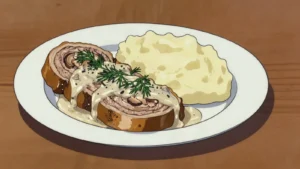
- Carve the meat into thick slices. Serving it up is always done hot. Serve potatoes or buckwheat alongside. Serve pickles and horseradish with it. It keeps three days refrigerated.
Technique
- Pork must reach seventy-five degrees at the thickest part, and poultry the same — check the thigh of a goose or duck and look for entirely clear juices with no pink at the bone. A slow-roasted shoulder goes well past that anyway, since it is full of connective tissue that breaks down only with long gentle cooking, so the texture is the guide there: it is done when a fork twists it apart with no resistance.
- Make deep holes in the meat with a knife and push garlic right into them, as well as rubbing the paste over the surface. A surface rub only reaches the outside, where deep holes carry flavour right through the cut — a traditional technique.
- Pour only a shallow layer of stock into the tin, about a centimetre, and set the meat on sliced onion and carrot to lift it clear. The meat must not sit in liquid, which would braise it rather than roast it, and the vegetables flavour the juices and become the base of the gravy.
Substitutions
- A whole goose or duck stands in for pork shoulder; goose renders a great deal of fat, which is prized — pour it off as it collects and it keeps months refrigerated.
- Mustard in the paste helps it cling to the meat and adds a sharp background; it is a common Belarusian marinade base.
Variations
- Caraway is central to Belarusian cooking and is not cumin — it is sharper and more aniseed-like, and a few crushed juniper berries suit pork and game with their resinous note.
- Cover the tin with foil for the first hours to trap steam and keep the meat moist, then take it off and raise the heat for the last half hour to brown and crisp the surface.
- This was a dish of the gentry table and of weddings rather than everyday peasant food, since large roasts required wealth and an oven that most rural households did not have — honest social history, and it remains a festive dish now that ovens are universal.
History
Large cuts of meat roasted whole in the oven, once the centrepiece of Belarusian gentry and wedding tables.
Frequently asked questions
What is Pyachysta?
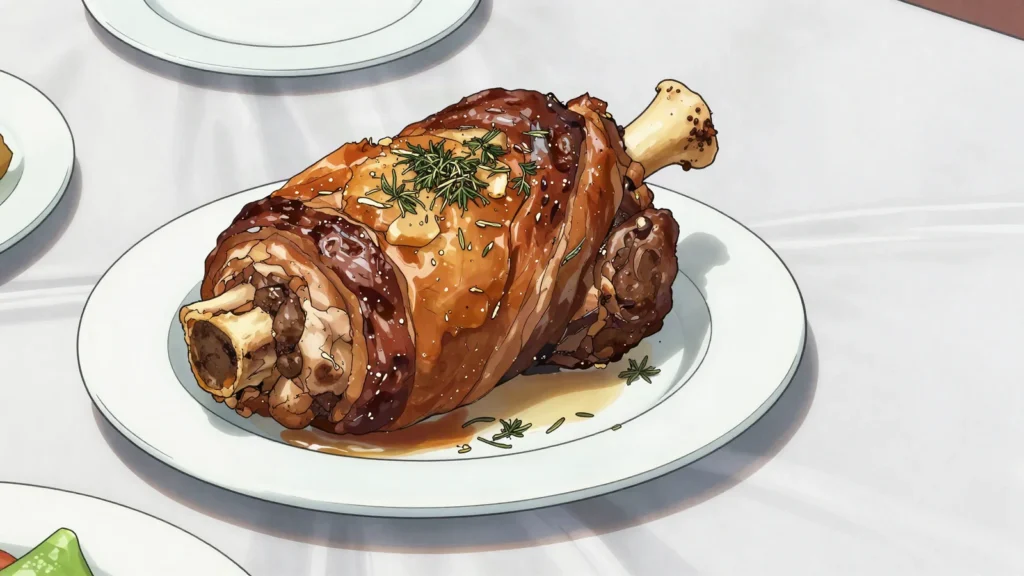
Pyachysta is a main from Belarus: festive whole-roasted pork or fowl. Large cuts of meat roasted whole in the oven, once the centrepiece of Belarusian gentry and wedding tables.
How long does Pyachysta take to make?
Pyachysta takes 30 minutes plus marinating of preparation and 3 hours of cooking. The recipe makes serves 8. It is rated medium to make.
What can I substitute in Pyachysta?
Yes, within limits. A whole goose or duck stands in for pork shoulder; goose renders a great deal of fat, which is prized — pour it off as it collects and it keeps months refrigerated. Mustard in the paste helps it cling to the meat and adds a sharp background; it is a common Belarusian marinade base.
What is the most important thing to get right in Pyachysta?
Cut pieces expose far more surface. It has a warm slightly bitter note. Use caraway where the recipe says so. A few berries is quite enough. Check it rather than guessing. It is cooked until it pulls apart. Check the thickest part of the thigh. The juices should run entirely clear. Pour it off as it collects in the tin. It keeps for months refrigerated.