
Ingredients
The chicken
- 1.5 kgchicken pieces
- on the bone
- juice of 2 limes
- 4garlic cloves, crushed
- a few sprigs of thyme
- 2spring onions, chopped
- salt and black pepper
The burnt sugar
- 4 tablespoonsbrown sugar
- or white sugar
- 3 tablespoonsoil
The pot
- 1onion, chopped
- 400 mlthick coconut milk
- 1hot chilli
- whole and unbroken
- 2cloves
- a strip of lime peel
- salt
To serve
- with rice
- or provisions
- at Christmas
Directions
- Stand well back as you add it. Thick coconut milk finishes the dish. Keep it at a gentle simmer only. Stir it gently as the sauce reduces. Chicken must be cooked right through. Check it rather than guessing. Wash hands after handling raw chicken. Wash boards and knives as well. Do not let raw juices touch other food.
- Rub the chicken with lime juice. Add the garlic, thyme and spring onion. Season it with salt and pepper. Two hours is a good minimum here. Turn on the kitchen extractor fan. Heat the oil in a heavy deep pot. Add the sugar into the hot oil. The oil should be hot beforehand. Heat the oil for a minute first. Add the chicken at that smoking point. It should smell nutty rather than acrid.
- Stand well back as it goes in. Use long tongs for adding it in. Add the pieces one at a single time. Turn the pieces to coat them well. Let them brown on all of their sides. Give them about ten full minutes. Work in batches if the pot is full. Add the chopped onion to the pot.
- Cook it for about five minutes. Pour in the thick coconut milk. Add the cloves and the lime peel. Add the whole chilli to the pot. Add it whole and quite unbroken. Do not cut or pierce it at all. Lift it right out before serving. Bring it up to a gentle simmer.
- Keep it at a gentle simmer only. Cooking it takes about forty minutes. Let it cook for about forty minutes. Chicken on the bone takes that long. Check it rather than trusting a clock. Stir it every ten minutes or so. Keep the heat low right throughout. Judging the chicken takes a proper check. Take the lid off near the end.
- Let the coconut milk reduce right down. It should become a thick sticky glaze. Lift the whole chilli right out. It can burst on a spoon otherwise. Take it right out before serving. Discard the whole chilli carefully.
- Taste it and adjust the salt as needed. It should be sweet, dark and slightly bitter. Adjust the salt to lift the whole thing. Serving it is always done hot. Spoon it out with all its glaze. Serve rice or provisions alongside. It keeps three days refrigerated.
Technique
- The sugar is taken further here than in most caramel bases — past amber to dark brown until it smokes lightly and smells nutty, which is why it is called burnt sugar. That slight bitterness balances the sweet coconut milk and is the whole point of the dish. But trust the smell over the colour: nutty means ready and acrid means gone too far, and it turns acrid within seconds.
- Burning sugar is far hotter than boiling water, sticks to skin and burns badly, so never touch or taste it hot. It also smokes considerably and sets off alarms, so open a window and turn on the extractor before you start. Adding chicken spits violently as the moisture hits, so pat every piece dry first, stand well back and lower them in one at a time with long tongs.
- Keep it at a gentle simmer throughout, since hard boiling splits the coconut milk and the oil separates out. Stir every ten minutes scraping the bottom, because the sugar catches there and burnt sugar on the base turns the whole pot acrid.
Substitutions
- A whole unbroken chilli perfumes the pot without releasing all its heat; do not cut or pierce it, and lift it out before serving so it cannot burst on someone’s spoon.
- Provisions — boiled yam, dasheen, green banana and plantain — stand in for rice and soak up the sticky glaze.
Variations
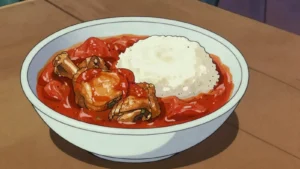
- The atlas also carries pollo guisado, which uses the same burnt sugar technique before finishing in a tomato sauce where this finishes in coconut milk; caramelising sugar before the meat runs right across the Caribbean.
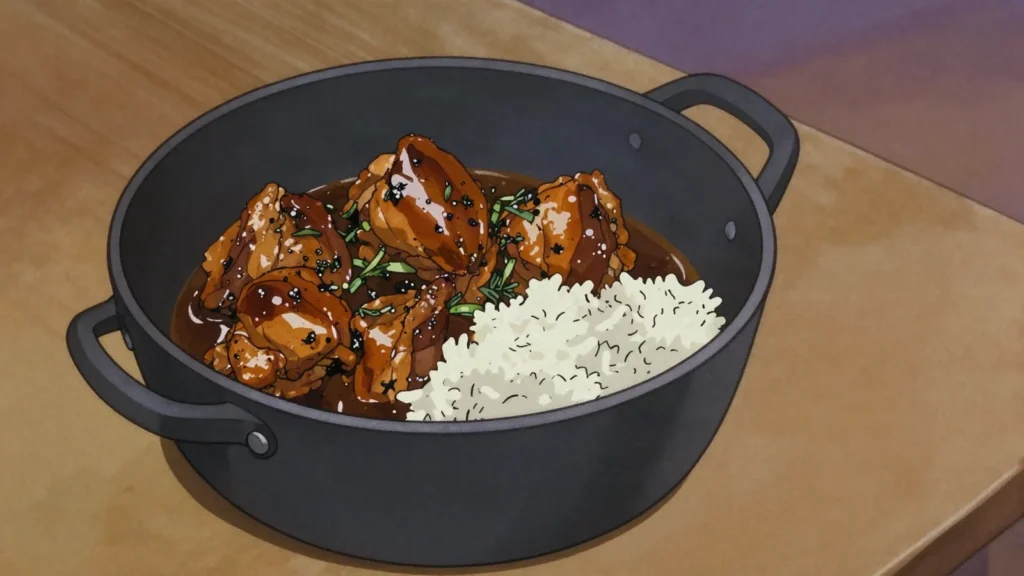
- Reduce the coconut milk at the end to a thick sticky glaze that coats the chicken rather than a pourable sauce, watching closely and lowering the heat — a thick sugary glaze goes from sticky to black very fast.
- Dudon is a Creole word whose origin is not certainly known; several explanations circulate and the atlas records the name without inventing one.
History
A Saint Lucian Creole dish that browns chicken in burnt cane sugar before finishing it in coconut milk, a technique shared with Martinique.
Frequently asked questions
What is Poule dudon?
Poule dudon is a main from Saint Lucia: chicken caramelised in burnt sugar and coconut, dark and sticky. A Saint Lucian Creole dish that browns chicken in burnt cane sugar before finishing it in coconut milk, a technique shared with Martinique.
How long does Poule dudon take to make?
Poule dudon takes 30 minutes plus marinating of preparation and 1 hour of cooking. The recipe makes serves 6. It is rated hard to make.
What can I substitute in Poule dudon?
Yes, within limits. A whole unbroken chilli perfumes the pot without releasing all its heat; do not cut or pierce it, and lift it out before serving so it cannot burst on someone’s spoon. Provisions — boiled yam, dasheen, green banana and plantain — stand in for rice and soak up the sticky glaze.
What is the most important thing to get right in Poule dudon?
Stand well back as you add it. Thick coconut milk finishes the dish. Keep it at a gentle simmer only. Stir it gently as the sauce reduces. Chicken must be cooked right through. Check it rather than guessing. Wash hands after handling raw chicken. Wash boards and knives as well. Do not let raw juices touch other food.