
Ingredients
The chicken
- 1whole village chicken
- free-range and mature
- about 1.5 to 2 kg
- jointed into pieces
- or 1.5 kg free-range chicken pieces
- on the bone
The base
- 3 tablespoonscooking oil
- or groundnut oil
- 3large onions, chopped
- 5 clovesgarlic, crushed
- a thumb of ginger, grated
- optional
- 4large tomatoes, chopped
- or 1 tin chopped tomatoes
- 2 tablespoonstomato purée
The seasoning
- 2 teaspoonssalt
- or to taste
- 1 teaspoonblack pepper
- 1stock cube
- optional
- 1hot chilli, whole
- optional
- about 750 ml water
Sometimes added
- 1green pepper, chopped
- 2carrots, sliced
- a little curry powder
- chopped coriander, to finish
To serve
- nshima, stiff maize porridge
- cooked greens, such as rape or pumpkin leaves
- or rice
Directions
- Reduce the simmering to about forty minutes. Do not wash raw chicken in the sink. Use a separate board for raw chicken. Wash hands, boards and knives thoroughly.
- Keep it away from anything ready to eat. Cut it into eight or ten pieces. Keep the back and neck for the pot too. Put the chicken pieces in a large pot. Add water to just cover the pieces. Add a little salt and bring it to a boil. Skim off the grey foam that rises.
- Simmer them gently for about an hour. Then lift the pieces out and keep the broth. Heat the oil in a large heavy pot. Pat the pieces dry before they go in. Brown them well on all sides in batches. Do not crowd the pot at any point.
- Lift the pieces out and set them aside. Add the chopped onions with a pinch of salt. Cook them slowly for a full fifteen minutes. They should be soft, sweet and golden.
- Add the garlic and the ginger if using. Cook them for two minutes until fragrant. Fry it for two or three minutes. Add the chopped fresh tomatoes. Cook them down until they collapse fully. That softening takes about ten minutes. Add any juices that collected on the plate. Add the reserved broth or fresh water. Add enough to come halfway up the pieces. Do not drown the chicken in liquid.
- Add the stock cube if you are using one. Add the whole chilli, left unbroken. Add the green pepper and carrot if using. Season with salt and black pepper. Bring it to a simmer and partly cover. Now simmer it until the chicken is tender. Simmer it uncovered for ten minutes. If it is too thick, add a little water.
- Scatter chopped coriander if you like. Remove the chilli before serving. It is stiff maize porridge, cooked thick. Wash hands before eating with them. Leftovers keep three days refrigerated.
Technique
- A village chicken is a mature free-range bird, often a year or more old, and its meat is darker, firmer, tougher and far more flavourful than a grill’s. It cannot be cooked quickly — twenty minutes gives something inedible, two hours gives something excellent. That is the whole point of the dish.
- A boiling fowl, an older laying hen sold for stewing, is the closest widely available equivalent and is cheap because few people want it. If you can only get a grill, cut the simmering to about forty minutes and accept a milder, softer result.
- Do not wash raw chicken. Washing splashes campylobacter and salmonella around the kitchen onto taps, surfaces and cloths, and does not remove them from the meat — only cooking does that. Pat it dry with paper and bin the paper.
- Cook the onions for a full fifteen minutes. Zambian cooks use a great deal of onion and it thickens and sweetens the whole stew, but only if it is properly cooked down.
- Fry the tomato purée and cook the fresh tomatoes right down until they collapse. An under-cooked tomato base tastes sharp and thin.
- Do not drown the chicken. Liquid halfway up the pieces is right; this is a stew, not a soup.
- Keep the back, neck and feet if you have them. Bony pieces and feet add gelatine and give the stew real body, and nothing is discarded in a village kitchen.
- Boiling the chicken first and then browning it is very common in the region. It tenderises the tough meat early and gives you a broth for the stew. Browning straight away is equally valid.
- Killing a village chicken is a real decision, since the bird lays eggs and produces more chickens. It is done for guests and for occasions, and it is a mark of respect. That is not a picturesque detail — it carries genuine weight.
Substitutions
- A boiling fowl replaces a village chicken most closely; a mature free-range or corn-fed bird is the next best.
- A standard grill works with the cooking time cut to about forty minutes.
- Tinned chopped tomatoes replace fresh out of season.
- Groundnut oil replaces plain cooking oil and is widely used in the region.
- Rice replaces nshima where maize meal is unavailable.
- A little curry powder is added by some cooks and is a common modern touch.
Variations
- A version with groundnut paste stirred in near the end is richer and is made across the region.
- Some cooks add a handful of chopped greens to the pot rather than serving them separately.
- Related village chicken stews are made across Zambia, Malawi, Zimbabwe and Tanzania under their own names.
- A drier version, reduced until the sauce clings tightly, is served at some gatherings.
- Goat or beef cooked the same way is the alternative when no chicken is killed.
- Some households add curry powder, which is a common and now well-established modern addition.
History
Free-range birds, tougher and darker than broilers, simmered slowly with tomato and onion; they are the currency of rural hospitality.
Frequently asked questions
What is Village chicken stew?
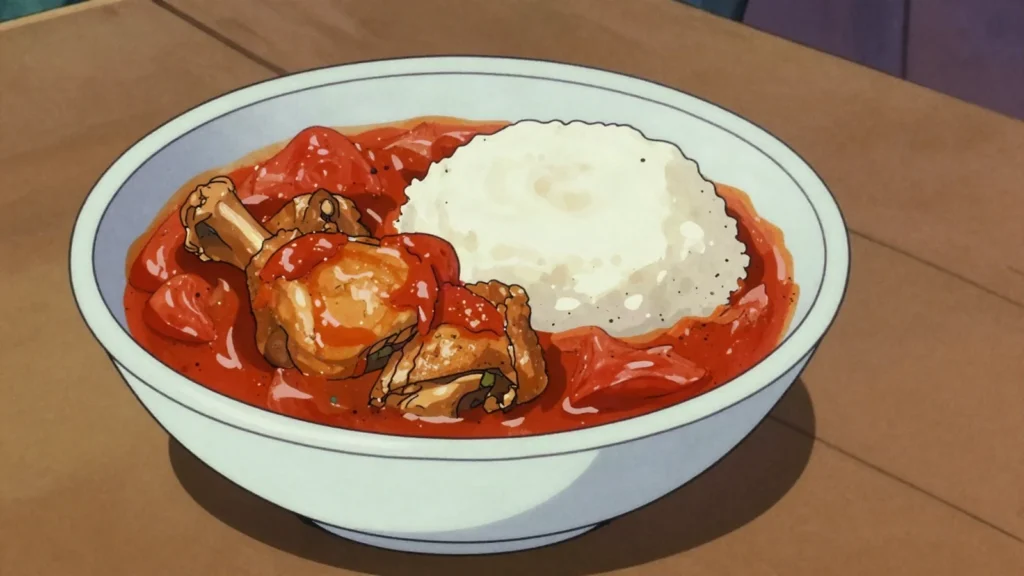
Village chicken stew is a main from Zambia: free-range chicken simmered with tomato and onion for guests. Free-range birds, tougher and darker than broilers, simmered slowly with tomato and onion; they are the currency of rural hospitality.
How long does Village chicken stew take to make?
Village chicken stew takes 20 minutes of preparation and 2 hours of cooking. The recipe makes serves 6. It is rated easy to make.
What can I substitute in Village chicken stew?
Yes, within limits. A boiling fowl replaces a village chicken most closely; a mature free-range or corn-fed bird is the next best. A standard grill works with the cooking time cut to about forty minutes. Tinned chopped tomatoes replace fresh out of season. Groundnut oil replaces plain cooking oil and is widely used in the region. Rice replaces nshima where maize meal is unavailable. A little curry powder is added by some cooks and is a common modern touch.
What is the most important thing to get right in Village chicken stew?
Reduce the simmering to about forty minutes. Do not wash raw chicken in the sink. Use a separate board for raw chicken. Wash hands, boards and knives thoroughly.