
Ingredients
Fish
- 1 kgfirm whole fish (red snapper, grouper or catfish), cleaned and cut into thick steaks on the bone
- 1lime, juiced
- 1 tspsalt
Broth
- 1.5 litreswater
- 2onions, one grated and one sliced
- 4garlic cloves, crushed
- 1thumb ginger, grated
- 4–6Scotch bonnet or bird’s eye chillies
- 2tomatoes, chopped
- 2 tspground grains of selim or black pepper
- 1 tspground uziza or ashanti pepper (optional)
- 1 tbspground dried crayfish (optional)
- 1stock cube
- 2 tbspred palm oil
- 1small bunch African basil or scent leaf, torn
- salt
To serve
- boiled yuca, malanga or plantain
- or plain white rice
Directions
- Rinse the fish steaks in cold water with the lime juice and salt, then drain. This firms the flesh and takes away any muddiness.
- Bring the water to the boil with the grated onion, garlic, ginger, stock cube and ground pepper and simmer 10 minutes to build a fragrant base.
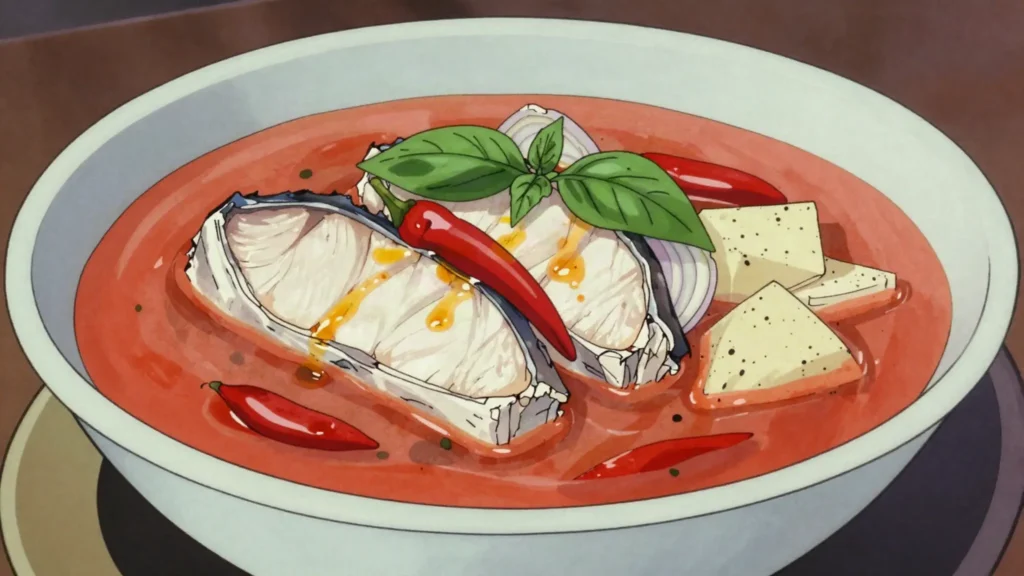
- Add the tomatoes, sliced onion, crayfish and palm oil and simmer uncovered another 10 minutes, until the broth turns coral and smells cooked rather than raw.
- Crush the chillies with a splash of the broth and stir them in. Pepesup is meant to sting; start with two and build up rather than trying to correct it later.
- Slide the fish steaks in in a single layer. From here shake the pot rather than stirring with a spoon, or the fish breaks into rags.
- Simmer gently, never at a rolling boil, for 8–12 minutes until the flesh flakes cleanly from the bone and the eye of each steak is opaque.
- Take off the heat, throw in the torn basil, cover and rest 5 minutes so the herb perfumes the broth.
- Ladle into deep bowls with plenty of liquid and serve with boiled yuca, plantain or rice, with cold beer or palm wine alongside.
Technique
- Pepesup is a broth, not a thick stew: no flour, no thickener, and thin enough to drink straight from the bowl.
- Fish on the bone gives the body. Fillets make a thin, sad soup with nothing holding it together.
- The palm oil goes in early on purpose so it emulsifies into the broth instead of floating in a greasy film.
Substitutions
- Grains of selim and uziza are the traditional aromatics; black pepper with a bay leaf and a pinch of allspice is an honest stand-in.
- No African basil: use Thai basil, which has the same aniseed lift, rather than sweet Italian basil.
Variations
- Made with goat or cow foot instead of fish for weekend gatherings, simmered two hours before the pepper goes in.
History
A spicy pepper soup, made from fish or meat cooked in a broth heavily seasoned with chili and other spices, developed in Equatorial Guinea reflecting broader West and Central African pepper soup traditions found under related names and preparations across the wider Gulf of Guinea coastal region. Its significant chili heat distinguishes pepesup from milder regional soups, and the dish is often prepared using catfish or other locally caught fish given Equatorial Guinea’s coastal geography along the Gulf of Guinea, though meat versions also exist. Pepesup remains a popular traditional dish across Equatorial Guinea, valued both as an everyday soup and, in some households, believed to carry restorative or health-supporting properties reflecting broader regional culinary and folk-medicine traditions around spicy pepper soups.
Frequently asked questions
What is Pepesup?
Pepesup is a soup & stew from Equatorial Guinea: fiery fish pepper soup, weekend and celebration staple. A spicy pepper soup, made from fish or meat cooked in a broth heavily seasoned with chili and other spices, developed in Equatorial Guinea reflecting broader West and Central African pepper soup traditions found under related names and preparations across the wider Gulf of Guinea coastal region. Its significant chili heat distinguishes pepesup from milder regional soups, and the dish is often prepared using catfish or other locally caught fish given Equatorial Guinea’s coastal geography along the Gulf of Guinea, though meat versions also exist. Pepesup remains a popular traditional dish across Equatorial Guinea, valued both as an everyday soup and, in some households, believed to carry restorative or health-supporting properties reflecting broader regional culinary and folk-medicine traditions around spicy pepper soups.
How long does Pepesup take to make?
Pepesup takes 20 min of preparation and 40 min of cooking. The recipe makes 4 servings. It is rated easy to make.
What can I substitute in Pepesup?
Yes, within limits. Grains of selim and uziza are the traditional aromatics; black pepper with a bay leaf and a pinch of allspice is an honest stand-in. No African basil: use Thai basil, which has the same aniseed lift, rather than sweet Italian basil.
What is the most important thing to get right in Pepesup?
Add the tomatoes, sliced onion, crayfish and palm oil and simmer uncovered another 10 minutes, until the broth turns coral and smells cooked rather than raw.