
Ingredients
The infusion
- a good handful of dried leaves
- or fresh leaves, twice the quantity
- of the plant used locally
- see the honesty note
- or 4 teaspoons black tea
- as a stand-in
The liquid
- 1 litrewater
To sweeten
- sugar, generously
- or honey
- or condensed milk
Sometimes added
- a squeeze of lime
- a slice of fresh ginger
- a piece of lemongrass
- a little milk
Directions
- Use a plant you know, from a known source. Buy dried herbs from a shop if you are unsure.
- Use fresh cold water. The first steeps the leaves in hot water. Bring the water to a boil. Pour it over the leaves. Cover the pot.
- Let it stand five to ten minutes. Covering the pot keeps them in. Put the leaves in cold water. Bring it to a boil.
- Simmer it for ten to fifteen minutes. Soft aromatic leaves suit steeping.
- Strain it into a second pot or a flask. Add sugar while it is hot.
- Add it to taste, which here means generously. It keeps without refrigeration before opening.
- Serve it hot in cups or glasses. Hot drinks are often served in glasses in the region.
Technique
- The atlas cannot verify which plant osang is made from. Its own source says only “local tea infusion” and does not name it, so the atlas names none — naming the wrong plant would be worse than naming none, because it would send someone to the wrong leaf, and with plants that can matter a great deal. This entry gives the method for a sweetened infusion, which is the same for any leaf, with black tea as a stand-in.
- Do not gather unfamiliar plants to make an infusion. Many plants are toxic, some in small quantities, some causing liver damage over time rather than at once, and some closely resembling edible ones. Boiling does not make a toxic plant safe. Use a plant you know from a known source, learn identification in person from someone experienced, and buy dried herbs from a shop if you are unsure.
- Some plant infusions interact with medication and some are not advised in pregnancy. The atlas cannot advise on a plant it cannot identify — ask a doctor or pharmacist.
- Cover the pot while steeping. Aromatic compounds escape with the steam, and covering it is a real and easy improvement.
- Strain the leaves out on time and into a second pot. Left in, they keep extracting and the infusion turns bitter from tannins, which cannot be undone.
- Steeping suits soft aromatic leaves; boiling suits tough leaves, bark and roots, extracting more but also more bitterness. Lemongrass is usually boiled, mint usually steeped.
- Use fresh cold water rather than reboiled. Reboiled water has lost its dissolved oxygen and gives a flatter infusion — a small difference and a real one.
- Sweeten each cup rather than the whole pot if people differ. It is drunk noticeably sweet, which is the norm for hot drinks across much of Africa rather than an excess.
- Do not add lime and milk together. The acid curdles the milk.
- Reheat gently and never boil a made infusion, which turns it bitter.
- Sweeten it more if you serve it cold. Cold drinks taste less sweet than hot ones, which is a genuine effect worth knowing.
- This entry gives a method rather than a definitive recipe, because the source is thin. Someone with local knowledge would name the plant; the atlas records what it can support and stops there.
Substitutions
- Black tea stands in where the local plant is unknown or unavailable.
- Lemongrass makes a widespread Central African infusion and is boiled rather than steeped.
- Mint, hibiscus or citrus leaves all make good sweetened infusions by the same method.
- Honey replaces sugar; stir it into the hot but not boiling infusion.
- Condensed milk sweetens and enriches at once and keeps without refrigeration unopened.
- Ginger, lemongrass or a squeeze of lime can all be added.
Variations
- Lemongrass infusion is drunk across Central and West Africa by the same method.
- Attaya, the strong sweet green tea of West Africa, is a quite different preparation.
- Karkade or bissap, from dried hibiscus, is drunk hot or cold.
- Ginger infusions are drunk for warmth across the region.
- A version enriched with condensed milk is common.
- Cold sweetened infusions are drunk against the heat in the same households.
Frequently asked questions
What is Osang?
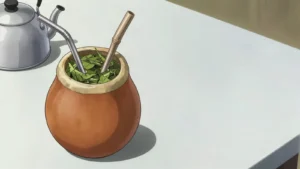
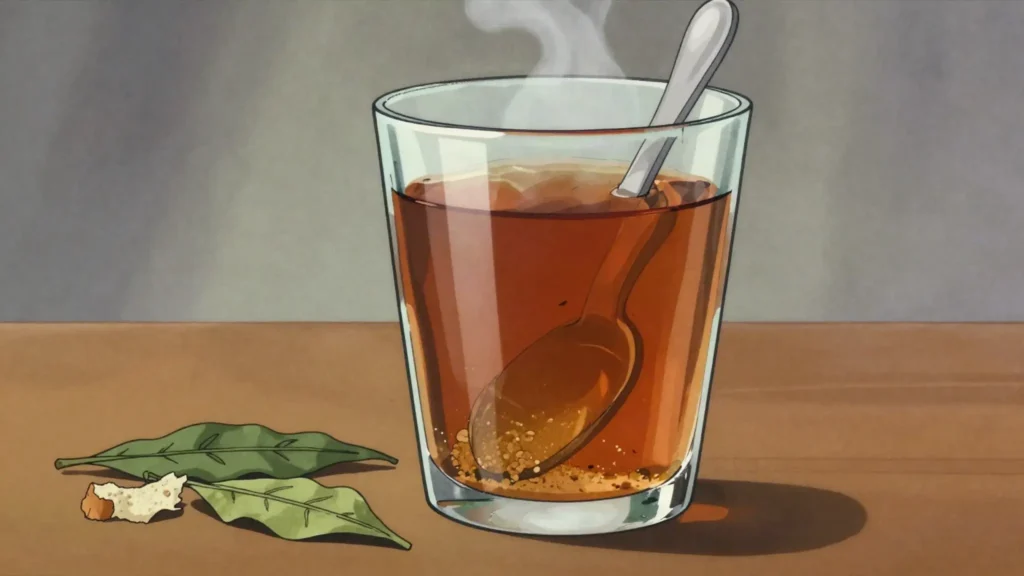
Osang is a drink from Equatorial Guinea: local tea infusion, commonly drunk sweetened.
How long does Osang take to make?
Osang takes 5 minutes of preparation and 15 minutes of cooking. The recipe makes makes about 1 litre. It is rated easy to make.
What can I substitute in Osang?
Yes, within limits. Black tea stands in where the local plant is unknown or unavailable. Lemongrass makes a widespread Central African infusion and is boiled rather than steeped. Mint, hibiscus or citrus leaves all make good sweetened infusions by the same method. Honey replaces sugar; stir it into the hot but not boiling infusion. Condensed milk sweetens and enriches at once and keeps without refrigeration unopened. Ginger, lemongrass or a squeeze of lime can all be added.
What is the most important thing to get right in Osang?
Do not gather unfamiliar plants to make an infusion. Many plants are toxic, some in small quantities, some causing liver damage over time rather than at once, and some closely resembling edible ones. Boiling does not make a toxic plant safe. Use a plant you know from a known source, learn identification in person from someone experienced, and buy dried herbs from a shop if you are unsure.