
Ingredients
The dough
- 1 kgcassava
- peeled, cored and boiled
- 150 gcassava starch
- almidón, or cornflour
- 1 teaspoonsalt
- a little warm water, if needed
The so’o filling
- 500 gminced beef
- 2onions, finely chopped
- 2spring onions, chopped
- 1red pepper, diced
- 2garlic cloves, crushed
- 1 teaspoonground cumin
- 1 teaspoonoregano
- 2 tablespoonsoil
- salt and black pepper
Sometimes added
- 1boiled egg, chopped
- green olives, chopped
- a hard-boiled egg slice per pastel
To fry
- oil, for deep frying
Directions
- Peel it thoroughly and discard all the peel. Boil it in plenty of fresh water. Discard that cooking water entirely. Do not eat cassava that tastes bitter. Work it while it is still warm. It must be pulled out entirely. Cut the cassava into shorter lengths. Score the skin down each length. Cassava has a thick two-layer peel. Put the peeled pieces in a pot. Cover them well with plenty of water.
- Add salt and bring it to a boil. Cooking it takes about thirty minutes. Boil it until it is completely soft. A fork should go in with no resistance. Drain all the cooking water away. Do not use it for anything at all. Pull it right out and discard it. Check every single piece for it.
- Mash the hot cassava thoroughly. It should be completely smooth. Mash it properly rather than briefly. Work the cassava starch into the mash. Add all of the salt along with it. Knead it all together thoroughly. It should become smooth and pliable. Squeeze a piece of it in your palm. It should hold together smoothly.
- Add warm water if the dough cracks. Add more starch if the dough sticks. Add either a little at a time. Heat the oil in a heavy frying pan. Add all the chopped onions to it. Cook them for about eight minutes. Add the diced red pepper to it. Cook it for about five minutes.
- Add the minced beef to the pan. Break it all up as it starts to brown. Break up every lump as it cooks. Use a wooden spoon to work it. Add the garlic, cumin and oregano. Season it with salt and black pepper. Cook it for a few more minutes. They should be clearly present. Taste it and adjust both of them. Stir in the chopped spring onion. It should stay fresh and green.
- Let the filling cool completely. Hot filling softens the dough. Cool it right down completely first. Take one small piece of the dough. Flatten it out into a flat disc. Press it between two sheets of plastic. That stops it sticking and tearing.
- Press it fairly thin but not too thin. About three millimetres is right. Put a spoon of filling on one half. Do not overfill any of them at all. Leave a clear border all round. Lay a slice of boiled egg on the filling. Fold the dough over the filling. Press the edges together firmly. The seal must be entirely complete.
- Press it firmly all the way round. Use the plastic sheet to fold it over. Press the edge through the plastic. Press the edge down with a fork. Check each one of them for cracks. Cracks open up in the hot oil.
- Press any cracks closed before frying. Heating the oil takes attention. Pour the oil into a deep heavy pot. Fill it no more than half full. Heat it to about one hundred and eighty degrees. A deep pot of hot oil is genuinely dangerous. Keep a lid nearby to smother a flare-up. Never put water on an oil fire at all.
- Keep children well away from the pot. Lower a few pastels into the hot oil. Turn them and give three more minutes. Only the dough needs cooking through. Lift them out onto a wire rack. Let all the excess oil drip away. That softens the crust within minutes. Serve them hot from the fryer. They keep a day in the refrigerator.
Technique
- Cassava contains cyanogenic glycosides that release cyanide when the plant is damaged, and it is never eaten raw in any variety. Peel it thoroughly and discard the whole two-layer peel, brown bark and pink inner layer alike, since that holds most of the compounds; boil it in plenty of water and discard that water rather than using it. Cassava that tastes bitter should not be eaten — the bitterness signals the compounds and the signal should be trusted.
- Cassava dough has no gluten and tears very readily, so press it between two sheets of plastic rather than rolling it, and use the plastic to fold it over the filling so you barely handle it. Press the edge closed through the plastic, then peel it away. Check every pastel for cracks before frying, since cracks open in the hot oil and the filling escapes.
- Mash the cassava while it is still hot, when it goes smooth — cold cassava goes lumpy and stiff, and lumps both show in the finished pastel and make it tear when pressed out. Pull out the tough woody cord from every piece first, since it stays hard however long it cooks.
Substitutions
- Cornflour stands in for cassava starch, which binds the mash, gives the dough some stretch and provides the chewy texture.
- A slice of boiled egg or chopped green olives in the filling are both common in Paraguay, adding richness and sharpness, though neither is essential.
Variations
- Mandi’o is the Guaraní word for cassava and so’o the word for meat; Guaraní is an official language of Paraguay and many food names come from it.
- Let the filling cool completely before shaping, since hot filling softens the dough so it cannot be sealed and creates steam that bursts them.
- Cassava dough blisters as it fries, which is expected and gives the crisp bubbled surface.
History
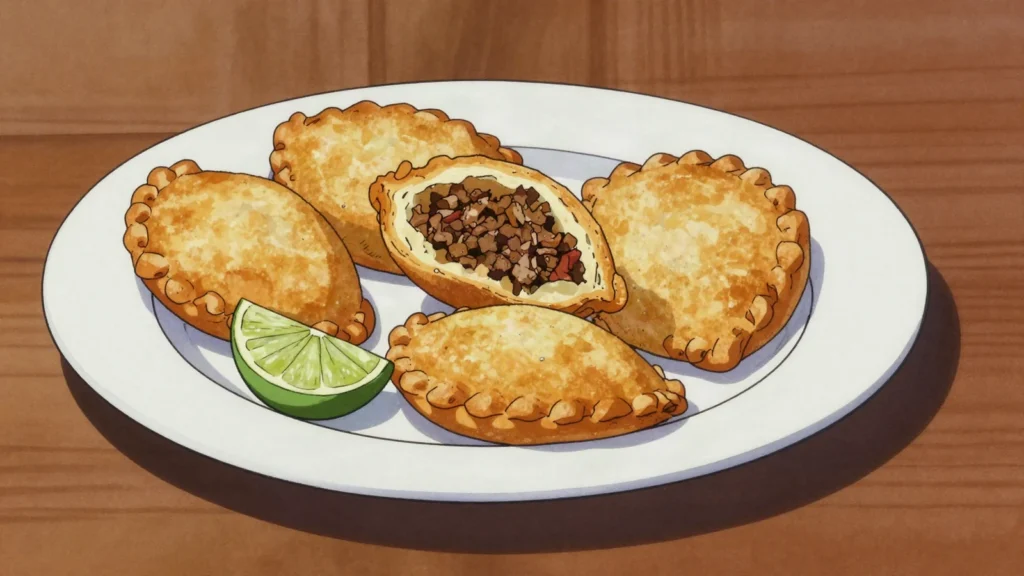
Cassava dough turnover filled with beef and fried; mandi’o is the Guarani word for cassava.
Frequently asked questions
What is Pastel mandi’o?
Pastel mandi’o is a street food from Paraguay: fried cassava-dough empanada filled with beef so’o. Cassava dough turnover filled with beef and fried; mandi’o is the Guarani word for cassava.
How long does Pastel mandi’o take to make?
Pastel mandi’o takes 1 hour of preparation and 25 minutes of cooking. The recipe makes about 20 pastels. It is rated hard to make.
What can I substitute in Pastel mandi’o?
Yes, within limits. Cornflour stands in for cassava starch, which binds the mash, gives the dough some stretch and provides the chewy texture. A slice of boiled egg or chopped green olives in the filling are both common in Paraguay, adding richness and sharpness, though neither is essential.
What is the most important thing to get right in Pastel mandi’o?
Peel it thoroughly and discard all the peel. Boil it in plenty of fresh water. Discard that cooking water entirely. Do not eat cassava that tastes bitter. Work it while it is still warm. It must be pulled out entirely. Cut the cassava into shorter lengths. Score the skin down each length. Cassava has a thick two-layer peel. Put the peeled pieces in a pot. Cover them well with plenty of water.