
Ingredients
Dough
- 500 gplain flour
- 200 gbutter, softened
- 200 gsour cream
- or thick yoghurt
- 1egg yolk
- 1 teaspoonbaking powder
- 1/2 teaspoonsalt
The filling
- 300 gwalnuts
- finely ground
- 150 gcaster sugar
- 1 teaspoonground cardamom
- 1/2 teaspoonground cinnamon
- a pinch of ground cloves
To finish
- icing sugar, to dust
- melted butter, for brushing
To serve
- with tea
- on a Novruz tray
- alongside pakhlava and shekerbura
Directions
- Grind the walnuts fairly fine. Coarse pieces tear the thin dough. Taste one of them before using them. Discard the batch if it tastes rancid. The dough is rolled thin and cut into triangles. Beat the butter until soft and light. Add all of the sour cream to it.
- Beat them together until smooth. The butter must be genuinely soft. Take it out an hour beforehand. Beat the egg yolk into the mixture. It also helps it hold together. Sift the flour with the baking powder. Add all of the salt in to them.
- Add the dry mixture to the butter. Combining it takes a light hand. Work it in with your fingertips. Work it as little as you possibly can. Stop as soon as it comes together. Wrap the dough and refrigerate it. Give it at least one full hour.
- Grind the walnuts fairly finely. Add all of the caster sugar to them. Add the cardamom, cinnamon and cloves. Mix them all together thoroughly. The filling should taste warmly spiced.
- Take the dough from the refrigerator. Let it soften for ten minutes. Roll it out thinly on a floured surface. Take it down to about two millimetres. Thin dough gives a delicate pastry. Work in batches to keep it cold. Warm dough gets sticky and hard to handle.
- Keep the rest in the refrigerator. Roll out only one piece at a time. Cut the sheet into long triangles. Cut a long strip and then cut triangles from it. Each should have a wide base and a point.
- Put a little filling at the wide base. Use a teaspoonful of it at most. Keep it all to a narrow thin line. Roll from the wide base towards the point. Roll it all up fairly tightly. It should be a small neat log. Set them on a lined baking tray. Put them all down point side first.
- Heat the oven to one hundred and eighty degrees. Bake them for about twenty minutes. They should be barely coloured. Leave them on the tray for five minutes. They firm up considerably as they cool.
- Brush them with melted butter while warm. That helps the icing sugar stick. Dust them heavily with icing sugar. Dust them once they are fully cool. Hot pastries melt the sugar into a glaze. Cool ones keep it powdery and white. Dust them again just before serving. Arrange them on a tray or plate. Serve hot black tea alongside them. They keep two weeks in a sealed tin.
Technique
- Sour cream in the dough does two things: the fat shortens it and the acid tenderises the gluten, giving a very tender crumbly pastry that should melt rather than chew. Handle it as little as possible and stop the moment it comes together, since working it develops gluten and makes it tough.
- Roll from the wide base of the triangle towards the point, fairly tightly so the filling stays in, and set them on the tray point side down — the weight holds the end closed, where point up lets them unroll as they bake.
- They are baked deliberately pale, barely coloured with only the bases lightly golden, since the icing sugar shows better on a pale pastry. Dust them once cool, since hot pastries melt the sugar into a glaze rather than keeping it powdery.
Substitutions
- Thick yoghurt stands in for sour cream in the dough.
- Taste a walnut before using them, since old ones go rancid and taste sharp; nut allergies are common, so say clearly what is in these on a shared tray.
Variations
- Pakhlava, shekerbura and mutaki all use ground nuts and sugar and go on the same Novruz tray; the shapes and doughs are what distinguish them.
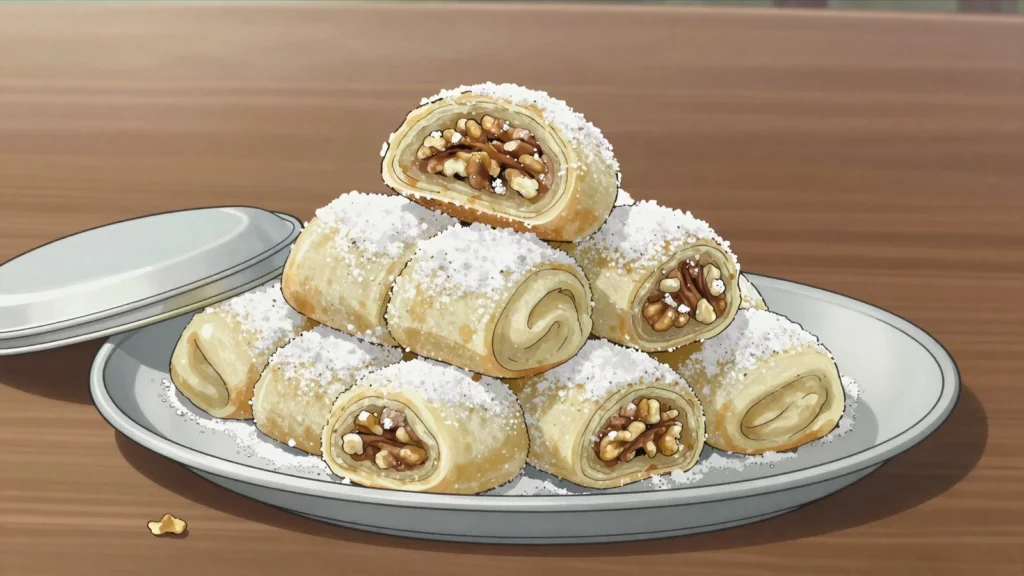
- They are rolled as small logs, often curved slightly into a crescent; both shapes are made.
- Keep the unrolled dough in the refrigerator and work one piece at a time, since warm dough gets sticky and hard to handle.
History
A Baku tea-table sweet, rolled log-shaped and baked short; a fixture of Novruz sweet trays alongside pakhlava and shekerbura.
Frequently asked questions
What is Mutaki?
Mutaki is a dessert from Azerbaijan: small rolled pastries stuffed with walnut and sugar, dusted with icing sugar. A Baku tea-table sweet, rolled log-shaped and baked short; a fixture of Novruz sweet trays alongside pakhlava and shekerbura.
How long does Mutaki take to make?
Mutaki takes 1 hour plus resting of preparation and 25 minutes of cooking. The recipe makes about 30 pastries. It is rated hard to make.
What can I substitute in Mutaki?
Yes, within limits. Thick yoghurt stands in for sour cream in the dough. Taste a walnut before using them, since old ones go rancid and taste sharp; nut allergies are common, so say clearly what is in these on a shared tray.
What is the most important thing to get right in Mutaki?
Beat them together until smooth. The butter must be genuinely soft. Take it out an hour beforehand. Beat the egg yolk into the mixture. It also helps it hold together. Sift the flour with the baking powder. Add all of the salt in to them.