
Ingredients
Seeds
- 600 gdried izaquente, the seeds of the African breadnut Treculia africana, soaked overnight
- 3 litreswater
- 1 tspbicarbonate of soda, to help the skins slip
To cook down
- 120 mlred palm oil (azeite de dendê)
- 250 gpalm sugar or dark brown sugar
- 400 mlthick coconut milk
- 1cinnamon stick
- 6cloves
- 1 tspground nutmeg, freshly grated
- 1 tspground ginger
- 1strip lime zest
- ½ tspfine salt
To finish
- 1 tspvanilla extract or the seeds of 1 vanilla pod, Sao Tomean if you can get it
- 50 gtoasted peanuts, roughly crushed
Directions
- Soak the dried seeds overnight in plenty of cold water. They swell considerably and the papery brown skin loosens.
- Boil the seeds hard in fresh water with the bicarbonate for 20 minutes, then drain and rub them between your palms under running water. The skins come away in flakes; keep rubbing until the pale yellow kernels are clean. This is the tedious part and it cannot be skipped, as the skins are bitter.
- Return the peeled seeds to the pot with 2 litres of fresh water, the cinnamon, cloves and lime zest, bring to a boil, then simmer covered for 1 hour 30 minutes to 2 hours until a seed crushes easily between finger and thumb.
- Drain, reserving 300 ml of the cooking liquid, and discard the cinnamon and cloves.
- Mash about half the seeds coarsely with a wooden spoon or pound them in a mortar, leaving the rest whole. The contrast of whole seeds in a thick pudding is what the dish is about.
- Warm the palm oil gently in a wide heavy pan until it is fluid and bright orange, no hotter, then add the sugar and stir 3–4 minutes until it dissolves into a dark syrup.
- Add all the seeds, the coconut milk, the reserved cooking liquid, nutmeg, ginger and salt. Simmer, stirring often with a wooden spoon, for 25–30 minutes.
- It is ready when the mixture is thick enough that the spoon leaves a track across the base of the pan that closes slowly, and the palm oil glistens on the surface. Stir in the vanilla off the heat.
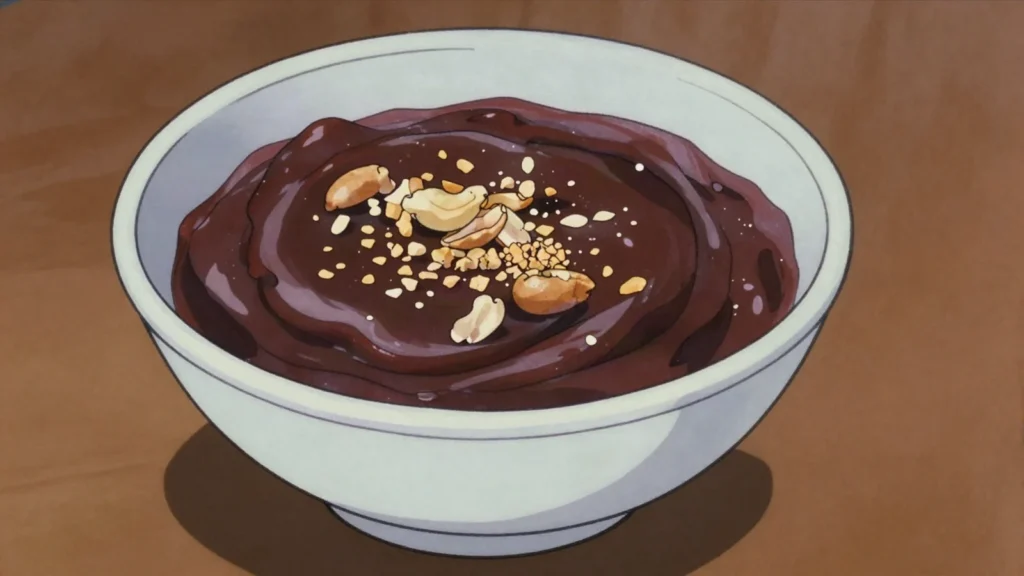
- Spoon into bowls, scatter with crushed peanuts and serve warm or at room temperature. It sets firmer as it cools and is often eaten the next day.
Technique
- Izaquente is the Santomean name for the seed of Treculia africana, known as ukwa in Nigeria and izaquente or ezaquente on the islands. It is a festive food, cooked in quantity for Christmas and saints days, and documentation of the exact home recipe varies from household to household; the constants are the long boil, the palm oil and heavy spicing.
- Underboiled seeds stay stubbornly hard and no amount of later simmering fixes them. Test one before you commit the sugar and oil.
- Palm oil must be warmed, not fried. Heated past about 150°C (300°F) it darkens, turns acrid and dominates the whole pot.
- Sao Tome grows some of the best vanilla and cocoa in the Gulf of Guinea, and both find their way into festive sweets; a Sao Tomean vanilla pod is worth using here.
Substitutions
- Cannot find izaquente? Dried jackfruit seeds, boiled and peeled the same way, are the closest texture, and cooked chestnuts give a similar sweet starchiness in a shorter time.
- Palm sugar can be replaced by dark muscovado; avoid white sugar, which leaves the pudding tasting flat.
- If red palm oil is unavailable, use coconut oil plus ½ tsp paprika for colour, and accept a cleaner, less earthy result.
Variations
- A savoury version cooked with onion, chilli and palm oil and eaten as a side rather than a sweet.
- A porridge-style izaquente loosened with extra coconut milk and eaten hot for breakfast.
- Some households add grated fresh coconut in the final 10 minutes for texture.
History
A spiced fish or seafood stew, cooked in palm oil with tomato and chili, developed on the islands of São Tomé and Príncipe reflecting the nation’s Portuguese colonial history, since the islands remained a Portuguese colony until 1975, and its position in the Gulf of Guinea off the coast of Central Africa, drawing on both Portuguese cooking technique and West and Central African ingredients including palm oil, long central to cooking across the wider Gulf of Guinea coastal region. Its combination of fresh, locally caught seafood with that palm-oil-and-chili base reflects the island nation’s reliance on ocean fishing given its small land area and limited large-scale agriculture. Izaquente remains one of the dishes most specifically associated with São Toméan and Príncipense cuisine.
Frequently asked questions
What is Izaquente?
Izaquente is a dessert from São Tomé and Príncipe: festive pudding of African breadnut seeds with palm oil and spices. A spiced fish or seafood stew, cooked in palm oil with tomato and chili, developed on the islands of São Tomé and Príncipe reflecting the nation’s Portuguese colonial history, since the islands remained a Portuguese colony until 1975, and its position in the Gulf of Guinea off the coast of Central Africa, drawing on both Portuguese cooking technique and West and Central African ingredients including palm oil, long central to cooking across the wider Gulf of Guinea coastal region. Its combination of fresh, locally caught seafood with that palm-oil-and-chili base reflects the island nation’s reliance on ocean fishing given its small land area and limited large-scale agriculture. Izaquente remains one of the dishes most specifically associated with São Toméan and Príncipense cuisine.
How long does Izaquente take to make?
Izaquente takes 30 min plus overnight soaking of preparation and 2 hr 30 min of cooking. The recipe makes 8 servings. It is rated medium to make.
What can I substitute in Izaquente?
Yes, within limits. Cannot find izaquente? Dried jackfruit seeds, boiled and peeled the same way, are the closest texture, and cooked chestnuts give a similar sweet starchiness in a shorter time. Palm sugar can be replaced by dark muscovado; avoid white sugar, which leaves the pudding tasting flat. If red palm oil is unavailable, use coconut oil plus ½ tsp paprika for colour, and accept a cleaner, less earthy result.
What is the most important thing to get right in Izaquente?
Palm oil must be warmed, not fried. Heated past about 150°C (300°F) it darkens, turns acrid and dominates the whole pot.