Ingredients
The preserved things
- 200 gdried or smoked fish
- soaked and flaked
- 2 tablespoonsnététou
- fermented locust bean
- or dawadawa
- 50 gdried shrimp, optional
The pot
- 500 gbroken rice
- or long grain rice
- 250 gcowpeas
- niébé, soaked overnight
- 6bitter tomatoes
- jakhatou, halved
- 2onions, chopped
- 6garlic cloves, crushed
- 4 tablespoonspalm oil
- or groundnut oil
- 2tomatoes, chopped
- 1 tablespoontomato purée
- 1scotch bonnet, whole
- about 1.5 litres water
- salt and black pepper
Sometimes added
- a handful of dried baobab leaf
- a little dried okra
To serve
- in one wide dish
- eaten with the right hand
Directions
- Rinse the dried fish under cold water. Put it in a bowl of fresh cold water. Leave it for at least four hours. One water reaches a limit and stops. Taste a small piece of the soaked fish. It should be savoury rather than harsh. Soak it longer if it is still very salty. Drain the soaked fish thoroughly.
- Flake it and check it carefully for bones. They do not soften in cooking at all. Put the cowpeas in a bowl of water. Cover them well and leave them overnight.
- Drain and rinse the soaked cowpeas. Put them in a pot with fresh water. Simmer them until they are nearly tender. Give them about forty minutes. Take them off slightly underdone. Fully soft beans collapse into the rice. Cut all of the jakhatou in half. Leaving them whole keeps it contained. Heat the oil in a very large heavy pot. Add the chopped onions in to it.
- Cook them for a good ten minutes. Add the crushed garlic to them. Cook it for two more full minutes. Crumble the nététou into the pot. Fry it for about two full minutes. It should dissolve into the base. Start with less if it is new to you. Add the chopped tomatoes to the pot.
- Add the tomato purée along with them. Cook them down for about eight minutes. Add the flaked dried fish to the pot. Add the dried shrimp if you have them. Cook them for about five minutes. Pour in all of the measured water. Add the halved bitter tomatoes. Add the whole scotch bonnet to it. Simmering it takes about twenty minutes.
- Bring it up to a gentle simmer. Let it simmer for about twenty minutes. Add the part-cooked cowpeas to the pot. Let them simmer for ten more minutes. Taste the liquid and adjust the salt. It takes its seasoning from it. Season the broth properly before the rice goes in.
- Stir it once to distribute it. There should be enough to cook the rice. Add hot water if it looks short. Cooking the rice takes about twenty minutes. Cover the pot and lower the heat right down. Let it cook for about twenty minutes. The rice must steam rather than boil.
- Take it off the heat with the lid on. Let it stand for ten full minutes. The grains firm up as they settle. Lift the whole scotch bonnet out. Discard it entirely before serving. Bring the fish and beans up through it. Lift and fold rather than stirring. Serving it is done in one wide dish. Tip it all into a large communal dish. Arrange the bitter tomatoes on top. It keeps three days refrigerated.
Technique
- Every main flavour here is preserved rather than fresh — dried fish, fermented locust bean, dried beans — none of which needs refrigeration or depends on the day’s catch. That is what made it work inland and through the dry season, and the preserved ingredients give a depth that is the point rather than a compromise.
- Nététou is fermented African locust bean, Parkia biglobosa, called dawadawa in Ghana and Nigeria and soumbala in Mali and Burkina Faso. It smells extremely strong and slightly rotten but tastes deeply savoury cooked; fry it into the base to mellow it, use no more than two tablespoons for this pot, and start with less if it is new to you.
- Season the broth properly before the rice goes in, since the rice absorbs that liquid entirely and takes all its seasoning from it — it cannot be corrected easily afterwards.
Substitutions
- Dawadawa or soumbala are the same fermented locust bean under other names.
- Long grain rice stands in for broken rice, which is preferred in Senegambia rather than a poor substitute.
Variations
- The atlas also carries mbakhalou saloum from Senegal, another rice pot with dried fish and nététou, built on peanut paste instead of beans; they are relatives rather than the same dish.
- Jakhatou, the bitter garden egg, is halved so its bitterness goes into the pot, and that bitterness is wanted.
- Dried baobab leaf or okra go in in some households.
History
A Wolof one-pot built on preserved rather than fresh ingredients, which made it a dry-season and inland dish along the Gambia River.
Frequently asked questions
What is Mbahal?
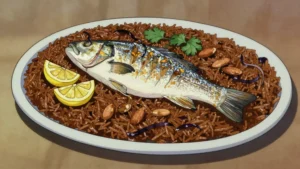
Mbahal is a main from Gambia: rice cooked with dried fish, netetou, beans and bitter tomato. A Wolof one-pot built on preserved rather than fresh ingredients, which made it a dry-season and inland dish along the Gambia River.
How long does Mbahal take to make?
Mbahal takes 40 minutes plus soaking of preparation and 1 hour 30 minutes of cooking. The recipe makes serves 8. It is rated medium to make.
What can I substitute in Mbahal?
Yes, within limits. Dawadawa or soumbala are the same fermented locust bean under other names. Long grain rice stands in for broken rice, which is preferred in Senegambia rather than a poor substitute.
What is the most important thing to get right in Mbahal?
Rinse the dried fish under cold water. Put it in a bowl of fresh cold water. Leave it for at least four hours. One water reaches a limit and stops. Taste a small piece of the soaked fish. It should be savoury rather than harsh. Soak it longer if it is still very salty. Drain the soaked fish thoroughly.