
Ingredients
Leaves
- 800 gyoung cassava leaves, thick stems removed (or 500 g frozen pounded cassava leaf)
- 4garlic cloves
- 1thumb ginger, peeled
- 1onion, quartered
Stew
- 400 mlthin coconut milk (second pressing)
- 300 mlthick coconut milk (first pressing)
- 2 tbspcoconut or vegetable oil
- 1onion, finely chopped
- 2tomatoes, chopped
- 300 gfresh tuna, in 3 cm cubes, or 200 g salted dried fish, soaked and flaked
- 1 tspcurry powder or ½ tsp ground turmeric
- 1hot chilli, whole
- 1 tspsalt
To serve
- Steamed rice, or boiled breadfruit or green banana
Directions
- Pound the cassava leaves with the garlic, ginger and quartered onion in a deep wooden mortar until they collapse into a fine, dark green paste; this pounding, done by hand across the islands, is what gives mataba its velvety texture.
- Tip the paste into a pot with the thin coconut milk and 300 ml water, bring to the boil and simmer uncovered for 45 minutes, stirring occasionally.
- Cassava leaves must be pounded and boiled thoroughly before eating; the long open simmer drives off their natural cyanogenic compounds and takes away the raw, grassy edge.
- Meanwhile heat the oil in a frying pan and soften the chopped onion for 6–8 minutes, then add the tomato and curry powder and cook to a thick base, about 8 minutes.
- Stir this base into the leaves along with the whole chilli and continue to simmer, uncovered, for 30 minutes until the mixture is very thick and dark.
- Add the salted dried fish if using, and cook 15 minutes so its salt and smoke run through the pot.
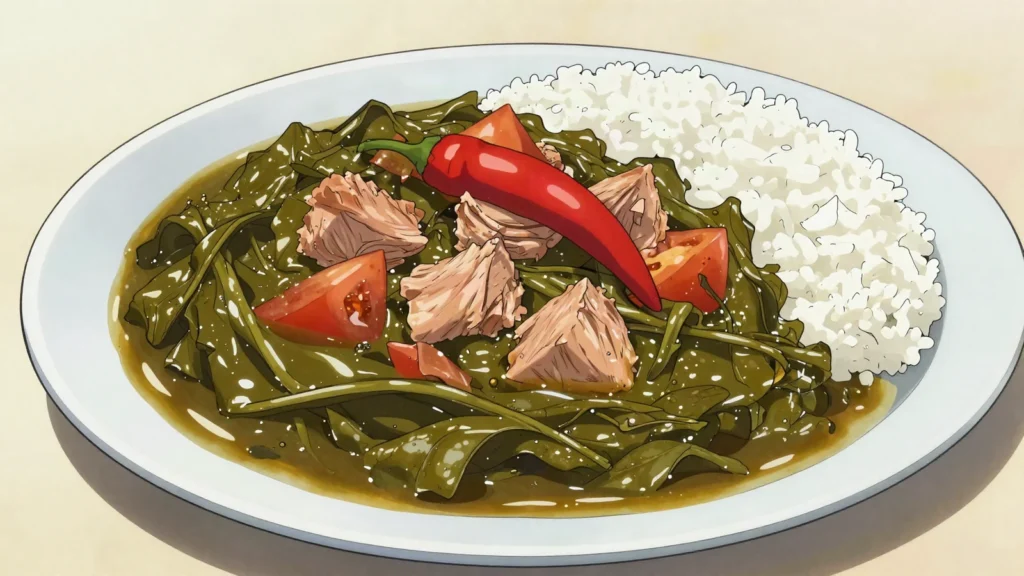
- Pour in the thick coconut milk and cook gently for 10 minutes, without a hard boil, until the stew is rich, glossy and the colour of moss.
- Slide in the fresh tuna cubes and poach them in the stew for 5–6 minutes, until just opaque; stir as little as possible so they stay whole.
- Check the salt, lift out the chilli and serve very hot over rice, or with boiled breadfruit alongside.
Technique
- Mataba is the everyday dish of the Comoros and appears at every ceremony and family meal; the pounded leaf is served as a thick side rather than a soupy stew.
- Only young, tender cassava leaves are used. Old leaves stay fibrous however long you cook them.
- Add the thick coconut milk at the end and keep it below a boil, or it separates into oil and curd.
Substitutions
- Frozen pounded cassava leaf from an African or Caribbean grocer is the standard shortcut; simmer it 40 minutes before saucing.
- Where cassava leaves are banned or unavailable, sweet potato leaves cook the same way, though the flavour is milder and less mineral.
Variations
- Mataba is often made entirely without protein and served alongside grilled dishes.
- On Anjouan some cooks add a spoonful of pounded peanut for extra body.
History
Cassava leaves, pounded and cooked in coconut milk, often with fish, crab or other seafood added, developed in Comorian cooking using coconut, abundant across the islands’ tropical climate, combined with cassava leaf, reflecting the same broader pattern of cassava-leaf cooking found across many parts of Sub-Saharan Africa following cassava’s introduction from South America through earlier European trade contact. Its combination with fresh seafood, readily available given the Comoros’ island geography surrounded by the Indian Ocean, distinguishes mataba’s specific character within the wider family of cassava leaf dishes found across the African continent. Mataba remains one of the Comoros’ most traditional and widely eaten dishes, closely tied to the islands’ particular blend of African and Indian Ocean culinary influences.
Frequently asked questions
What is Mataba?
Mataba is a main from Comoros: cassava leaves slow-cooked in coconut milk, often with tuna. Cassava leaves, pounded and cooked in coconut milk, often with fish, crab or other seafood added, developed in Comorian cooking using coconut, abundant across the islands’ tropical climate, combined with cassava leaf, reflecting the same broader pattern of cassava-leaf cooking found across many parts of Sub-Saharan Africa following cassava’s introduction from South America through earlier European trade contact. Its combination with fresh seafood, readily available given the Comoros’ island geography surrounded by the Indian Ocean, distinguishes mataba’s specific character within the wider family of cassava leaf dishes found across the African continent. Mataba remains one of the Comoros’ most traditional and widely eaten dishes, closely tied to the islands’ particular blend of African and Indian Ocean culinary influences.
How long does Mataba take to make?
Mataba takes 30 min of preparation and 1 hr 45 min of cooking. The recipe makes 4 servings. It is rated medium to make.
What can I substitute in Mataba?
Yes, within limits. Frozen pounded cassava leaf from an African or Caribbean grocer is the standard shortcut; simmer it 40 minutes before saucing. Where cassava leaves are banned or unavailable, sweet potato leaves cook the same way, though the flavour is milder and less mineral.
What is the most important thing to get right in Mataba?
Cassava leaves must be pounded and boiled thoroughly before eating; the long open simmer drives off their natural cyanogenic compounds and takes away the raw, grassy edge.